
Cardiac Surgery

7 Bypass Surgery Complications & How to Prevent Them
Patient Guide, Cardiac Surgery

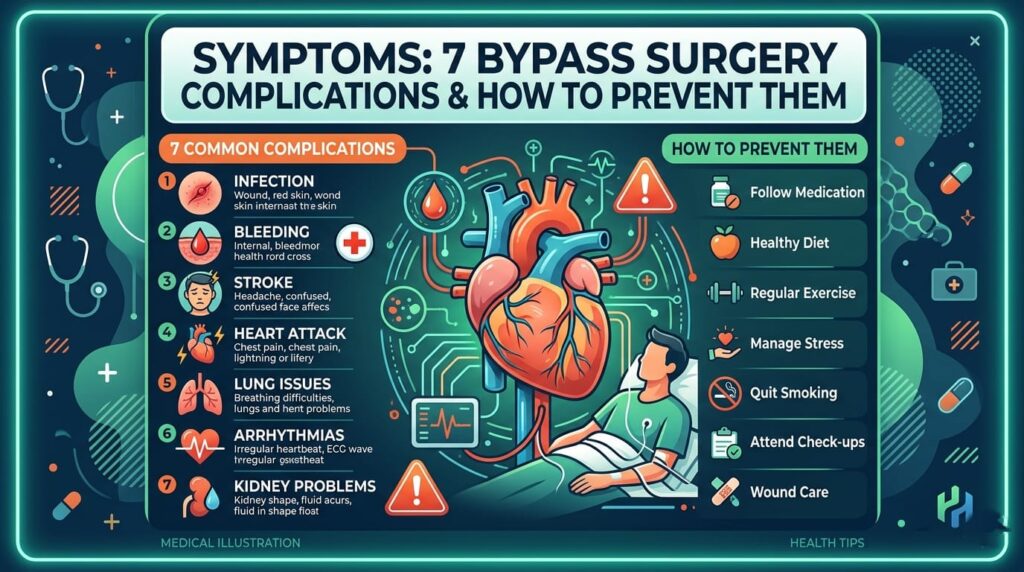
7 Bypass Surgery Complications & How to Prevent Them

Undergoing heart surgery is a major life event, and feeling anxious about the recovery process is entirely normal. Patients and their families often spend late nights researching the internet, trying to understand what to expect after leaving the operating room. While modern medicine has made this procedure incredibly safe, being aware of potential bypass surgery complications is the smartest way to ensure a smooth recovery. Knowledge is your best defense. When you know what to look out for, you can act quickly and work alongside your medical team to stay healthy. That is why top cardiothoracic experts, like Dr. Ved Prakash, emphasize patient education. By understanding your body, you can take proactive steps to protect your heart. What Are Bypass Surgery Complications? Coronary Artery Bypass Grafting (CABG) is a highly effective procedure used to treat severe heart disease. Surgeons take a healthy blood vessel from another part of your body and use it to create a detour—or bypass—around a blocked artery. This restores healthy blood flow to your heart muscle. However, because this is a major, invasive surgery, the body experiences significant stress. Bypass surgery complications refer to the medical issues, side effects, or setbacks that can occur during or after this procedure. Some complications are minor and easily treated, while others require immediate medical intervention. Let’s break down the most common ones. The 7 Major Bypass Surgery Complications 1. Bleeding and Blood Loss It is very common to experience some bleeding after any major surgical operation. However, excessive bleeding from the chest tubes or the incision site is one of the most immediate bypass surgery complications doctors watch for. To prevent severe blood loss, your surgical team will monitor you around the clock in the Intensive Care Unit (ICU) immediately following your operation. How to prevent it: Stop taking blood-thinning medications (like aspirin or warfarin) exactly when your doctor tells you to before surgery. Under the care of specialists like Dr. Ved Prakash, strict pre-surgery blood testing is conducted to minimize these risks. 2. Heart Arrhythmias (Irregular Heartbeats) After the heart is handled during surgery, it can become irritated. This irritation often leads to atrial fibrillation, a type of irregular heartbeat. This is among the most frequent bypass surgery complications, occurring in up to 30% of patients. While it can feel scary and cause a fluttering sensation in your chest, it is usually temporary and highly treatable. How to prevent it: Take all prescribed beta-blockers or anti-arrhythmic medications on schedule. Limit caffeine and stress during your initial recovery weeks at home. 3. Infections at the Incision Site Your surgeon will make an incision in your chest, and possibly in your leg or arm if a blood vessel was harvested from there. Any break in the skin carries a risk of bacterial infection. If the area becomes red, warm to the touch, or starts oozing fluid, you must act fast. Deep sternal wound infections are rare but serious bypass surgery complications that require prompt antibiotic treatment. How to prevent it: Keep your incision sites clean and dry exactly as instructed by your nursing team. Wash your hands thoroughly before touching the wound area. Monitor for fever and report any temperature spikes to your doctor immediately. 4. Kidney Function Issues During surgery, your body’s blood flow is temporarily altered, sometimes using a heart-lung bypass machine. This sudden change in blood pressure can put stress on your kidneys, leading to temporary kidney impairment. For most patients, kidney function returns to normal within a few days. However, patients with pre-existing diabetes or kidney issues face a higher risk. How to prevent it: Stay perfectly hydrated before and after your surgery according to your doctor’s guidelines. Dr. Ved Prakash and his medical team carefully monitor fluid levels and blood pressure during surgery to protect your vital organs. 5. Cognitive Decline (Brain Fog) Many patients complain of feeling confused, having memory lapses, or struggling to concentrate in the weeks following their operation. Often referred to as “pumphead,” this is one of the more frustrating bypass surgery complications. Fortunately, this cognitive decline is usually temporary. Most patients regain their full mental sharpness within six to twelve months. How to prevent it: Engage in light mental exercises like reading or solving simple puzzles during recovery. Ensure you get adequate, uninterrupted sleep every night to allow your brain to heal. 6. Blood Clots and Stroke Risk Whenever blood flow is altered, there is a risk of blood clots forming in the body. If a clot breaks loose and travels to the brain, it can cause a stroke. This is a severe risk that medical teams take extreme precautions to prevent. The risk is highest in the first few days after surgery, which is why movement and medication are heavily emphasized in the hospital. How to prevent it: Wear compression stockings provided by the hospital to keep blood flowing in your legs. Start walking as soon as your medical team gives you the green light—movement is your best defense against blood clots! 7. Pneumonia or Breathing Difficulties General anesthesia and the use of a breathing tube during surgery can leave your lungs vulnerable to fluid buildup. If this fluid is not cleared, it can lead to pneumonia—one of the most common respiratory bypass surgery complications. You will likely feel chest pain when coughing or taking deep breaths, which makes patients hesitant to breathe deeply, worsening the problem. How to prevent it: Use your spirometer (the breathing device given to you in the hospital) exactly as directed. Hold a pillow firmly against your chest when you cough; this reduces pain and protects your sternum while clearing your lungs. General Tips to Avoid Bypass Surgery Complications Minimizing the risk of bypass surgery complications doesn’t end when you leave the hospital. Your home routine is just as crucial. A successful recovery requires strict discipline, emotional support, and following your doctor’s advice to the letter. Here are the golden rules for a complication-free recovery: Follow your medication schedule strictly: Never skip doses

Cardiac Surgery

What Is Coronary Angiography? Procedure, Results and What Happens Next

Coronary angiography is the definitive test for identifying blockages in the heart arteries — the investigation that gives every cardiologist and cardiac surgeon the exact road map needed to plan the right treatment. If you have been referred for coronary angiography, or if you already have a report and cannot make sense of it, Dr. Ved Prakash, Director of CTVS at Yatharth Super Speciality Hospitals, Greater Noida, explains what the procedure involves, what the results mean, and what comes next.   What Is Coronary Angiography? Coronary angiography is a catheter-based procedure in which a special dye (contrast agent) is injected directly into the coronary arteries while X-ray images are captured continuously. The dye makes the inside of the arteries visible — showing exactly where blockages are, how severe they are, and how many arteries are affected. It is performed in a cardiac catheterisation laboratory (cath lab), takes 30–45 minutes, and is done under local anaesthesia. You remain awake throughout. Most hospitals now use the radial artery in the wrist for access — which means less discomfort and same-day or next-morning discharge in most cases. Why Has Your Doctor Recommended Coronary Angiography? Coronary angiography is recommended when: Chest pain on exertion suggests blocked coronary arteries (angina) An ECG, stress test, or echocardiogram has shown changes that need further investigation You are being assessed before major heart surgery — such as valve replacement — and need coronary status confirmed You have had a heart attack and require urgent identification of the blocked artery A CT coronary angiogram has found blockages that need catheter-based confirmation before treatment What Happens During Coronary Angiography — Step by Step Preparation You fast for 4–6 hours before the procedure. An IV line is placed in your arm. The access site — usually your wrist — is cleaned and numbed with local anaesthetic. Catheter Insertion A thin, flexible catheter is inserted into the radial artery and guided up through the arm and chest to the opening of each coronary artery. This is done under live X-ray guidance. You feel pressure but no pain. Dye Injection and Imaging A small amount of contrast dye is injected into each coronary artery. For 10–15 seconds you will feel a warm flush through the chest — this is completely normal and passes quickly. X-ray images are captured from multiple angles as the dye flows through the arteries. Catheter Removal and Recovery The catheter is removed. A compression band is placed over the wrist access site. Within an hour you can sit up and eat. Most patients go home the same evening or the following morning. How to Read Your Coronary Angiography Report This is where most patients feel lost — and where the most important decisions get made. Here is what the numbers mean. Percentage Blockage (Stenosis) Stenosis What It Means Typical Action 0–49% Mild narrowing — does not significantly restrict flow Medication and lifestyle. No procedure needed. 50–69% Moderate — may or may not restrict flow FFR pressure wire test to confirm significance 70–90% Significant — restricts blood flow Treatment recommended: stent or bypass 90–99% Critical — very high heart attack risk Urgent treatment 100% Complete blockage (total occlusion) Depends on duration and viable muscle at risk Which Arteries Are Named in the Report LAD (Left Anterior Descending): Supplies the front of the heart. The most important coronary artery — sometimes called the “widow maker” when severely blocked. LCx (Left Circumflex): Supplies the side and back of the left ventricle. RCA (Right Coronary Artery): Supplies the right ventricle and the back of the left ventricle. Left Main: The trunk from which the LAD and LCx both arise. A significant left main blockage is treated as a surgical situation in most cases. What Happens After Coronary Angiography If Blockages Are Found? Single, simple blockage: May be treated with angioplasty and stenting in the same session or shortly after — particularly if the patient is non-diabetic and the anatomy is straightforward. Multiple blockages or complex anatomy: The angiography images are reviewed by a Heart Team — interventional cardiologist and cardiac surgeon together. They use the SYNTAX score to assess complexity and recommend either angioplasty or bypass surgery based on what gives the best long-term result for that specific anatomy. Left main disease: A cardiac surgical review is mandatory before any decision. Bypass surgery is recommended in most left main cases. No significant blockages: Coronary artery disease is effectively ruled out. Your symptoms need evaluation for other causes. You Do Not Have to Decide Immediately One thing many patients do not know: if angiography is being done electively and blockages are found, you are not obligated to accept stenting on the same table. You have every right to review the images, take the report, and seek an independent review of your angiogram from a cardiac surgeon before deciding between bypass surgery and angioplasty. This is not delay — it is good medicine. Frequently Asked Questions — What Is Coronary Angiography What is coronary angiography and is it dangerous? Coronary angiography is a catheter-based diagnostic test that uses dye and X-ray to reveal coronary artery blockages. It is very safe — serious complications occur in less than 0.1% of elective procedures. Local anaesthesia, 30–45 minutes, wrist access in most cases. What does 70% blockage on angiography mean? The artery is narrowed to 30% of its normal diameter — significantly restricting blood flow. Most cardiologists and cardiac surgeons recommend treatment for 70%+ blockages in major coronary arteries. Whether treatment is stenting or bypass surgery depends on the number of vessels involved and the overall anatomy. Is coronary angiography painful? Not painful. The wrist or groin is numbed with local anaesthetic before the catheter is inserted. Patients feel a brief warm flush when the dye is injected — 10–15 seconds — which is normal. Most patients find angiography considerably less uncomfortable than they anticipated. What happens after coronary angiography if a blockage is found? A single simple blockage may be stented in the same session. Multiple

Cardiac Surgery

What Is an Echocardiogram? What It Shows and How to Read Your Report

What Is an Echocardiogram? Echocardiogram is an ultrasound scan of your heart — the single most important investigation in cardiac medicine, and the test Dr. Ved Prakash reviews before making any surgical recommendation. If you have been asked to get one, or if you already have a report in hand and cannot understand it, this guide explains what an echocardiogram shows, how to read the key numbers, and what different findings mean for your treatment. Dr. Ved Prakash is Director of Cardiothoracic and Vascular Surgery at Yatharth Super Speciality Hospitals, Greater Noida, and has been reviewing echocardiograms as part of surgical planning for over 8 years across Medanta, Narayana, and Sarvodaya. What Is an Echocardiogram — In Plain Language An echocardiogram uses sound waves at a frequency too high for human hearing — ultrasound — to produce real-time, moving images of your heart. The probe is placed on your chest and the reflected sound waves are converted into pictures on a screen. You see the heart beating, the walls contracting, the valves opening and closing — all in motion. Unlike an ECG, which only shows electrical activity, an echocardiogram shows structure. It answers the questions an ECG cannot: Is the heart pumping effectively? Are the valves leaking or narrowed? Are any walls of the heart not moving properly? Is there fluid around the heart? A standard echocardiogram takes 20–30 minutes, uses no radiation, and requires no preparation. It is painless. What Does an Echocardiogram Show? A single echocardiogram provides more clinical information about the heart than any other non-invasive test: Ejection fraction (EF) — the pumping power of the left ventricle. The most important number on the report. Wall motion — whether each segment of the heart wall is contracting normally. Areas that are not moving indicate past heart attack damage or ongoing ischaemia. Valve function — whether each of the four valves is opening fully (stenosis) or closing completely (regurgitation), and how severe the problem is. Chamber size — whether the heart chambers have enlarged from chronic pressure or volume overload. Pericardial effusion — fluid around the heart that can compress cardiac function if significant. Congenital defects — holes between chambers (ASD, VSD) or structural abnormalities present from birth. How to Read Your Echocardiogram Report Ejection Fraction (EF) This is the most watched number on any echocardiogram report. It measures what percentage of blood in the left ventricle is pumped out with each heartbeat. 55–70%: Normal. The heart is pumping well. 40–54%: Mildly reduced. Medication review and repeat echocardiogram in 3–6 months is standard. 30–39%: Moderately reduced. Specialist review and treatment required. Below 30%: Severely reduced. Significant heart failure. This number changes what surgery is recommended, when it is done, and how Valve Severity Grading Every abnormal valve on the echocardiogram is graded as mild, moderate, or severe. Mild disease is monitored — repeat echo in 1–2 years. Moderate disease means more frequent follow-up — every 6–12 months. Severe disease with symptoms, or with evidence of chamber enlargement on the same echocardiogram, is a surgical discussion. This is the threshold at which a consultation with a cardiac surgeon — specifically about heart valve surgery — becomes necessary. Wall Motion Abnormality Each segment of the left ventricular wall is scored: 1 = normal movement, 2 = reduced movement (hypokinesia), 3 = no movement (akinesia), 4 = bulging outward (dyskinesia — indicates a ventricular aneurysm). Any score above 1 in multiple segments means past heart attack damage or active ischaemia from a blocked artery. Types of Echocardiogram Transthoracic Echocardiogram (TTE) The standard test. Probe on the chest wall. Completely painless. No preparation. Done in 20–30 minutes. This is what most patients have when their cardiologist orders an “echo”. Transoesophageal Echocardiogram (TOE) A probe is passed into the food pipe under sedation — giving far clearer images of the mitral valve, the back of the heart, and the left atrium. Used before mitral valve surgery, in suspected endocarditis, and to look for clots in the left atrial appendage before cardioversion. Stress Echocardiogram An echocardiogram is taken at rest, then immediately after exercise on a treadmill. Wall motion abnormalities that only appear during exertion reveal blocked arteries that are not obvious on a resting echo — useful when symptoms suggest angina but the resting study is normal. When Does an Echocardiogram Lead to Surgery? Not every abnormal echocardiogram leads to surgery. But the following findings typically trigger a surgical consultation: Ejection fraction below 35% with symptoms of breathlessness or fatigue Severe aortic stenosis — valve area below 1.0 cm² with any symptoms Severe mitral regurgitation with increasing left ventricular dimensions Significant ASD or VSD with right heart enlargement on the same study Multiple wall motion abnormalities suggesting active ischaemia from blocked coronary arteries If your echocardiogram has raised a concern and you want a surgical opinion, you can share your echo report online for a consultation with Dr. Ved Prakash — without having to travel first. Frequently Asked Questions — What Is an Echocardiogram What is an echocardiogram and is it the same as an ECG? No — they are completely different. An ECG records electrical signals. An echocardiogram uses ultrasound to show the heart’s structure and movement — valves, walls, chambers, fluid. An echocardiogram gives far more diagnostic information than an ECG. What does ejection fraction mean on an echocardiogram? Ejection fraction is the percentage of blood pumped out by the left ventricle per beat. Normal is 55–70%. Below 40% indicates significant heart failure and directly influences decisions about surgery type and timing. What does a normal echocardiogram report look like? EF 55–70%, all four valves functioning normally, no wall motion abnormalities, normal chamber sizes, no pericardial effusion. If your report shows all of these, your heart structure and function are normal. Is an echocardiogram safe? Completely safe. Ultrasound only — no radiation. Painless and preparation-free. Safe for newborns, pregnant women, and the elderly without any risk. Dr. Ved Prakash | Director, CTVS — Yatharth Super Speciality Hospitals, Greater Noida 📞

Cardiac Surgery

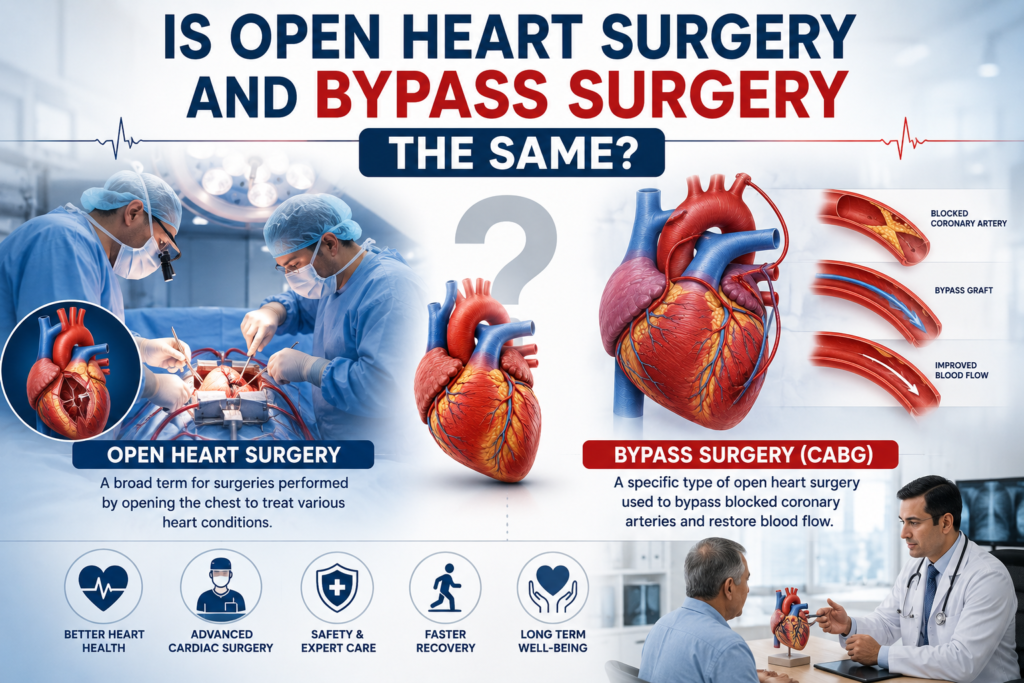
What Is CABG? Coronary Artery Bypass Grafting Explained Simply

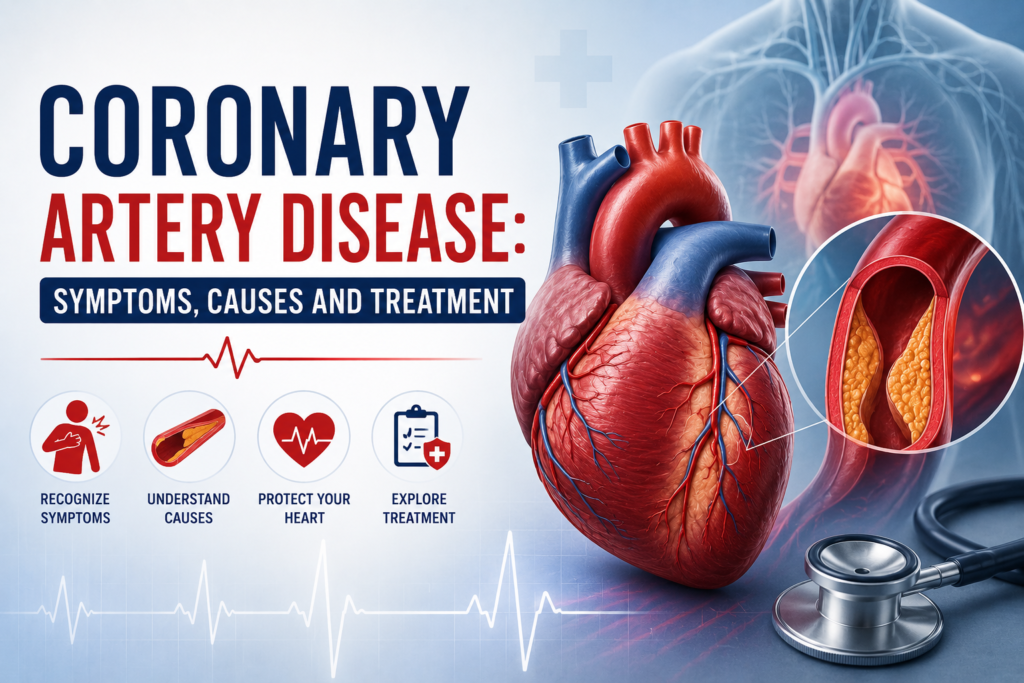
CABG — pronounced “cabbage” — stands for Coronary Artery Bypass Grafting, and it is the most commonly performed open-heart surgery in the world. If your cardiologist has mentioned CABG after your angiography, this article explains exactly what it means, how it differs from stenting, and what to expect at every stage. Dr. Ved Prakash, Director of CTVS at Yatharth Super Speciality Hospitals, Greater Noida, has performed CABG across Medanta, Narayana, and Sarvodaya with 8+ years of experience in coronary bypass surgery. What Is CABG — The Simple Explanation CABG is a surgery that bypasses a blocked coronary artery using a healthy blood vessel taken from elsewhere in your body. The blocked section of the artery is not removed or opened — instead, a new passage is created around it so blood can reach the heart muscle that was being deprived. Your coronary arteries sit on the surface of your heart and supply it with oxygen-rich blood. When plaque builds up inside them over years, they narrow. When they narrow enough to restrict blood flow significantly — or block it completely — the heart muscle is starved. This causes angina (chest pain), heart attacks, and eventually heart failure. CABG restores that blood flow permanently and reliably — which is why it remains the gold standard treatment for severe multi-vessel coronary artery disease. CABG vs Angioplasty — What Is the Difference? Feature CABG (Bypass Surgery) Angioplasty (Stenting) How it works New graft vessel bypasses the blockage Balloon opens the artery; stent holds it open Incision needed? Yes — chest incision No — catheter through groin or wrist Recovery time 6–12 weeks 2–5 days Best for Multiple blockages, diabetes, left main disease Single or simple blockages Durability LIMA graft lasts 15–20+ years Stents may re-block in 5–10 years Preferred in diabetes? Yes — strongly preferred Higher re-blockage rate in diabetics The choice between CABG and angioplasty is made based on your angiogram, your overall health, and whether you have diabetes. It is not a one-size-fits-all decision. For more detail on how this choice is made, read our full guide on what is bypass surgery. What Vessels Are Used as CABG Grafts? The graft vessel is the new “bypass road.” Three vessels are most commonly used: Left Internal Mammary Artery (LIMA) — taken from the inner chest wall. This is the best graft available. It remains open in over 90% of patients at 10 years and is used in virtually every CABG operation. It connects naturally to the most important coronary artery (LAD). Saphenous Vein — from the inner leg. Commonly used as the second or third graft. Lasts 10–15 years on average. Leg usually heals within 2 weeks with no functional limitation. Radial Artery — from the forearm. An excellent arterial graft with durability close to the LIMA. Used when total arterial revascularisation is planned. Using two arterial grafts (LIMA + radial artery) — called bilateral arterial grafting — gives the best long-term results and is increasingly preferred for younger patients. On-Pump vs Off-Pump CABG — Which Is Better? This is one of the most common questions patients ask before surgery. On-pump CABG: A heart-lung machine takes over while the heart is stopped. The surgeon operates on a still, bloodless field — which allows the most precise stitching. Standard approach for complex cases. Off-pump CABG (beating heart surgery): The bypass grafts are attached while the heart continues to beat. No heart-lung machine is used. Reduces the risk of kidney problems in patients with pre-existing kidney disease. The choice is made by Dr. Ved Prakash based on your specific anatomy, heart function, and comorbidities. Both techniques deliver excellent outcomes in experienced hands. What Does CABG Surgery Involve — Step by Step? General anaesthesia — you are fully asleep throughout Chest incision — the breastbone (sternum) is divided to access the heart Graft harvesting — the LIMA and/or vein graft is prepared Bypass grafts attached — one end to the aorta, the other to the coronary artery beyond the blockage Chest closed — sternum is wired back together; skin closed with sutures Total operative time: 3–5 hours What Happens After CABG Surgery? Cardiac ICU: 24–48 hours for close monitoring and breathing tube removal Ward stay: 5–7 days — walking, eating, and recovering Home discharge: With medications, wound care instructions, and follow-up dates Full recovery: 6–12 weeks depending on age and overall health Frequently Asked Questions About CABG What does CABG stand for? CABG stands for Coronary Artery Bypass Grafting. It is the medical term for bypass surgery — an operation that creates a new route for blood flow around a blocked coronary artery. Is CABG a major operation? Yes. CABG is major open-heart surgery requiring general anaesthesia and a hospital stay of 7–10 days. However, it is one of the most studied and standardised operations in cardiac surgery, with consistently high success rates at experienced centres. How many bypass grafts can be done in one operation? Between one and five bypasses can be performed in a single CABG operation, depending on how many coronary arteries are blocked. Triple bypass (three grafts) is the most commonly performed. Is CABG done under local or general anaesthesia? Always under general anaesthesia. You are completely unconscious for the entire operation and wake up in the cardiac ICU after it is completed. Does CABG cure heart disease permanently? CABG restores blood flow reliably and durably — the LIMA graft lasts 15–20+ years in most patients. It does not stop the underlying process of atherosclerosis. Medications, lifestyle changes, and follow-up remain essential after surgery to protect the grafts and the rest of the heart. Considering CABG? Talk to Dr. Ved Prakash First. If CABG has been recommended after your angiography, consult Dr. Ved Prakash for bypass surgery in Delhi NCR at Yatharth Super Speciality Hospitals, Greater Noida. Share your angiogram report via WhatsApp for an online pre-consultation before your visit. Dr. Ved Prakash | Director CTVS — Yatharth Super Speciality Hospitals, Greater Noida 📞 +91-9355255106  | Book Appointment →

Cardiac Surgery

What Is Bypass Surgery? A Complete Patient Guide

Bypass surgery is a heart operation that creates a new path for blood to flow around a blocked coronary artery — restoring blood supply to the heart muscle that was being starved of oxygen. If you or a family member has been told that bypass surgery may be needed, this guide explains exactly what it involves, who needs it, and what recovery looks like — in plain, honest language. Dr. Ved Prakash, Director of Cardiothoracic and Vascular Surgery at Yatharth Super Speciality Hospitals, Greater Noida, has performed hundreds of bypass surgeries across Medanta, Narayana, and Sarvodaya — and answers the most important patient questions here. What Is Bypass Surgery — In Simple Terms? Your heart has arteries on its surface called coronary arteries. These carry the blood your heart muscle needs to keep beating. When fatty deposits (plaque) build up inside these arteries over years, they narrow — and blood flow slows down or stops. Bypass surgery — medically called Coronary Artery Bypass Grafting (CABG) — takes a healthy blood vessel from another part of your body and attaches it to create a detour around the blocked section. Blood can now flow freely to the heart again, bypassing the blockage entirely. Think of it like building a new road around a permanently blocked stretch of highway. Who Needs Bypass Surgery? Not everyone with heart blockages needs bypass surgery. Your cardiologist or cardiac surgeon will recommend it when: Multiple coronary arteries are blocked — particularly the left main artery or three-vessel disease Angioplasty (stenting) is not feasible — due to the location, length, or complexity of the blockages You have diabetes with multiple blockages — studies consistently show bypass gives better long-term results than stenting in diabetic patients Your heart muscle is weakened — low ejection fraction with suitable coronary anatomy A previous angioplasty has failed — the stent has re-blocked (restenosis) You have persistent chest pain despite maximum medication The decision between bypass surgery and angioplasty is never made on a single criterion. Dr. Ved Prakash reviews every angiogram individually — the pattern of blockages, your overall health, age, and heart function all factor into the recommendation. How Is Bypass Surgery Performed? The operation is performed under general anaesthesia and typically takes 3 to 5 hours. Here is what happens: Step 1 — Harvesting the Graft A healthy blood vessel is taken from your body to use as the bypass graft. The most commonly used vessels are the Left Internal Mammary Artery (LIMA) from the chest wall — which gives the best long-term results, lasting 15–20 years or more — and the saphenous vein from the leg. Step 2 — On-Pump or Off-Pump Surgery In traditional on-pump CABG, a heart-lung machine takes over your heart’s function while the surgeon operates on a still heart. In off-pump CABG (beating heart surgery), the bypass is performed while the heart continues to beat — no heart-lung machine is used. The choice depends on your specific anatomy and overall health. Step 3 — Attaching the Bypass Grafts The graft vessel is stitched to the coronary artery above and below the blockage. Blood now flows through this new channel, bypassing the blocked section completely. Step 4 — Closure and Recovery The chest is closed and you are moved to the cardiac ICU for close monitoring for the next 24–48 hours. Types of Bypass Surgery Type What It Means Best For Single bypass One artery bypassed One significant blockage Double bypass Two arteries bypassed Two-vessel disease Triple bypass Three arteries bypassed Three-vessel disease — most common Quadruple bypass Four arteries bypassed Extensive coronary disease Off-pump CABG Beating heart surgery Patients with kidney or lung concerns What Are the Warning Signs That You May Need Bypass Surgery? See a cardiac surgeon immediately if you experience: Chest pain or tightness on exertion that is relieved by rest Breathlessness with mild activity or climbing stairs Pain radiating to the left arm, jaw, or shoulder Unexplained fatigue and reduced ability to do everyday tasks Angiogram showing significant blockages in one or more coronary arteries If an angiogram has already been done and surgery has been recommended, consider getting a cardiac second opinion in Delhi NCR before proceeding — not to delay, but to ensure you are fully informed. What Is Recovery After Bypass Surgery Like? Recovery happens in clear stages: Days 1–2: In the cardiac ICU. Breathing tube removed, usually within 6–8 hours after surgery. Days 3–7: Moved to the ward. Sitting up, walking short distances, eating normally. Week 2–4: Discharged home. No driving, no lifting, light walking daily. Week 6: Chest bone (sternum) has healed. Most daily activities resume. Week 8–12: Cardiac rehabilitation begins. Return to work for most desk-job patients. Full recovery typically takes 6 to 12 weeks. Most patients feel significantly better than before surgery within 4 to 6 weeks — the relief of restored blood flow to the heart is usually dramatic. How Long Does a Bypass Graft Last? This is the most important long-term question. The LIMA arterial graft has been shown to remain open in more than 90% of patients at 10 years and performs well beyond 15–20 years in most cases. Vein grafts (from the leg) last 10–15 years on average. Lifestyle choices after surgery — stopping smoking, controlling cholesterol and blood pressure, staying active — have a significant effect on graft longevity. Is Bypass Surgery Safe? Elective bypass surgery at an experienced centre carries a mortality risk of less than 1–2% in otherwise healthy patients. Emergency surgery or surgery in patients with very poor heart function carries higher risk — which is discussed openly with every patient before the operation. Dr. Ved Prakash discusses the specific risk profile for each patient individually during consultation. Frequently Asked Questions — Bypass Surgery What is bypass surgery and how is it different from angioplasty? Bypass surgery creates a permanent new route for blood flow using a graft vessel. Angioplasty opens the blocked artery using a balloon and often a stent. Bypass is generally preferred

Scroll to Top