
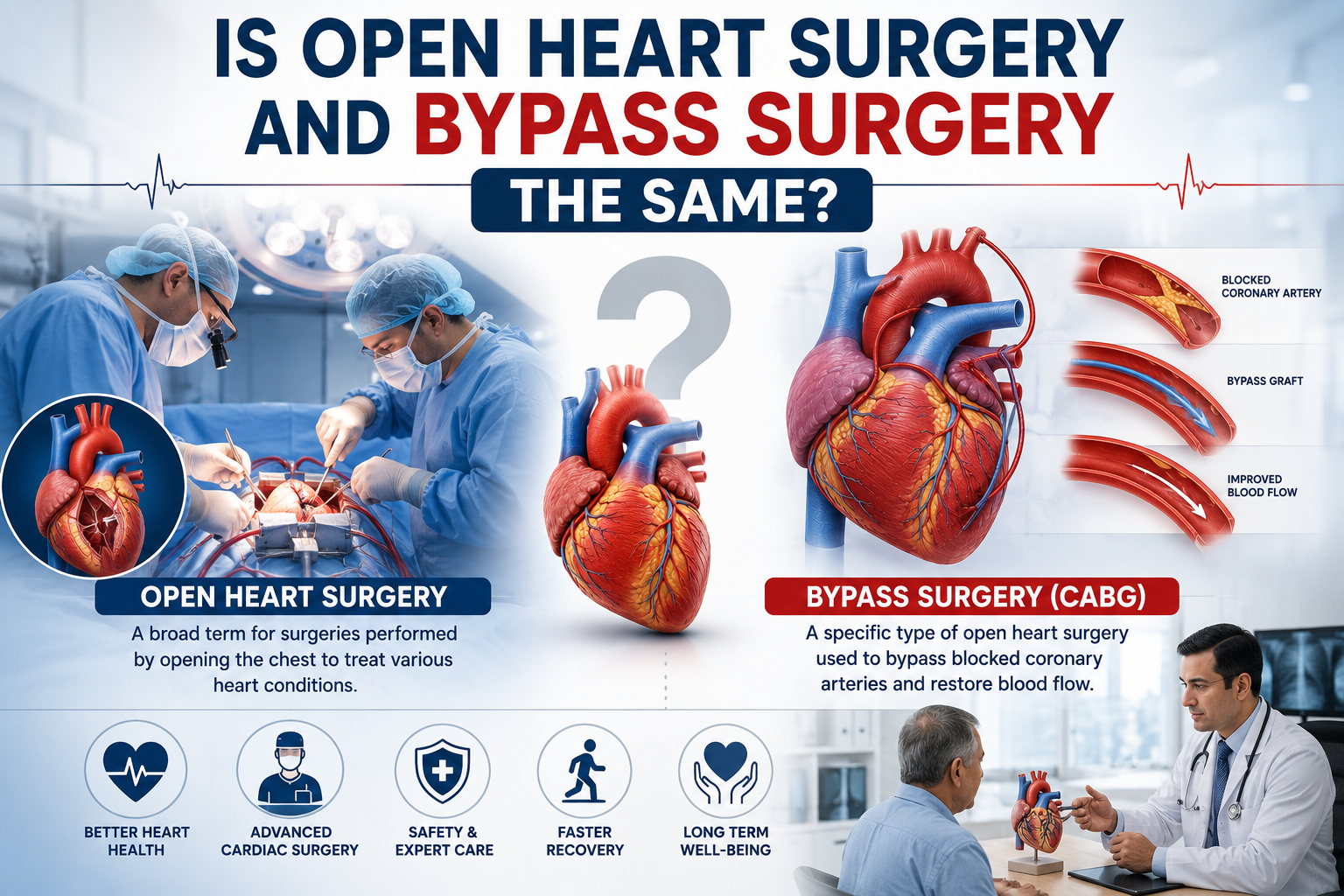
Many people believe that open heart surgery and bypass surgery are exactly the same. While these terms are often used interchangeably, they do not mean the same thing. Understanding the difference is important because it helps patients make informed decisions about their treatment and reduces unnecessary fear about cardiac surgery.
Simply put, open heart surgery is a broad category of operations performed by opening the chest to access the heart. Bypass surgery, also known as Coronary Artery Bypass Grafting (CABG), is one specific type of open heart surgery used to restore blood flow when the coronary arteries become blocked.
Knowing this distinction can help patients better understand their diagnosis, treatment options, and recovery process. It also allows them to communicate more confidently with their healthcare provider and participate actively in decisions related to their heart health.
Dr. Ved Prakash, an experienced cardiac specialist, believes that patient education plays a vital role in reducing anxiety before surgery. When patients clearly understand the purpose of different procedures, they are more prepared both mentally and physically for treatment.
What Is Open Heart Surgery?
Open heart surgery refers to any operation in which the surgeon opens the chest through the breastbone (sternum) to reach the heart. In many cases, a heart-lung machine temporarily takes over the function of the heart and lungs while the surgeon performs the procedure safely.
It is important to understand that open heart surgery is not a single operation. Instead, it includes many different procedures that treat various heart conditions, depending on the patient’s medical needs.
Some common conditions treated through open heart surgery include:
- Coronary artery disease
- Heart valve disorders
- Congenital heart defects
- Aortic aneurysms
- Certain heart tumors
- Advanced heart failure requiring surgical treatment
Modern cardiac surgery has become much safer because of technological advancements, improved surgical techniques, and better intensive care. Many patients recover successfully and return to their normal activities after surgery.
What Is Bypass Surgery?
Bypass surgery, medically called Coronary Artery Bypass Grafting (CABG), is performed when one or more coronary arteries become narrowed or blocked by fatty deposits called plaque. These blockages reduce blood flow to the heart muscle and increase the risk of a heart attack.
During bypass surgery, the surgeon takes a healthy blood vessel from the leg, chest, or arm and creates a new pathway around the blocked artery. This allows oxygen-rich blood to reach the heart muscle more effectively.
The main goals of bypass surgery are to:
- Improve blood circulation to the heart
- Relieve chest pain (angina)
- Reduce the risk of a future heart attack
- Improve quality of life
- Increase long-term heart health
- Help patients return to daily activities with fewer symptoms
The Main Difference Between Open Heart Surgery and Bypass Surgery
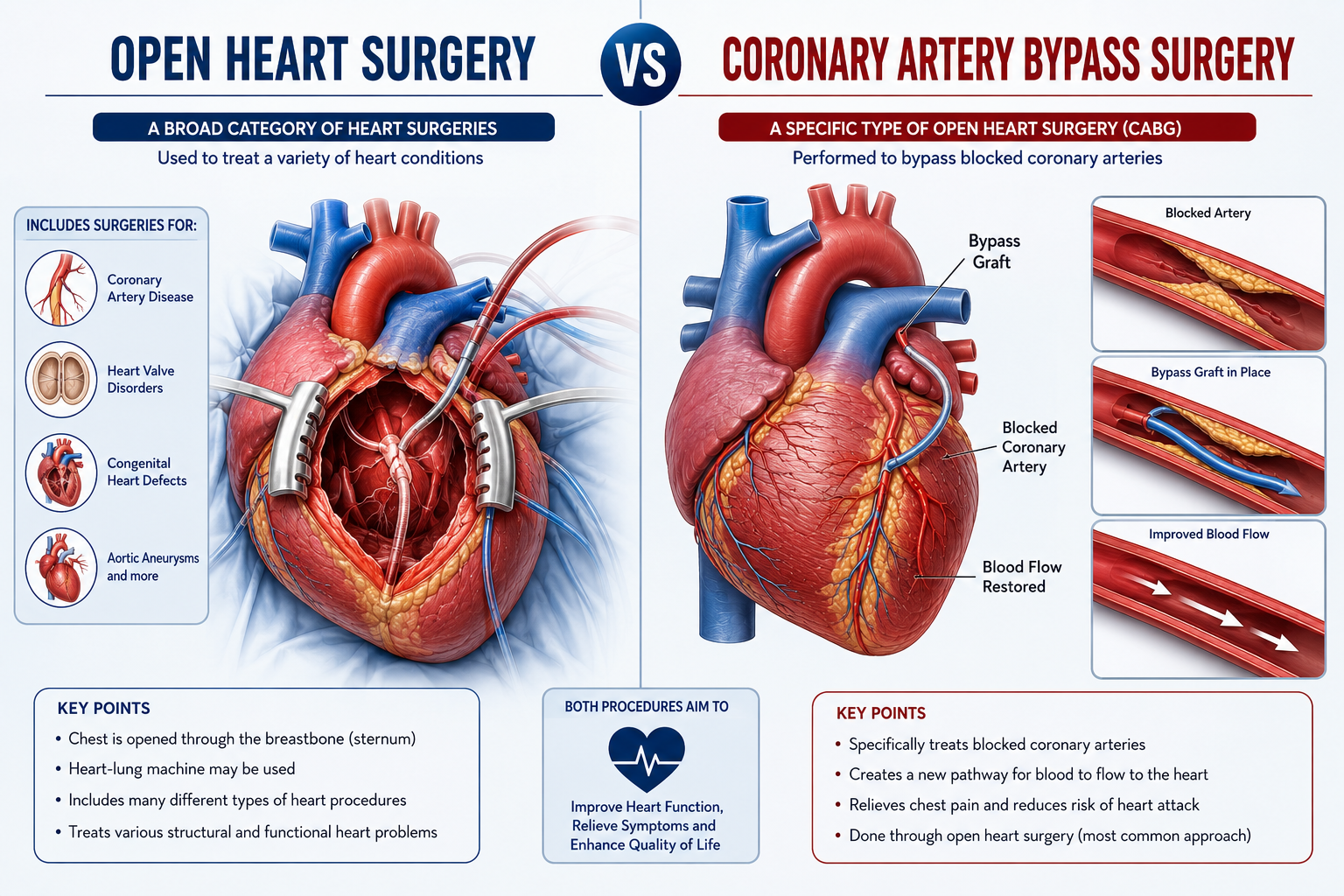
The easiest way to understand the difference is that open heart surgery is a general term, while bypass surgery is one specific type of cardiac surgery performed to treat blocked coronary arteries.
Think of it this way: every bypass surgery performed through opening the chest is an open heart surgery, but not every open heart surgery is a bypass operation. Many other procedures, such as valve repair or congenital heart defect correction, also fall under the category of open heart surgery.
This distinction helps patients better understand why doctors recommend different surgical procedures based on the underlying heart condition rather than using one treatment for every problem.
When Is Open Heart Surgery Recommended?
Doctors recommend open heart surgery when a heart condition cannot be treated effectively with medicines, lifestyle changes, or minimally invasive procedures. The decision is based on detailed tests such as ECG, echocardiography, coronary angiography, CT scans, and blood investigations.
Some patients require surgery immediately, while others may be monitored until the condition becomes severe enough to need an operation. Early diagnosis often leads to better treatment outcomes and improved heart health.
Common reasons for open heart surgery include:
- Severe coronary artery disease
- Damaged or leaking heart valves
- Congenital heart defects
- Aortic aneurysms
- Advanced heart failure
- Certain heart tumors
- Complex heart conditions requiring multiple repairs
Not every patient with heart disease needs surgery. Your cardiologist carefully evaluates your overall health before recommending the most suitable cardiac surgery.
When Is Bypass Surgery Needed?
Bypass surgery is recommended when the coronary arteries become severely narrowed or blocked due to plaque buildup. These blockages reduce oxygen-rich blood flow to the heart muscle, causing chest pain and increasing the risk of a heart attack.
Doctors may advise bypass surgery if angiography shows multiple blocked arteries or if angioplasty and stent placement are not suitable. In many cases, CABG provides better long-term results for patients with complex coronary artery disease.
The procedure creates a new route for blood to flow around blocked arteries, helping the heart receive enough oxygen. This reduces symptoms, improves physical activity, and supports long-term heart health.
Can Bypass Surgery Be Performed Without Open Heart Surgery?
With advancements in cardiac surgery, some patients may undergo minimally invasive or off-pump bypass surgery. In these procedures, surgeons use smaller incisions or perform the operation without stopping the heart.
However, many bypass surgeries are still performed as traditional open heart surgery, especially when several arteries need treatment or when the patient’s condition is more complex. The choice depends on the patient’s anatomy, overall health, and the surgeon’s assessment.
Modern surgical techniques have made both traditional and minimally invasive procedures safer, allowing patients to recover faster with fewer complications.
Risks of Open Heart Surgery and Bypass Surgery
Like all major operations, both open heart surgery and bypass surgery carry some risks. Fortunately, advances in medical technology, experienced surgeons, and better post-operative care have significantly improved patient safety.
The level of risk varies depending on age, overall health, the severity of heart disease, and any existing medical conditions such as diabetes or kidney disease.
Possible risks may include:
- Bleeding during or after surgery
- Infection at the incision site
- Blood clots
- Stroke
- Irregular heartbeat
- Kidney or lung complications
- Temporary memory or concentration problems
- Reactions to anesthesia
Although these risks may sound concerning, the benefits of timely cardiac surgery usually outweigh the risks when recommended by an experienced specialist.
Benefits of Bypass Surgery
For patients with severe coronary artery disease, bypass surgery offers several long-term advantages. Restoring healthy blood flow to the heart can significantly improve both quality of life and overall heart health.
Some major benefits include:
- Better blood supply to the heart muscle
- Reduced chest pain (angina)
- Lower risk of future heart attack
- Improved ability to perform daily activities
- Better exercise tolerance
- Enhanced quality of life
- Long-lasting relief for many patients
Dr. Ved Prakash carefully evaluates every patient’s condition before recommending cardiac surgery. His patient-focused approach helps ensure that each individual receives the most appropriate treatment based on their specific heart condition and overall health.

Recovery After Open Heart Surgery and Bypass Surgery
Recovery after open heart surgery or bypass surgery varies from one patient to another. Factors such as age, overall health, the type of procedure performed, and how well patients follow medical advice all influence the healing process. Most patients remain in the hospital for several days under close observation before returning home.
During recovery, doctors encourage light walking, breathing exercises, and participation in cardiac rehabilitation programs. These supervised programs improve strength, restore confidence, and help patients return safely to their normal routine while protecting long-term heart health.
Tips for a Faster and Healthier Recovery
Following healthy habits after cardiac surgery reduces complications and supports better healing. Patients should carefully follow their doctor’s instructions throughout the recovery period.
Some important recovery tips include:
- Take all prescribed medicines on time.
- Attend every follow-up appointment.
- Eat a heart-healthy diet rich in fruits and vegetables.
- Reduce salt, sugar, and saturated fats.
- Avoid smoking and tobacco completely.
- Walk regularly as advised by your doctor.
- Maintain a healthy body weight.
- Control blood pressure, cholesterol, and diabetes.
- Get enough sleep and manage stress effectively.
These lifestyle changes improve overall heart health and lower the chances of future heart problems.
Can Heart Disease Be Prevented?
Although not every heart condition can be prevented, many cases of coronary artery disease can be avoided through healthy lifestyle choices. Prevention is always better than treatment, especially when it comes to protecting your heart.
Simple habits such as regular exercise, eating nutritious foods, avoiding tobacco, limiting alcohol, maintaining a healthy weight, and managing stress significantly reduce the risk of developing heart disease. Routine health check-ups also help detect problems early, before they become serious.
People with diabetes, high blood pressure, or a family history of heart disease should undergo regular cardiac evaluations. Early diagnosis allows timely treatment and may prevent the need for major cardiac surgery.
When Should You Consult a Cardiac Specialist?
Seek medical attention immediately if you experience symptoms such as persistent chest pain, severe breathlessness, pain spreading to the arm or jaw, unexplained fatigue, dizziness, fainting, or an irregular heartbeat. These symptoms should never be ignored because they may indicate serious heart disease.
Early consultation allows doctors to identify the exact problem using advanced diagnostic tests and recommend the most effective treatment. Dr. Ved Prakash emphasizes that timely evaluation can prevent complications and improve the success of both medical treatment and cardiac surgery.
Conclusion
The simple answer to the question, “Is open heart surgery and bypass surgery the same?”, is No. Open heart surgery is a broad term that includes many different operations performed on the heart, while bypass surgery (CABG) is one specific procedure used to restore blood flow in blocked coronary arteries.
Understanding this difference helps patients make informed decisions and reduces unnecessary anxiety before treatment. Modern cardiac surgery has become safer, more precise, and highly successful due to advanced surgical techniques, improved technology, and experienced cardiac specialists.
Whether you need valve repair, bypass surgery, or another type of open heart surgery, early diagnosis and expert care are essential for the best possible outcome. Following a healthy lifestyle after treatment further improves recovery and supports lifelong heart health.
If you or a loved one has been advised to undergo heart surgery, consult an experienced specialist like Dr. Ved Prakash for a detailed evaluation, personalized treatment plan, and compassionate care throughout your journey toward better heart health.