
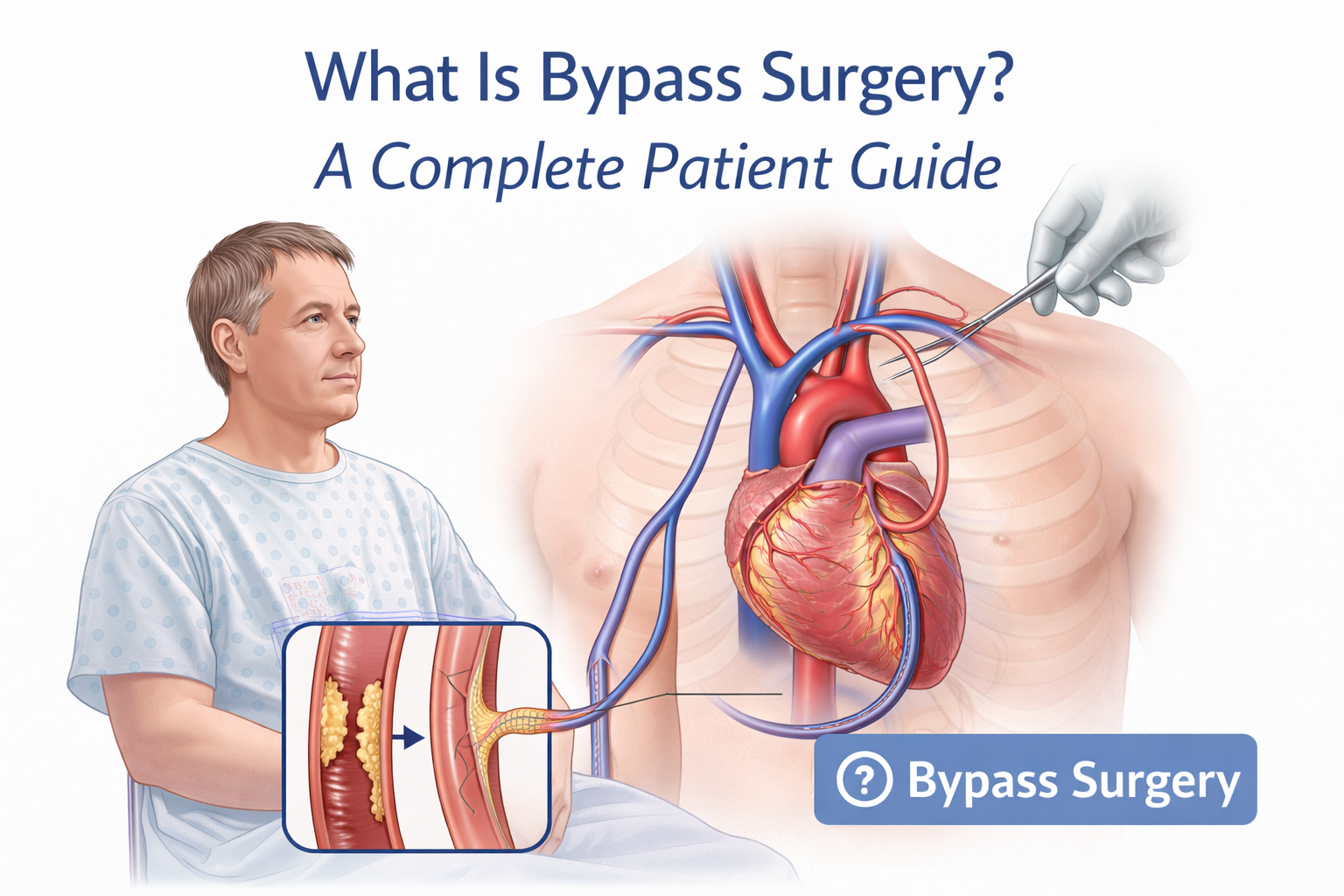
 Bypass surgery is a heart operation that creates a new path for blood to flow around a blocked coronary artery — restoring blood supply to the heart muscle that was being starved of oxygen. If you or a family member has been told that bypass surgery may be needed, this guide explains exactly what it involves, who needs it, and what recovery looks like — in plain, honest language.
Dr. Ved Prakash, Director of Cardiothoracic and Vascular Surgery at Yatharth Super Speciality Hospitals, Greater Noida, has performed hundreds of bypass surgeries across Medanta, Narayana, and Sarvodaya — and answers the most important patient questions here.
What Is Bypass Surgery — In Simple Terms?
Your heart has arteries on its surface called coronary arteries. These carry the blood your heart muscle needs to keep beating. When fatty deposits (plaque) build up inside these arteries over years, they narrow — and blood flow slows down or stops.
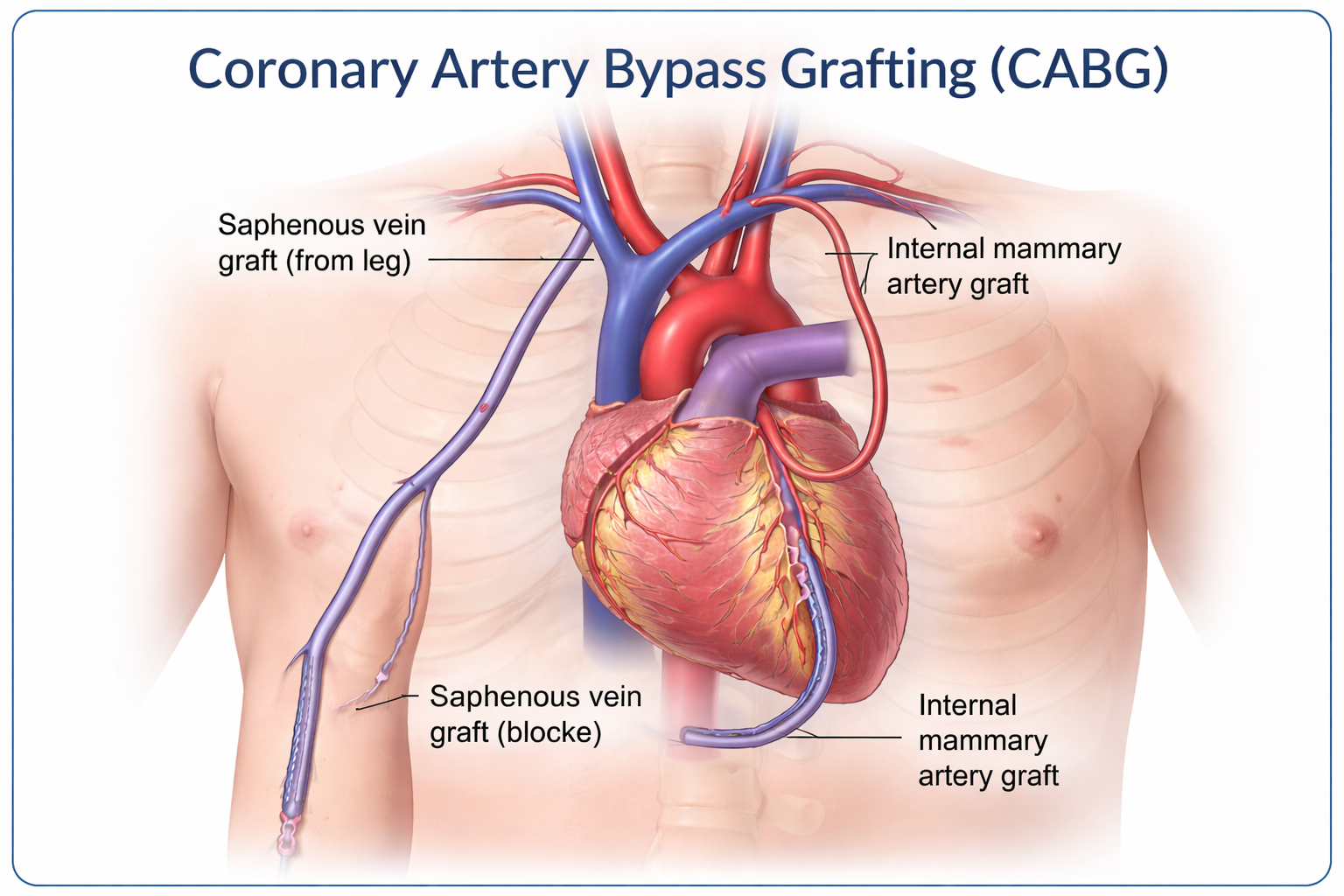
Bypass surgery — medically called Coronary Artery Bypass Grafting (CABG) — takes a healthy blood vessel from another part of your body and attaches it to create a detour around the blocked section. Blood can now flow freely to the heart again, bypassing the blockage entirely.
Think of it like building a new road around a permanently blocked stretch of highway.
Who Needs Bypass Surgery?
Not everyone with heart blockages needs bypass surgery. Your cardiologist or cardiac surgeon will recommend it when:
- Multiple coronary arteries are blocked — particularly the left main artery or three-vessel disease
- Angioplasty (stenting) is not feasible — due to the location, length, or complexity of the blockages
- You have diabetes with multiple blockages — studies consistently show bypass gives better long-term results than stenting in diabetic patients
- Your heart muscle is weakened — low ejection fraction with suitable coronary anatomy
- A previous angioplasty has failed — the stent has re-blocked (restenosis)
- You have persistent chest pain despite maximum medication
The decision between bypass surgery and angioplasty is never made on a single criterion. Dr. Ved Prakash reviews every angiogram individually — the pattern of blockages, your overall health, age, and heart function all factor into the recommendation.
How Is Bypass Surgery Performed?
The operation is performed under general anaesthesia and typically takes 3 to 5 hours. Here is what happens:
Step 1 — Harvesting the Graft
A healthy blood vessel is taken from your body to use as the bypass graft. The most commonly used vessels are the Left Internal Mammary Artery (LIMA) from the chest wall — which gives the best long-term results, lasting 15–20 years or more — and the saphenous vein from the leg.
Step 2 — On-Pump or Off-Pump Surgery
In traditional on-pump CABG, a heart-lung machine takes over your heart’s function while the surgeon operates on a still heart. In off-pump CABG (beating heart surgery), the bypass is performed while the heart continues to beat — no heart-lung machine is used. The choice depends on your specific anatomy and overall health.
Step 3 — Attaching the Bypass Grafts
The graft vessel is stitched to the coronary artery above and below the blockage. Blood now flows through this new channel, bypassing the blocked section completely.
Step 4 — Closure and Recovery
The chest is closed and you are moved to the cardiac ICU for close monitoring for the next 24–48 hours.
Types of Bypass Surgery
| Type | What It Means | Best For |
| Single bypass | One artery bypassed | One significant blockage |
| Double bypass | Two arteries bypassed | Two-vessel disease |
| Triple bypass | Three arteries bypassed | Three-vessel disease — most common |
| Quadruple bypass | Four arteries bypassed | Extensive coronary disease |
| Off-pump CABG | Beating heart surgery | Patients with kidney or lung concerns |
What Are the Warning Signs That You May Need Bypass Surgery?
See a cardiac surgeon immediately if you experience:
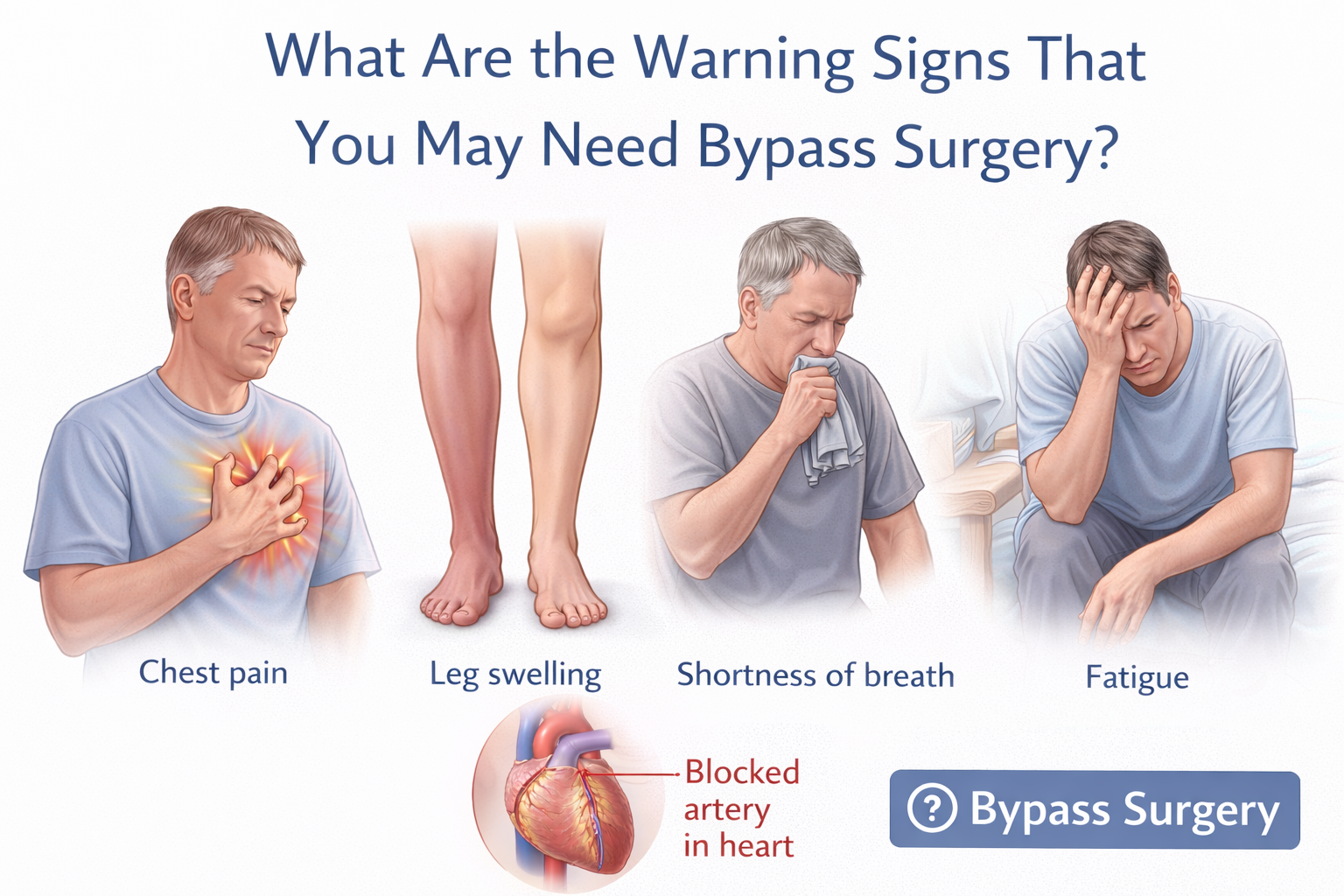
- Chest pain or tightness on exertion that is relieved by rest
- Breathlessness with mild activity or climbing stairs
- Pain radiating to the left arm, jaw, or shoulder
- Unexplained fatigue and reduced ability to do everyday tasks
- Angiogram showing significant blockages in one or more coronary arteries
If an angiogram has already been done and surgery has been recommended, consider getting a cardiac second opinion in Delhi NCR before proceeding — not to delay, but to ensure you are fully informed.
What Is Recovery After Bypass Surgery Like?
Recovery happens in clear stages:
- Days 1–2: In the cardiac ICU. Breathing tube removed, usually within 6–8 hours after surgery.
- Days 3–7: Moved to the ward. Sitting up, walking short distances, eating normally.
- Week 2–4: Discharged home. No driving, no lifting, light walking daily.
- Week 6: Chest bone (sternum) has healed. Most daily activities resume.
- Week 8–12: Cardiac rehabilitation begins. Return to work for most desk-job patients.
Full recovery typically takes 6 to 12 weeks. Most patients feel significantly better than before surgery within 4 to 6 weeks — the relief of restored blood flow to the heart is usually dramatic.
How Long Does a Bypass Graft Last?
This is the most important long-term question. The LIMA arterial graft has been shown to remain open in more than 90% of patients at 10 years and performs well beyond 15–20 years in most cases. Vein grafts (from the leg) last 10–15 years on average. Lifestyle choices after surgery — stopping smoking, controlling cholesterol and blood pressure, staying active — have a significant effect on graft longevity.
Is Bypass Surgery Safe?
Elective bypass surgery at an experienced centre carries a mortality risk of less than 1–2% in otherwise healthy patients. Emergency surgery or surgery in patients with very poor heart function carries higher risk — which is discussed openly with every patient before the operation. Dr. Ved Prakash discusses the specific risk profile for each patient individually during consultation.
Frequently Asked Questions — Bypass Surgery
What is bypass surgery and how is it different from angioplasty?
Bypass surgery creates a permanent new route for blood flow using a graft vessel. Angioplasty opens the blocked artery using a balloon and often a stent. Bypass is generally preferred for multiple blockages, diabetes, or when the left main coronary artery is involved.
Is bypass surgery painful?
The surgery is performed under general anaesthesia — you are completely asleep. Post-operative pain is managed with medications in the ICU and ward. The main source of discomfort is the chest incision, which settles significantly within 2–3 weeks.
How long does bypass surgery take?
Typically 3 to 5 hours depending on the number of bypasses needed and the surgical technique.
Can I live a normal life after bypass surgery?
Yes. The majority of bypass surgery patients return to full, active lives within 3 months. Most experience a significant improvement in quality of life — less chest pain, better exercise capacity, and reduced medication burden.
What is the success rate of bypass surgery in Delhi NCR?
For elective CABG at an experienced cardiac centre, success rates exceed 98–99%. Dr. Ved Prakash has performed bypass surgery across Medanta, Narayana, and Yatharth Hospital with consistently strong outcomes.
Talk to Dr. Ved Prakash Before You Decide
If bypass surgery has been recommended — or if you want to understand whether it is the right option for your specific blockages — book a consultation for bypass surgery in Delhi NCR with Dr. Ved Prakash at Yatharth Super Speciality Hospitals, Greater Noida.
Online consultation is also available. Share your angiography report via WhatsApp at +91-9355255106 and Dr. Ved Prakash will review it before the call.
Dr. Ved Prakash | Director, CTVS — Yatharth Super Speciality Hospitals, Greater Noida
📞 +91-9355255106 |
📧 drvedprakash@gmail.com |
Book Appointment →
Pingback: What Is CABG? Coronary Artery Bypass Grafting Explained Simply - Dr Ved Prakash
Pingback: Life After Bypass Surgery — What to Expect Week by Week - Dr Ved Prakash