
Sleep optimization is a fundamental pillar of modern cardiovascular medicine that often goes overlooked by the average patient. In our hyper-connected, fast-paced world, we frequently prioritize professional productivity over necessary nightly rest. However, your cardiovascular system pays a steep, cumulative price for this persistent imbalance. Current scientific research confirms that consistent, high-quality rest is just as important as a heart-healthy diet and regular physical exercise. By mastering the art of sleep optimization, you provide your weary heart with the critical nightly downtime it requires to mend, regenerate, and thrive. For those already managing heart conditions, sleep optimization is not merely a lifestyle preference; it is a clinical necessity for long-term recovery and arterial protection.
The human heart is a tireless, high-performance muscle, beating over 100,000 times every single day. Because it never truly stops to rest, it relies on specific, rhythmic windows of deep slumber to perform essential maintenance. During the deep, non-REM stages of rest, your blood pressure naturally and safely drops. This physiological phenomenon, known as “nocturnal dipping,” is a vital safety mechanism for your vascular walls.
Without intentional sleep optimization, this natural dipping process is frequently disrupted by stress, poor habits, or underlying medical conditions. When your blood pressure fails to drop at night, it forces your heart to work harder throughout the duration of your slumber, accelerating wear and tear on your delicate arteries. Furthermore, sleep optimization is essential for regulating the complex inflammatory markers that contribute to the development of atherosclerosis. By prioritizing sleep optimization, you are not just sleeping; you are actively engaging in essential cardiovascular repair that keeps your circulatory system resilient.
How exactly does the human body heal itself during the quiet hours of the night? The process involves a highly complex and sensitive interplay of hormones, nervous system regulation, and cellular metabolic pathways. When you commit to a routine of effective sleep optimization, your sympathetic nervous system—often called the “fight or flight” mode—successfully calms down. This shift to parasympathetic dominance is the key to true systemic recovery.
In stark contrast, chronic sleep debt keeps your nervous system in a constant state of sympathetic dominance. This leads to perpetually elevated levels of cortisol and adrenaline, which can stiffen your arteries and trigger dangerous, irregular heart rhythms. Effective sleep optimization acts as a biological “reset button” that balances these systems, promoting cardiac recovery and protecting against long-term vascular aging. When you ignore sleep optimization, you essentially deny your cardiovascular system the opportunity to neutralize the oxidative stress accumulated during your waking hours.
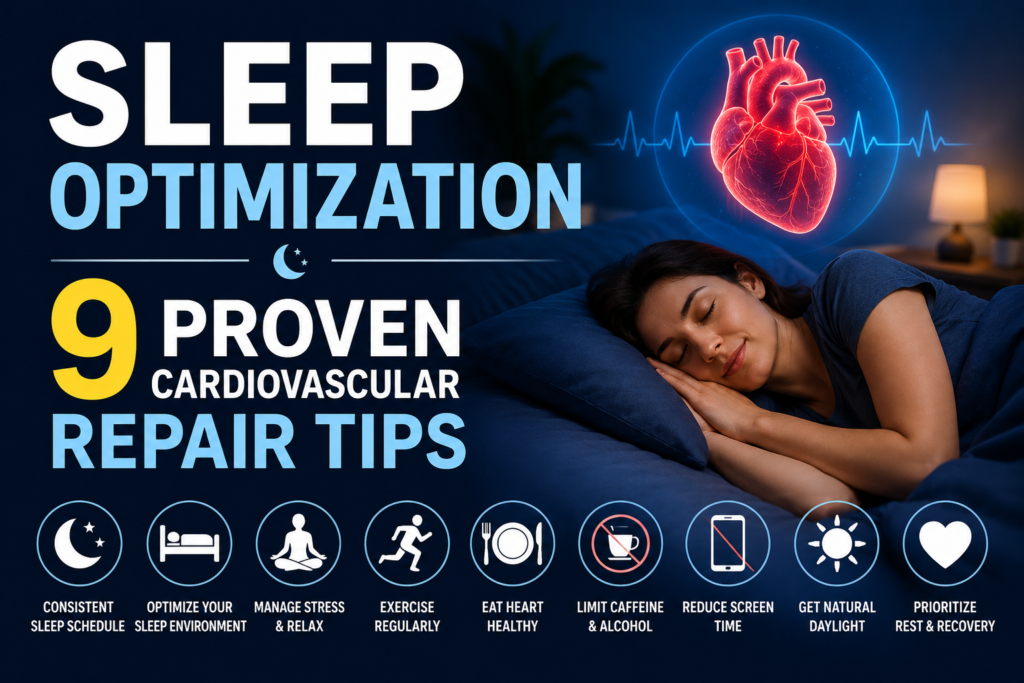
Implementing a robust strategy for sleep optimization does not necessarily require a medical degree or expensive equipment. These nine actionable, scientifically backed steps will transform your nightly recovery and significantly improve your cardiovascular health.
1. Maintain a Consistent Circadian Rhythm
Your body thrives on predictability. Going to bed and waking up at the exact same time—even on weekends—aligns your internal biological clock perfectly. This consistency is the absolute foundation of sleep optimization, as it signals your brain precisely when to trigger the release of sleep-inducing melatonin.
2. Control Your Bedroom Environment
Your bedroom should be a sanctuary for healing. Keep the temperature cool, ideally between 60°F and 67°F, to encourage deep rest. A dark, quiet room is absolutely essential for sleep optimization, as it minimizes external environmental disturbances that pull you out of your deep, healing sleep cycles.
3. Eliminate Digital Distractions
Modern blue light from smartphones and computers inhibits your natural melatonin production. To support your sleep optimization efforts, turn off all electronic devices at least one hour before your intended bedtime. The artificial glow from your phone acts as a direct, chemical barrier to the deep, restorative rest that your heart desperately needs.
4. Optimize Your Nutritional Timing
Digestion is a surprisingly energy-intensive process that can keep your heart rate elevated while you try to rest. Avoid consuming large or heavy meals within three hours of your bedtime. By aligning your dinner schedule with your core goals for sleep optimization, you ensure your body spends the night in repair mode rather than processing food.
5. Strategize Your Daily Exercise
Physical activity is a cornerstone of cardiovascular health. However, engaging in intense evening activity can raise your core body temperature and keep your heart rate too high for rest. For better sleep optimization, try to finish your most vigorous workouts at least four hours before you plan to retire for the night.
6. Monitor Your Caffeine Intake
Caffeine remains in your bloodstream for many hours after consumption. Even a mid-afternoon cup of coffee can fragment your rest quality later that night. A core rule of sleep optimization is to cut off all caffeine intake by midday to ensure your brain and heart can transition to a restful state effectively.
7. Practice Mindfulness for Stress Reduction
Anxious thoughts and racing minds are major enemies of quality rest. Before bed, dedicate fifteen minutes to deep, controlled breathing or gentle stretching. This helps lower your cortisol levels, which is a key component of successful sleep optimization and long-term arterial health.
8. Invest in Quality Bedding
You spend roughly one-third of your entire life in bed. If your mattress is sagging or your pillow is uncomfortable, your body remains in a state of physical tension all night long. High-quality bedding is a tangible, necessary investment in your sleep optimization strategy and your overall spinal and cardiac comfort.
9. Seek Professional Guidance

If you consistently struggle to find rest despite these fundamental changes, you may have an underlying physiological condition. Sleep optimization is physically impossible if you suffer from undiagnosed issues like obstructive sleep apnea. Consulting experienced professionals, such as Dr. Vedprakash, can help you identify and treat the root causes of your persistent fatigue.
Many busy individuals mistakenly believe they can simply “catch up” on their rest during the weekends. Unfortunately, the human body does not function in this linear, forgiving way. This irregular sleep-wake pattern often makes your Monday morning transition significantly more difficult. True sleep optimization is about the consistent, high-quality maintenance of every single night of your life.
Additionally, you must avoid using alcohol as a crutch for falling asleep. While it may initially make you feel drowsy, it fundamentally ruins the architecture of your night by preventing you from entering the deep, healing phases of REM sleep. Alcohol also artificially increases your resting heart rate throughout the night. For true sleep optimization, keep your nights clean of all stimulants and depressants, allowing your natural repair processes to function without interference.
Sometimes, no amount of lifestyle adjustment can fix a deeper, underlying medical problem. If you experience chronic snoring, gasping for air, or persistent daytime exhaustion, you must see a cardiologist immediately. These symptoms are classic, dangerous signs of sleep apnea—a condition that poses a major, life-altering risk to your cardiovascular health.
When you proactively seek help for your sleep optimization challenges, you are taking a necessary step toward preventing future heart events. A medical specialist can perform a formal sleep study to evaluate your heart health and oxygen levels accurately. Remember, sleep optimization is a critical medical goal, not just a casual lifestyle preference for the health-conscious.
The cumulative benefits of sleep optimization extend far beyond just feeling refreshed the next morning. Over months and years, consistent, restorative rest lowers your baseline blood pressure, reduces the systemic inflammation that clogs arteries, and stabilizes your metabolic health. Patients who successfully master sleep optimization often report a significant decrease in their reliance on blood pressure medications and a dramatic improvement in their daily exercise performance.
Furthermore, sleep optimization enhances your emotional resilience, making it easier to handle the daily stresses that might otherwise lead to unhealthy heart-damaging behaviors. When your cardiovascular system is properly rested, your body is much more efficient at processing glucose and managing cholesterol levels. Essentially, sleep optimization turns your body into a more efficient, self-repairing machine.
Your heart is your most important, hardworking muscle. It beats tirelessly to keep you moving, and in return, it asks only for the chance to rest and repair itself in peace. By adopting these nine tips and committing to a life of sleep optimization, you are choosing a path of long-term cardiovascular wellness. Start your journey today by making one small, manageable change to your nightly routine.
Prioritizing sleep optimization is the ultimate, evidence-based gift you can give your cardiovascular system. Whether it is turning off your phone early or simply keeping your room cool, every small effort adds up to a massive cumulative benefit. Take firm control of your recovery tonight, and your heart will reward you with vitality for many years to come