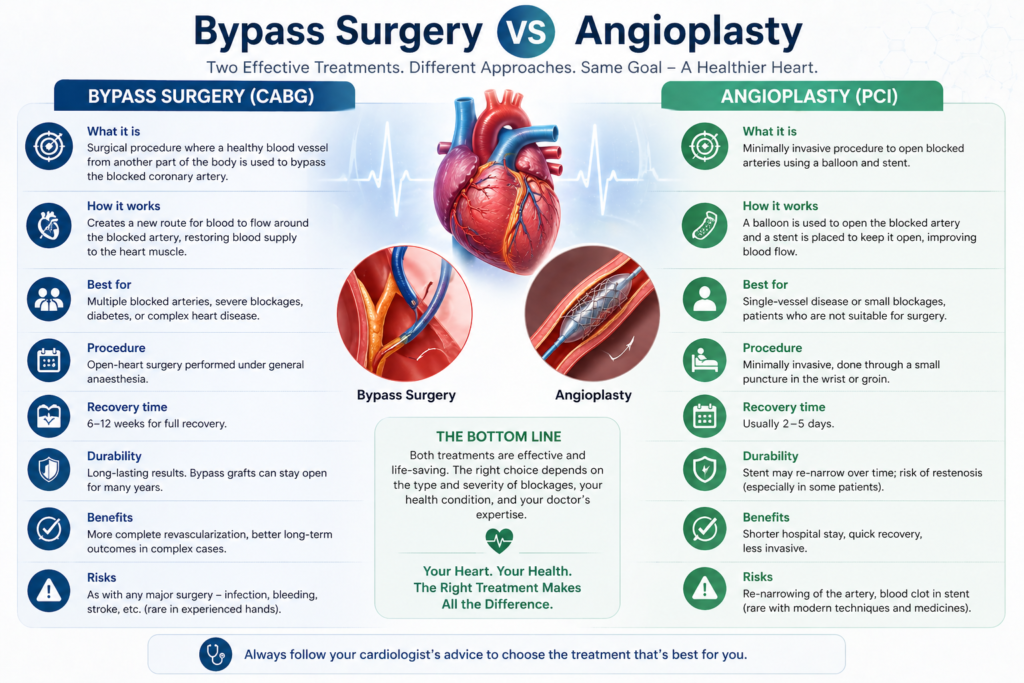

Life after bypass surgery is significantly better for most patients than life before it — less chest pain, better breathing, more energy, and a reduced risk of heart attack. But the weeks between leaving the operating theatre and reaching full recovery require patience, the right information, and realistic expectations.
Dr. Ved Prakash, Director of CTVS at Yatharth Super Speciality Hospitals, Greater Noida, has guided hundreds of patients through bypass surgery recovery. This is what actually happens, week by week.
Before We Begin — What Most Patients Feel in the First Days
Immediately after bypass surgery, most patients are surprised by three things. First, how alert they feel once the anaesthesia wears off. Second, that the breathing tube is usually removed within 6–8 hours — far sooner than they expected. Third, that they are asked to sit up and take a few steps as early as Day 2.
Recovery from bypass surgery is faster than most patients imagine — because the goal throughout is to get the heart and body moving again as soon as safely possible.
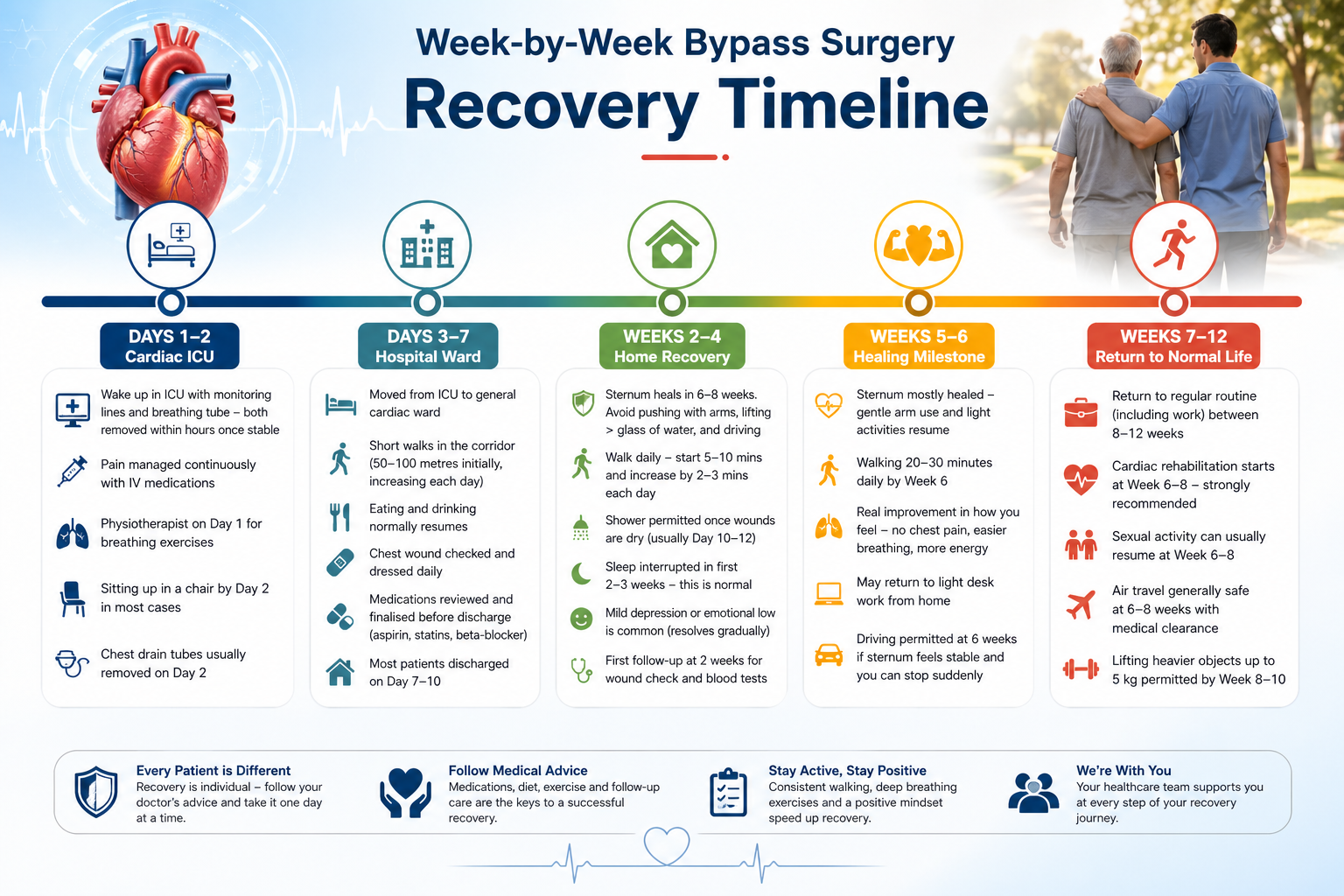
Week-by-Week Bypass Surgery Recovery Timeline
Days 1–2: Cardiac ICU
- You wake up in the cardiac ICU with monitoring lines and a breathing tube — both are removed within hours once you are stable
- Pain is managed continuously with IV medications — the nurses ask about your pain level regularly
- A physiotherapist visits on Day 1 to guide you through breathing exercises — these are critical for preventing lung complications
- You will be sitting up in a chair by Day 2 in most cases
- Chest drain tubes are usually removed on Day 2
Days 3–7: Hospital Ward
- You are moved from ICU to the general cardiac ward once stable
- Short walks in the corridor begin — typically 50–100 metres initially, increasing each day
- Eating and drinking normally resumes
- The chest wound is checked and dressed daily
- Medications are reviewed and finalised before discharge — aspirin, statins, beta-blocker are standard
- Most patients are discharged on Day 7–10
Weeks 2–4: Home Recovery
- The sternum (breastbone) is healing — it takes 6–8 weeks to fully unite. During this time, do not push yourself up from chairs using your arms, do not lift anything heavier than a glass of water, and do not drive
- Walk daily — start with 5–10 minutes and increase by 2–3 minutes each day as tolerated
- Shower is permitted once wounds are dry and sealed — usually by Day 10–12
- Sleep is often interrupted in the first 2–3 weeks — this is normal and temporary
- Mild depression or emotional low is common in the first 2–3 weeks — it resolves as energy and confidence return
- First outpatient follow-up is at 2 weeks for wound check and blood tests
Weeks 5–6: Healing Milestone
- The sternum is now mostly healed — gentle arm use and light daily activities resume
- Walking 20–30 minutes daily is the goal by Week 6
- Most patients notice a real improvement in how they feel — chest pain is gone, breathing is easier, energy is returning
- You may return to light desk work from home if energy allows
- Driving is permitted at 6 weeks if the sternum feels stable and you can perform an emergency stop without hesitation
Weeks 7–12: Return to Normal Life
- Most patients return to their regular routine — including work — between 8 and 12 weeks
- Cardiac rehabilitation (supervised exercise program) typically begins at Week 6–8 — strongly recommended for all bypass surgery patients
- Sexual activity can usually resume at Week 6–8 when sternum is fully healed
- Air travel is generally safe at 6–8 weeks with medical clearance
- Lifting heavier objects — up to 5 kg — is usually permitted by Week 8–10
What You Should Not Do After Bypass Surgery
| Activity | When It Is Safe |
| Driving | 6 weeks minimum |
| Lifting over 5 kg | 8–10 weeks |
| Return to desk work | 6–8 weeks |
| Return to physical work | 12 weeks minimum |
| Swimming | 12 weeks (chest wound must be fully healed) |
| Air travel | 6–8 weeks with medical clearance |
Medications After Bypass Surgery — What and Why
Most bypass surgery patients are discharged on the following medications — do not stop any of them without consulting your doctor:
- Aspirin: Keeps the bypass grafts open by preventing clotting. Lifelong.
- Statin (e.g. Atorvastatin): Controls cholesterol and protects the arteries. Lifelong.
- Beta-blocker (e.g. Metoprolol): Controls heart rate and reduces cardiac workload. Usually for at least 12 months, often longer.
- ACE inhibitor (e.g. Ramipril): Protects heart muscle function. Often long-term especially if ejection fraction was low.
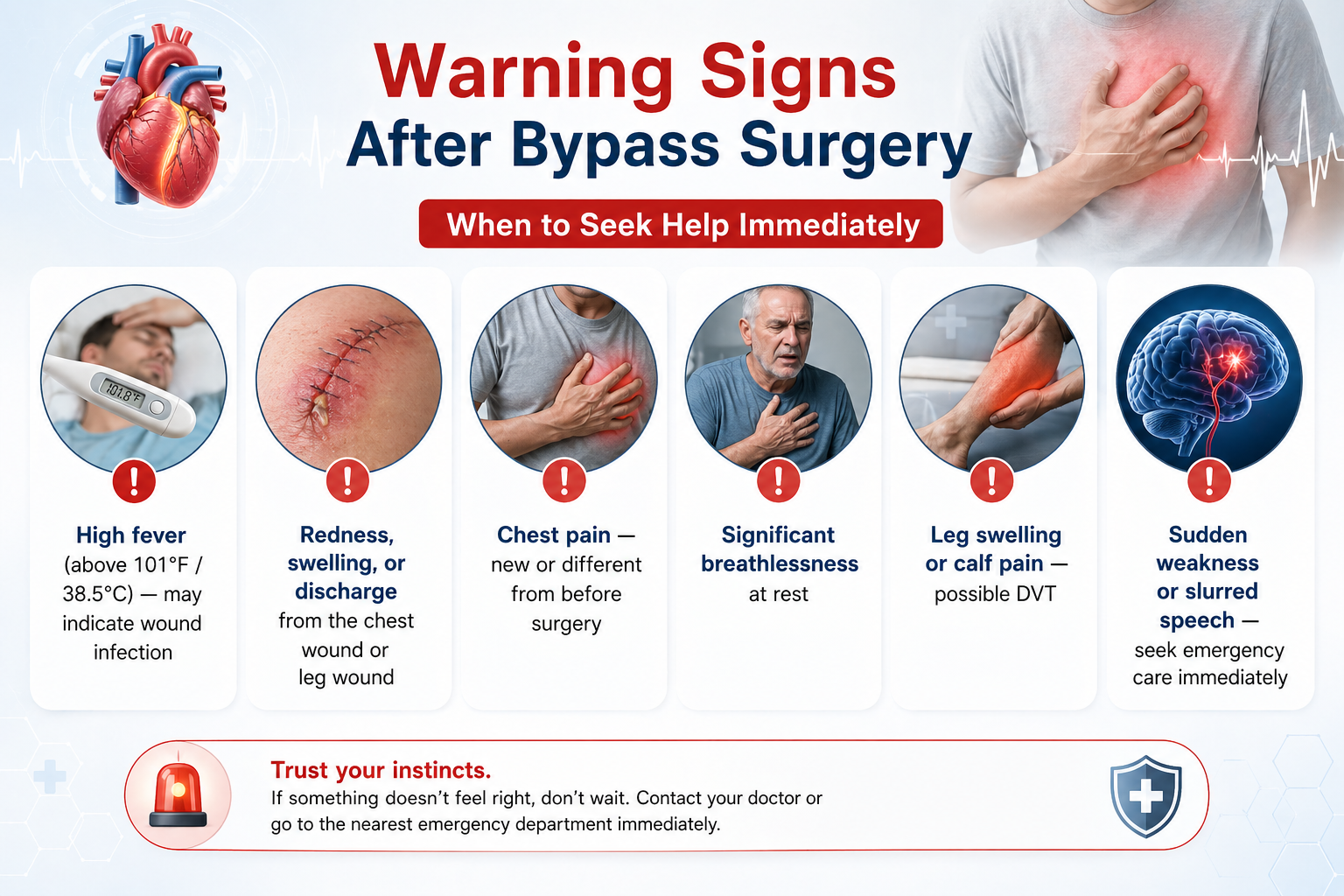
Warning Signs After Bypass Surgery — When to Seek Help Immediately
- High fever (above 101°F / 38.5°C) — may indicate wound infection
- Redness, swelling, or discharge from the chest wound or leg wound
- Chest pain — new or different from before surgery
- Significant breathlessness at rest
- Leg swelling or calf pain — possible DVT
- Sudden weakness or slurred speech — seek emergency care immediately
Frequently Asked Questions — Life After Bypass Surgery
How long does it take to fully recover from bypass surgery?
Most patients feel significantly better by 6 weeks and return to full normal life by 8–12 weeks. The sternum takes 6–8 weeks to fully heal — during this period physical restrictions apply. After 12 weeks, there are generally no long-term restrictions on activity.
Will I feel better after bypass surgery than before?
For the vast majority of patients — yes, dramatically. The relief of restored blood flow to the heart eliminates angina completely in most cases. Patients frequently report being able to walk, climb stairs, and exercise without chest pain or breathlessness for the first time in years.
Is depression common after bypass surgery?
Yes — a significant proportion of bypass surgery patients experience mild depression or emotional low in the first 2–4 weeks after surgery. This is partly hormonal (the body’s response to major surgery) and partly psychological. It almost always resolves as physical recovery progresses. Talk to your cardiac team if it persists beyond 4–6 weeks.
How long do bypass grafts last?
The LIMA arterial graft remains open in over 90% of patients at 10 years. Vein grafts from the leg last 10–15 years on average. Lifestyle changes after surgery — controlling cholesterol, blood pressure, and stopping smoking — significantly prolong graft life.
Can bypass surgery be repeated if grafts fail?
Yes — redo bypass surgery is possible, though it carries higher risk than the first operation. This is one of the strongest reasons to maintain medications and lifestyle changes diligently after surgery.
Recovery Is a Process — You Are Not Alone
If you or a family member is preparing for bypass surgery in Delhi NCR — or has recently had it — Dr. Ved Prakash’s team is available for post-operative guidance and follow-up at Yatharth Super Speciality Hospitals, Greater Noida.
For more detail on the surgery itself, read our complete guide on what is bypass surgery.
Dr. Ved Prakash | Director CTVS — Yatharth Super Speciality Hospitals, Greater Noida
📞 +91-9355255106 |
Book Appointment →