
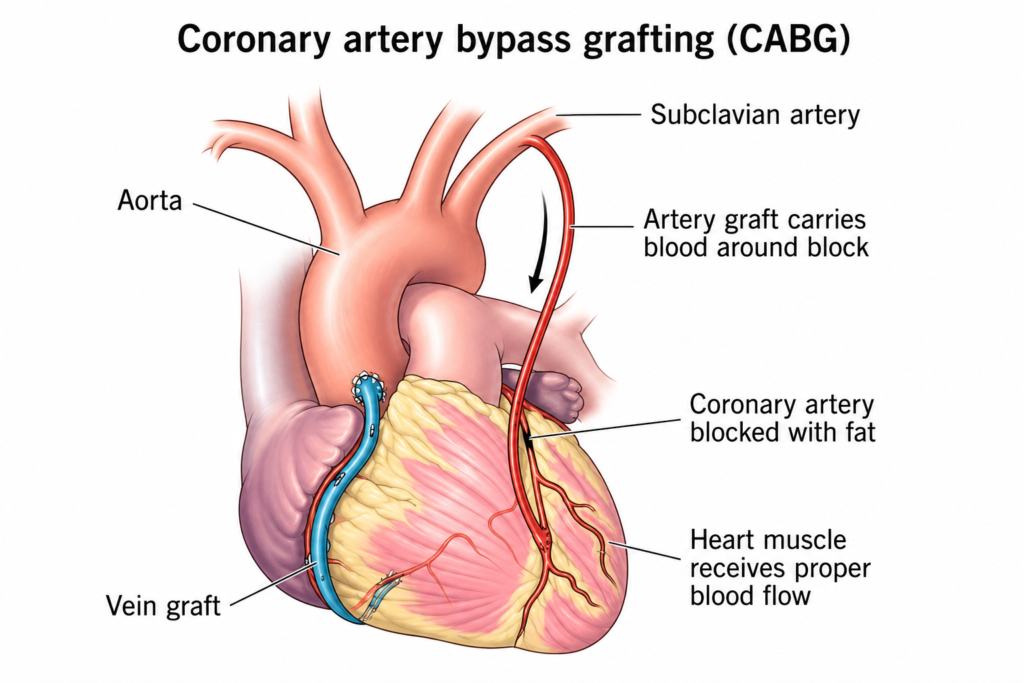
Coronary Artery Bypass Grafting (CABG), commonly known as Coronary Artery Bypass Surgery, is one of the most effective surgical treatments for patients with severe coronary artery disease (CAD). When the arteries supplying oxygen-rich blood to the heart become narrowed or blocked, the heart muscle may not receive adequate blood flow, leading to chest pain, shortness of breath, or even a heart attack.
Dr. Ved Prakash, Director of Cardiothoracic and Vascular Surgery (CTVS), provides comprehensive evaluation and advanced surgical care for patients with complex coronary artery disease. His focus is on delivering evidence-based treatment, personalized care, and supporting patients throughout every stage of their recovery.
What Is Coronary Artery Bypass Surgery (CABG)?
CABG is a surgical procedure that restores blood flow to the heart by creating a new route around blocked or narrowed coronary arteries. During the operation, a healthy blood vessel is taken from another part of the body, such as the chest, leg, or arm, and used to bypass the blocked artery.
The goal of CABG is to improve blood circulation to the heart muscle, relieve symptoms, reduce the risk of heart attack, and improve overall quality of life.
When Is CABG Recommended?
Dr. Ved Prakash may recommend CABG after a detailed evaluation if a patient has:
- Severe coronary artery disease affecting one or more arteries
- Significant blockage of the left main coronary artery
- Multiple blocked coronary arteries
- Persistent chest pain (angina) despite medication
- Failed angioplasty or recurrent blockage after stenting
- Diabetes with complex coronary artery disease
- Reduced heart function due to poor blood supply
Every treatment plan is individualized based on the patient’s condition, diagnostic findings, and overall health.
Symptoms That May Indicate Coronary Artery Disease
Patients experiencing the following symptoms should seek medical evaluation promptly:
- Chest pain or pressure
- Shortness of breath
- Fatigue during physical activity
- Pain radiating to the arm, neck, shoulder, or jaw
- Irregular heartbeat
- Dizziness or fainting
- Heart attack symptoms
Early diagnosis can significantly improve treatment outcomes.
How Is CABG Surgery Performed?
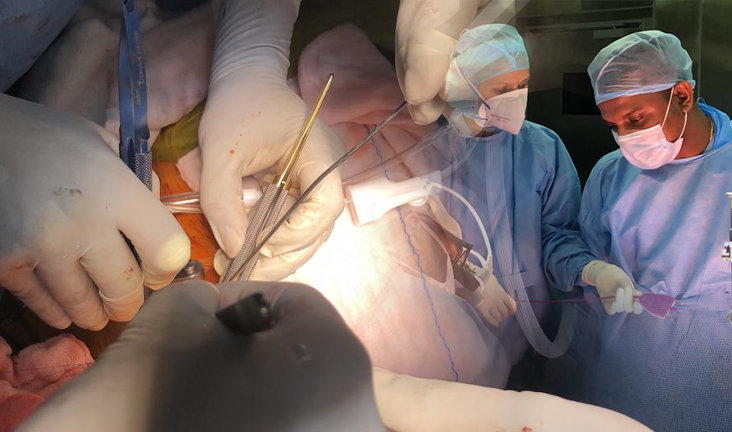
Coronary artery bypass surgery is performed under general anesthesia by an experienced cardiac surgery team.
1. Preoperative Evaluation
Patients undergo a thorough assessment that may include blood tests, ECG, echocardiography, coronary angiography, and other investigations to determine the most appropriate treatment plan.
2. Harvesting the Graft
A healthy blood vessel is carefully taken from the chest, arm, or leg to serve as the bypass graft.
3. Creating the Bypass
The surgeon connects the graft above and below the blocked artery, allowing blood to flow around the blockage and restore circulation to the heart muscle.
4. Completion of Surgery
After ensuring proper blood flow through the grafts, the surgical incision is closed, and the patient is transferred to the intensive care unit (ICU) for close monitoring.
Benefits of CABG Surgery
Coronary artery bypass surgery offers several long-term benefits, including:
- Improved blood flow to the heart
- Relief from chest pain (angina)
- Reduced risk of future heart attacks
- Better exercise tolerance
- Improved heart function
- Enhanced quality of life
- Increased ability to perform daily activities
- Better long-term outcomes for appropriately selected patients
Risks of CABG Surgery
As with any major surgery, CABG carries potential risks. These may include:
- Bleeding
- Infection
- Stroke
- Irregular heartbeat
- Blood clots
- Kidney complications
- Breathing difficulties
- Wound healing issues
Dr. Ved Prakash carefully evaluates each patient’s medical condition and discusses the potential benefits and risks before recommending surgery.
Recovery After CABG Surgery
Recovery after Coronary Artery Bypass Surgery (CABG) is a gradual process that continues even after you leave the hospital. While every patient’s recovery journey is different, following your cardiac surgeon’s advice and maintaining a healthy lifestyle are essential for achieving the best outcomes.
Hospital Stay
After surgery, patients are usually transferred to the Intensive Care Unit (ICU) for close monitoring. Most patients remain in the ICU for 1–2 days, where healthcare professionals continuously monitor heart function, blood pressure, breathing, and overall recovery. Once the patient’s condition is stable, they are moved to a regular hospital room for an additional 3–5 days before discharge.
Recovery at Home
Patients are encouraged to:
- Walk regularly as advised
- Take medications exactly as prescribed
- Follow a heart-healthy diet
- Avoid smoking and tobacco products
- Attend follow-up appointments
- Participate in a cardiac rehabilitation program if recommended
Most patients return to many normal activities within 6 to 12 weeks, depending on their overall health and the nature of their surgery.
Why Choose Dr. Ved Prakash for CABG?
Choosing an experienced cardiac surgeon is an important step in achieving the best possible outcome.
Patients choose Dr. Ved Prakash because of his:
- Expertise in cardiothoracic and vascular surgery
- Patient-centered treatment approach
- Comprehensive preoperative evaluation
- Evidence-based surgical planning
- Focus on patient safety
- Personalized postoperative care and follow-up
His goal is to help patients receive the right treatment at the right time while supporting them throughout their recovery.
Frequently Asked Questions
Is CABG better than angioplasty?
The most appropriate treatment depends on the number and location of blocked arteries, overall heart function, and other medical conditions. A cardiologist and cardiac surgeon will recommend the best option based on an individual assessment.
How long does CABG surgery take?
The procedure generally takes between 3 and 6 hours, depending on the complexity of the surgery.
How long is the recovery period?
Most patients recover within 6–12 weeks, although recovery time varies from person to person.
Can I live a normal life after CABG?
Many patients return to an active lifestyle after recovery by following their doctor’s advice, taking prescribed medications, eating a heart-healthy diet, exercising regularly, and attending follow-up appointments.
Book a Consultation with Dr. Ved Prakash
If you have been diagnosed with coronary artery disease or have been advised to undergo bypass surgery, consulting an experienced cardiac surgeon is an important step. Dr. Ved Prakash provides comprehensive evaluations, personalized treatment plans, and compassionate care to help patients make informed decisions about their heart health.
Schedule a consultation to discuss your symptoms, understand your treatment options, and receive expert guidance on whether Coronary Artery Bypass Surgery (CABG) is appropriate for your condition.
Conclusion
Coronary Artery Bypass Surgery (CABG) is an effective treatment for severe coronary artery disease, helping restore blood flow to the heart and improve quality of life. If you have symptoms such as chest pain or have been diagnosed with blocked coronary arteries, consult Dr. Ved Prakash for a comprehensive evaluation and personalized treatment plan. Early diagnosis and expert care can make a significant difference in achieving better heart health.