
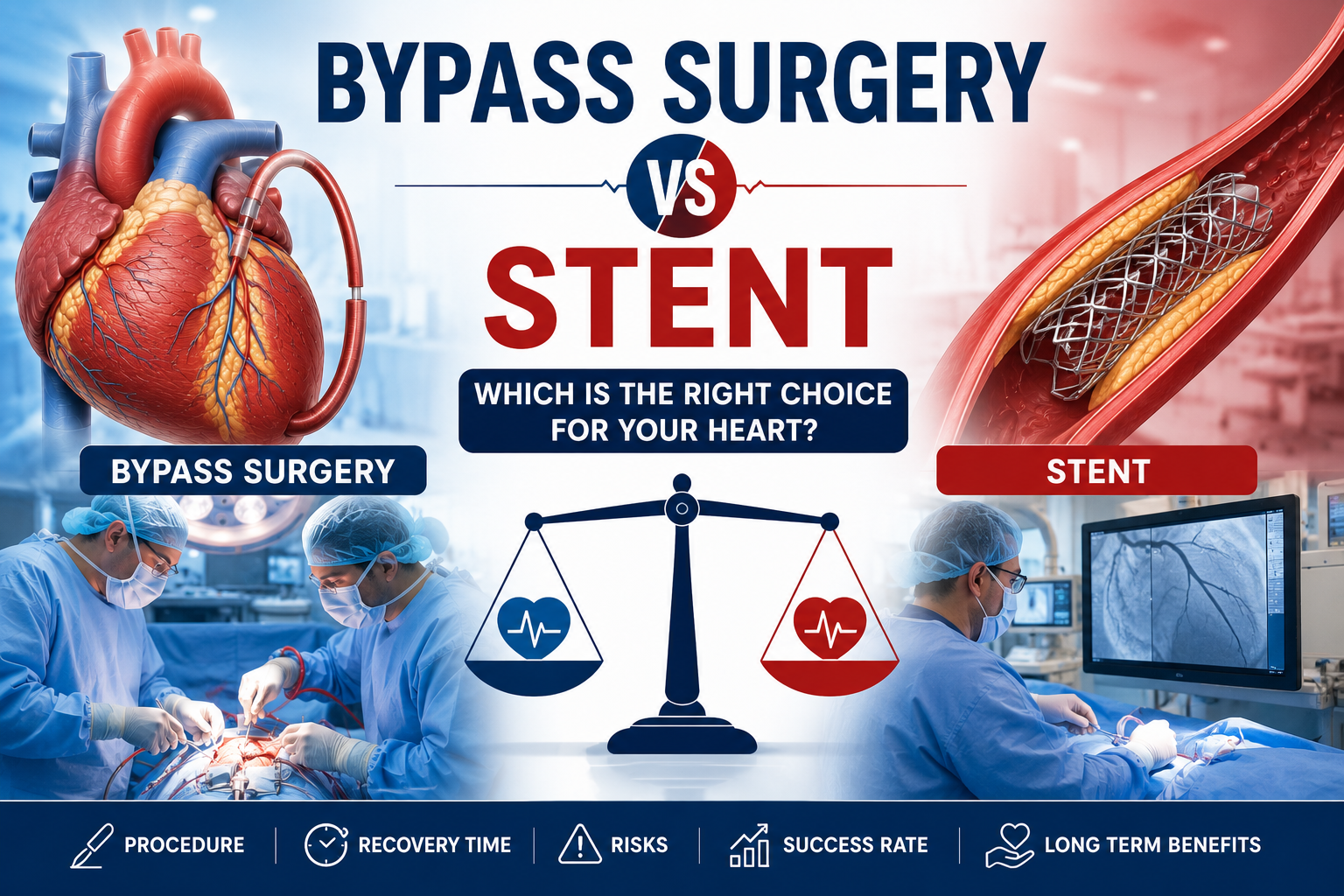
When a person is diagnosed with blocked coronary arteries, one of the most common questions they ask is, “Should I choose a bypass surgery or a stent?” Both treatments improve blood flow to the heart, but they are different procedures recommended for different medical conditions. Understanding the difference helps patients make informed decisions and reduces anxiety before treatment.
A stent is a small mesh tube placed inside a blocked artery to keep it open, while bypass surgery creates a new pathway around blocked arteries using a healthy blood vessel from another part of the body. The right choice depends on the number of blockages, their severity, the patient’s overall health, and the recommendation of a cardiac specialist.
Advances in cardiac surgery and interventional cardiology have made both procedures safer and more effective. However, there is no single treatment that is suitable for everyone. Each patient requires an individualized treatment plan based on detailed diagnostic tests.
Dr. Ved Prakash, an experienced cardiac specialist, emphasizes that choosing between a stent and bypass surgery should always be based on medical evaluation rather than personal preference. Proper diagnosis ensures better treatment outcomes and long-term heart health.
What Is a Heart Stent?
A heart stent is a tiny metal mesh tube that is placed inside a narrowed or blocked coronary artery during a procedure called angioplasty. The stent keeps the artery open, allowing oxygen-rich blood to flow freely to the heart muscle.
During angioplasty, a thin catheter with a small balloon is inserted through an artery in the wrist or groin. The balloon is inflated to widen the blocked artery, and the stent is left in place permanently to support the artery walls.
Most stent procedures are minimally invasive, which means patients usually recover faster and spend less time in the hospital compared to major cardiac surgery.
What Is Bypass Surgery?
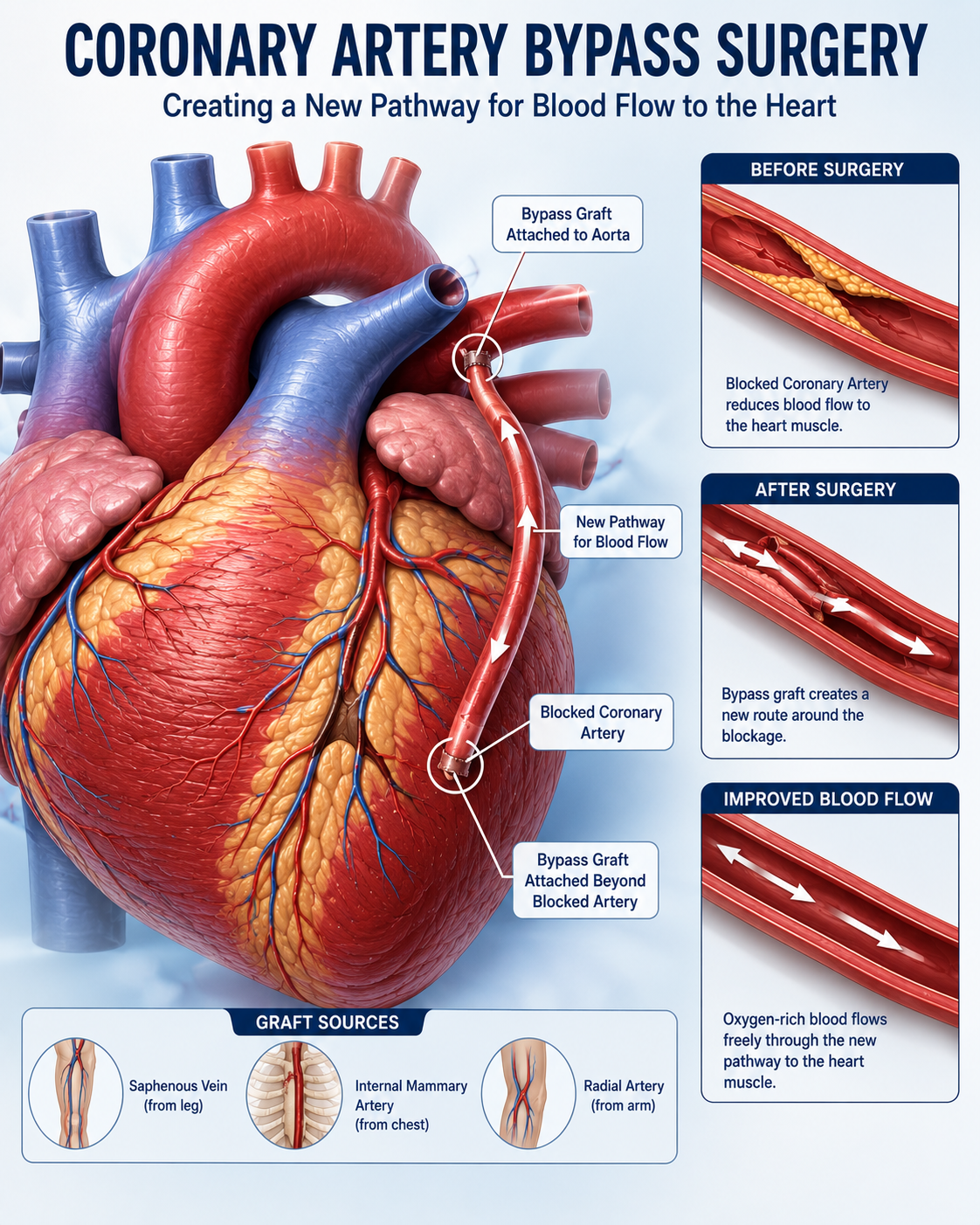
Bypass surgery, also called Coronary Artery Bypass Grafting (CABG), is a type of cardiac surgery performed when coronary arteries become severely blocked. Instead of opening the blocked artery, the surgeon creates a new route for blood to reach the heart muscle.
A healthy blood vessel is taken from the leg, chest, or arm and attached above and below the blockage. This allows blood to bypass the narrowed artery and restore healthy circulation to the heart.
Bypass surgery is commonly recommended for patients with multiple blocked arteries, severe coronary artery disease, diabetes with complex blockages, or cases where angioplasty and stenting may not provide long-term benefits.
How Do Stents and Bypass Surgery Differ?
Although both procedures improve blood flow, they are performed in completely different ways. A stent opens the blocked artery from inside, while bypass surgery creates a new pathway around the blockage.
Another important difference is the recovery period. Patients who receive a stent usually return to normal activities within a few days, whereas recovery after bypass surgery takes several weeks because it is a major surgical procedure.
Doctors choose the most suitable treatment after evaluating the patient’s symptoms, angiography reports, number of blockages, heart function, and overall medical condition. Selecting the right procedure is essential for improving heart health and reducing future complications.
When Is a Stent Recommended?
A heart stent is usually recommended for patients with one or two blocked coronary arteries, especially when the blockage is located in an area that can be treated safely with angioplasty. It is also commonly used during emergencies such as a heart attack, where restoring blood flow quickly is essential to prevent permanent damage to the heart muscle.
Because stent placement is a minimally invasive procedure, most patients experience less pain, a shorter hospital stay, and a faster recovery than major cardiac surgery. Many people can return to their normal routine within a few days after the procedure.
Doctors may recommend a stent when:
- One or two coronary arteries are blocked
- The blockage is suitable for angioplasty
- Chest pain (angina) continues despite medication
- Blood flow needs to be restored quickly after a heart attack
- The patient is at high risk for major surgery
When Is Bypass Surgery Recommended?
Bypass surgery is generally recommended when coronary artery disease is more advanced. It is often the preferred treatment for patients with multiple blocked arteries, severe narrowing of the left main coronary artery, or diabetes associated with complex blockages.
Unlike a stent, bypass surgery provides an alternative route for blood flow by using a healthy blood vessel from another part of the body. In many complex cases, this approach offers better long-term results and reduces the need for repeat procedures.
Doctors may recommend bypass surgery when:
- Three or more coronary arteries are blocked
- The left main coronary artery is severely narrowed
- Diabetes is present with multiple blockages
- Stenting is unlikely to provide lasting results
- Previous stents have failed or become blocked again
- Heart function is significantly reduced
The decision is always based on detailed investigations such as coronary angiography, echocardiography, ECG, and the patient’s overall health.
Benefits of a Heart Stent
A heart stent offers several advantages, particularly for patients with less complex coronary artery disease. Since it does not require opening the chest, recovery is usually much faster.
Some key benefits include:
- Minimally invasive treatment
- Shorter hospital stay
- Faster return to daily activities
- Less discomfort after the procedure
- Smaller incision with minimal scarring
- Effective relief from chest pain
- Quick restoration of blood flow during a heart attack
Benefits of Bypass Surgery
Although bypass surgery involves a longer recovery period, it provides significant long-term benefits for patients with severe coronary artery disease. Many patients experience lasting symptom relief and improved quality of life.
Major advantages include:
- Better treatment for multiple blocked arteries
- Improved blood flow to the heart muscle
- Lower risk of repeat procedures
- Long-term relief from angina
- Reduced risk of future heart attacks
- Better outcomes for many diabetic patients
- Improved overall heart health

Risks of Stent and Bypass Surgery
Every medical procedure carries some risk, although modern technology has greatly improved safety. The type and level of risk depend on the patient’s age, medical history, and the severity of heart disease.
Possible risks after stent placement include:
- Bleeding at the catheter insertion site
- Blood clot formation inside the stent
- Re-narrowing of the artery
- Allergic reaction to contrast dye
- Rare damage to the artery
Possible risks after bypass surgery include:
- Bleeding
- Infection
- Stroke
- Irregular heartbeat
- Blood clots
- Kidney or lung complications
- Temporary memory or concentration problems
Dr. Ved Prakash carefully evaluates each patient’s condition before recommending either a stent or bypass surgery. His personalized approach helps select the safest and most effective treatment while promoting long-term heart health.
Recovery After Stent and Bypass Surgery
Recovery differs significantly between a heart stent procedure and bypass surgery. Since stent placement is minimally invasive, most patients are discharged within one or two days and can resume normal activities within a week, depending on their doctor’s advice.
Recovery after bypass surgery takes longer because it is a major cardiac surgery. Patients usually stay in the hospital for several days and may need six to twelve weeks to recover completely. During this period, regular walking, breathing exercises, and participation in cardiac rehabilitation help improve strength and support long-term heart health.
Can Lifestyle Changes Prevent Future Heart Problems?
Whether you receive a stent or undergo bypass surgery, adopting a heart-healthy lifestyle is essential. These treatments improve blood flow, but they do not cure the underlying process of coronary artery disease. Without healthy habits, new blockages can still develop over time.
Doctors strongly recommend maintaining a balanced diet, staying physically active, avoiding tobacco, controlling blood pressure and diabetes, and managing cholesterol levels. These lifestyle changes reduce the risk of future complications and improve overall heart health.
Simple steps to protect your heart include:
- Eat plenty of fruits, vegetables, and whole grains.
- Reduce salt, sugar, and unhealthy fats.
- Exercise regularly as advised by your doctor.
- Quit smoking and avoid tobacco products.
- Maintain a healthy body weight.
- Take prescribed medicines regularly.
- Attend routine cardiac check-ups.
- Manage stress through relaxation techniques and adequate sleep.

Which Treatment Is Better: Bypass Surgery or a Stent?
There is no single answer because the best treatment depends on the patient’s condition. A heart stent is often preferred for people with limited artery blockages and lower surgical risk, while bypass surgery is usually recommended for patients with multiple blocked arteries or more complex coronary artery disease.
Doctors consider several factors before making a recommendation, including:
- Number and location of blocked arteries
- Severity of coronary artery disease
- Age and overall health
- Presence of diabetes
- Heart pumping function
- Previous heart procedures
- Risk of future complications
The decision should always be made after detailed evaluation by an experienced cardiac specialist. Personalized treatment provides the best opportunity for successful recovery and long-term heart health.
When Should You Consult a Cardiac Specialist?
Do not ignore warning signs such as chest pain, shortness of breath, pain spreading to the arm or jaw, dizziness, unusual fatigue, or an irregular heartbeat. These symptoms may indicate reduced blood flow to the heart and require immediate medical attention.
Dr. Ved Prakash emphasizes that early diagnosis allows doctors to recommend the most suitable treatment before the condition becomes more serious. Whether a patient requires medication, a stent, or cardiac surgery, timely medical care greatly improves treatment success and quality of life.
Conclusion
Both bypass surgery and a heart stent are highly effective treatments for coronary artery disease, but they serve different purposes. A stent is a minimally invasive procedure that is ideal for many patients with less complex artery blockages, while bypass surgery is often the better option for individuals with multiple or severe blockages.
Choosing between these treatments should never be based on convenience alone. The decision depends on the patient’s overall health, the extent of artery blockage, heart function, and detailed diagnostic findings. An experienced cardiac specialist can recommend the safest and most effective treatment plan.
If you or a loved one has been diagnosed with coronary artery disease, consult Dr. Ved Prakash for a comprehensive evaluation and personalized guidance. Early treatment, combined with healthy lifestyle choices and regular follow-up, can improve recovery, reduce future complications, and protect your lifelong heart health.