
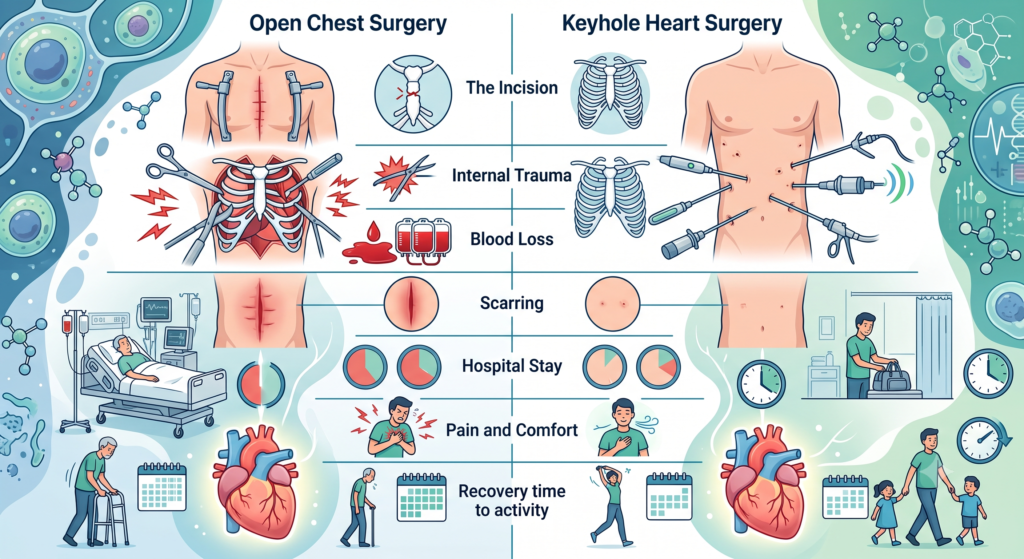
 Keyhole heart surgery is changing how we treat complex cardiac diseases today. Traditionally, surgeons relied heavily on a full sternotomy for most procedures. However, medical technology has evolved rapidly over the last decade. Therefore, patients now have far more effective options available. Because of these advancements, understanding your surgical choices is absolutely crucial.
Dr. Vedprakash, a leading specialist at dr-vedprakash.com, champions these advanced, minimally invasive techniques. Consequently, his patients experience vastly better outcomes and significantly less surgical trauma. In this comprehensive guide, we will explore why a mini-thoracotomy is often the superior choice. Furthermore, we will break down the seven biggest advantages of choosing this modern approach.
What is Keyhole Heart Surgery?
Keyhole heart surgery, often called a mini-thoracotomy, is a highly advanced surgical technique. Instead of opening the entire chest, surgeons make a tiny incision. Specifically, this incision usually measures just two to three inches long. The surgeon accesses the heart between the ribs.
Therefore, no central bones are cut or broken during the procedure. To do this, surgeons use specialized, elongated instruments and high-definition cameras. As a result, they can perform complex valve repairs with absolute precision. Ultimately, this approach preserves the structural integrity of your chest wall.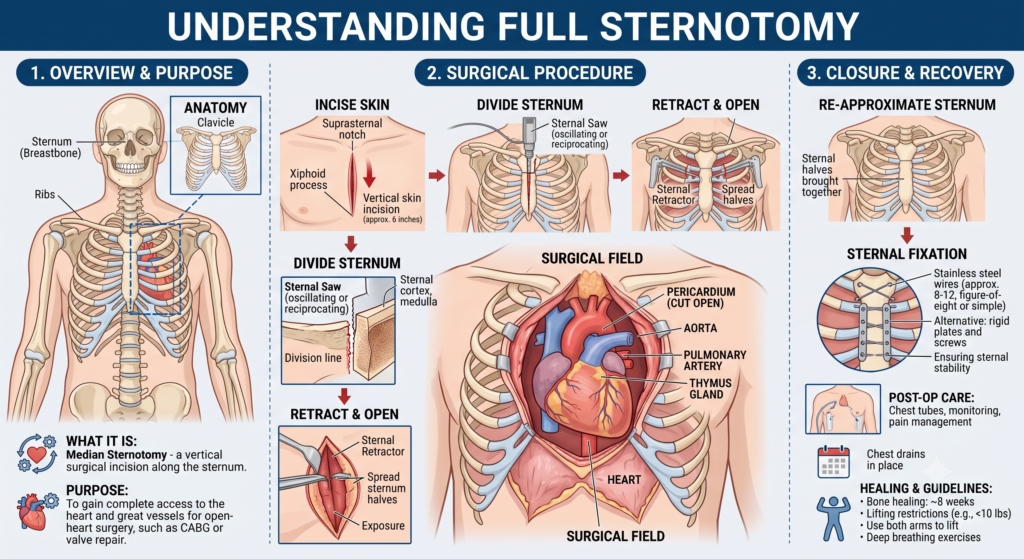
Understanding Full Sternotomy
Conversely, a full sternotomy is the traditional open-heart surgery method. During this procedure, the surgeon makes an eight-to-ten-inch incision down the chest. Subsequently, the breastbone (sternum) is completely divided in half. The rib cage is then pulled apart to expose the heart.
Indeed, this method gives surgeons excellent visibility and direct access. For decades, it was the only way to treat severe heart conditions. However, splitting the breastbone causes significant trauma to the body. Consequently, the healing process is much longer and far more painful. Because of this, many patients seek less invasive alternatives today.
Mini-Thoracotomy vs. Full Sternotomy
Comparing these two approaches reveals stark differences in patient experience. Therefore, it helps to look at the data side-by-side.
| Feature | Full Sternotomy | Keyhole Heart Surgery |
| Incision Size | 8 to 10 inches | 2 to 3 inches |
| Bone Cutting | Breastbone completely divided | No bones are cut |
| Recovery Time | 8 to 12 weeks | 2 to 4 weeks |
| Scarring | Large, highly visible central scar | Small, discreet side scar |
Clearly, the minimally invasive route offers a distinct physical advantage. However, the benefits extend far beyond just a smaller incision. Let us examine exactly why this matters for your health.
7 Proven Benefits of Keyhole Heart Surgery
1. Significantly Smaller Scars
First, the cosmetic difference is incredibly noticeable for most patients. A full sternotomy leaves a long, prominent scar straight down the chest. Conversely, keyhole heart surgery leaves only a tiny, two-inch mark.
Usually, this small scar is hidden neatly beneath the breast fold. Therefore, it is barely visible once it fully heals. For many patients, this drastically improves their post-surgery confidence.
2. Drastically Reduced Pain
Second, cutting through the breastbone is inherently painful. Because a full sternotomy breaks the sternum, patients require heavy pain medication. In addition, coughing or sneezing during recovery can cause severe discomfort.
However, a mini-thoracotomy completely avoids cutting any major bones. Instead, the surgeon gently spreads the soft tissue between the ribs. Consequently, patients experience significantly less postoperative pain.
3. Much Faster Recovery Time

Perhaps the most celebrated benefit is the accelerated recovery timeline. After a traditional open-heart procedure, patients usually need three months to recover. Furthermore, they face strict lifting restrictions while their breastbone fuses back together.
Meanwhile, keyhole heart surgery cuts that recovery time in half. Because the bone remains intact, your body heals much faster. Therefore, most patients resume normal activities within two to four weeks.
4. Lower Risk of Infection
Any time the body is opened, infection remains a serious risk. Specifically, deep sternal wound infections are a severe complication of traditional surgery. Because the sternotomy incision is so large, bacteria have more entry points.
Conversely, a smaller incision naturally limits exposure to outside contaminants. Therefore, the overall risk of surgical site infection drops dramatically. Ultimately, this keeps patients safer during their crucial healing phase.
5. Shorter Hospital Stays
Naturally, less trauma means you can go home much sooner. Traditional open-chest surgery typically requires a seven-to-ten-day hospital stay. Furthermore, several of those days are spent in the intensive care unit.
However, patients undergoing keyhole heart surgery often leave much faster. In fact, many are discharged within three to four days. Consequently, you can recover in the comfort of your own home sooner.
6. Less Surgical Blood Loss
During any major operation, managing blood loss is a top priority. Because a full sternotomy involves dividing bone and extensive tissue cutting, bleeding is heavier. Therefore, patients frequently require blood transfusions during or after the procedure.
Alternatively, the precision of a mini-thoracotomy minimizes internal bleeding. Specifically, the focused, tiny incision damages far fewer blood vessels. As a result, the need for blood transfusions is significantly reduced.
7. Quicker Return to Routine

Finally, prolonged downtime takes a heavy toll on your mental health. Being unable to drive, lift groceries, or work is deeply frustrating. With traditional surgery, these strict lifestyle limitations last for months.
Because keyhole heart surgery preserves the chest wall, mobility returns faster. Therefore, you can drive, return to work, and exercise much sooner. Indeed, getting your normal life back quickly is an invaluable benefit.
Who is a Good Candidate?
While the benefits are clear, this procedure is not for everyone. Specifically, your eligibility depends on your specific cardiac condition. For example, it is highly effective for mitral valve repairs and atrial septal defects.
However, complex multi-vessel bypass surgeries may still require a traditional sternotomy. Furthermore, patients with severe lung disease might not qualify for the minimally invasive approach. Therefore, a thorough medical evaluation is absolutely mandatory. Dr. Vedprakash will carefully review your imaging to determine the safest path forward.

Consult Dr. Vedprakash
Choosing the right surgical approach is a massive, life-altering decision. Therefore, you need an expert who understands the nuances of modern techniques. Dr. Vedprakash is a pioneer in advanced cardiac care and minimally invasive procedures.
Because of his extensive expertise, you can trust you are in safe hands. If you want to explore the benefits of keyhole heart surgery, reach out today. Visit dr-vedprakash.com to schedule your personalized consultation. Ultimately, your heart health deserves the absolute best care available.