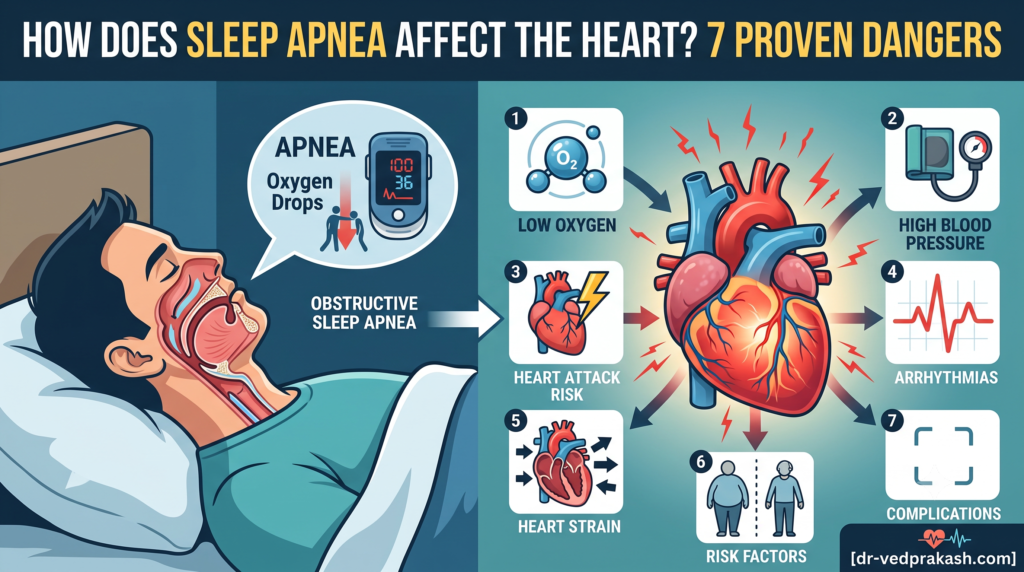
 Many patients ask, how does sleep apnea affect the heart on a daily basis? Therefore, understanding this connection is completely vital for your long-term health.
Furthermore, untreated sleep disorders can slowly ruin your cardiovascular system. Dr. Vedprakash strongly warns that snoring is not just a loud nuisance.
Instead, it is often a major warning sign of severe cardiovascular stress. Consequently, you must take these breathing pauses very seriously.
In this comprehensive guide, we will explore exactly what happens inside your body. Additionally, we will share seven proven dangers you need to know now.
How Does Sleep Apnea Affect The Heart Directly?
First, we must look at the direct physical impact on your body. When you stop breathing, your brain panics immediately.
As a result, your nervous system releases heavy stress hormones instantly. These stress hormones force your heart to pump much harder.
However, your heart is trying to pump without enough oxygen. Therefore, this creates a dangerous nightly cycle of severe stress.
To fully answer how does sleep apnea affect the heart, we must look deeper. Specifically, we must examine the physical changes happening inside your chest walls.
1. It Drops Your Oxygen Levels
During an apnea episode, your airway completely collapses. Consequently, your lungs simply cannot pull in fresh air.
Because of this, the oxygen levels in your blood drop rapidly. Naturally, your heart muscle desperately needs oxygen to function properly.
Without it, the heart tissue begins to suffer from immediate starvation. Therefore, this nightly oxygen starvation damages healthy heart cells over time.
2. It Spikes Your Blood Pressure
Whenever you stop breathing, your brain sends out a loud alarm. Instantly, your blood vessels constrict to redirect oxygen to your brain.
As a result, your blood pressure shoots up drastically in seconds. Furthermore, this is known as severe nocturnal hypertension.
Even worse, this high blood pressure often continues into the daytime hours. Thus, your heart is constantly fighting against highly elevated pressure.
3. It Strains The Heart Walls
Working against high blood pressure requires massive effort. Because of this, the muscular walls of your heart actually thicken.
Over time, this unnatural thickening makes the heart very stiff. Consequently, a stiff heart cannot pump blood efficiently to your body.
Therefore, fluid can begin to back up into your lungs. Ultimately, this leads to a terrible condition called congestive heart failure.
Long-Term Proven Dangers To Your Heart
Over months and years, the damage becomes permanent. So, how does sleep apnea affect the heart in the long run?
Unfortunately, the constant strain drastically shortens your overall life expectancy. In fact, many sudden cardiac events happen during the early morning.
Furthermore, the cumulative damage heavily weakens your entire cardiovascular system. Let us look at the most severe long-term risks below.
4. Increased Risk of Heart Attacks

Low oxygen heavily damages the delicate lining of your blood vessels. As a result, harmful plaque builds up much faster inside your arteries.
Eventually, this sticky plaque can rupture and form massive blood clots. Furthermore, these clots easily block blood flow to the heart muscle.
When this happens, a severe heart attack occurs immediately. Therefore, treating your breathing prevents these deadly blockages from forming entirely.
5. Triggering Heart Arrhythmias
An irregular heartbeat is a very common and scary complication. Specifically, atrial fibrillation (AFib) is heavily linked to sleep disorders.
During an apnea event, the heart is physically stretched and stressed. Because of this stretching, the electrical signals in the heart misfire completely.
Consequently, the heart begins to beat wildly out of rhythm. Sadly, this chaotic rhythm heavily increases your major stroke risk.
Dr. Vedprakash Explains Who Is At Risk

Not everyone faces the exact same level of medical danger. According to Dr. Vedprakash, certain patients have much higher risks.
Therefore, you must evaluate your own personal health history carefully. Additionally, catching the warning signs early can literally save your life.
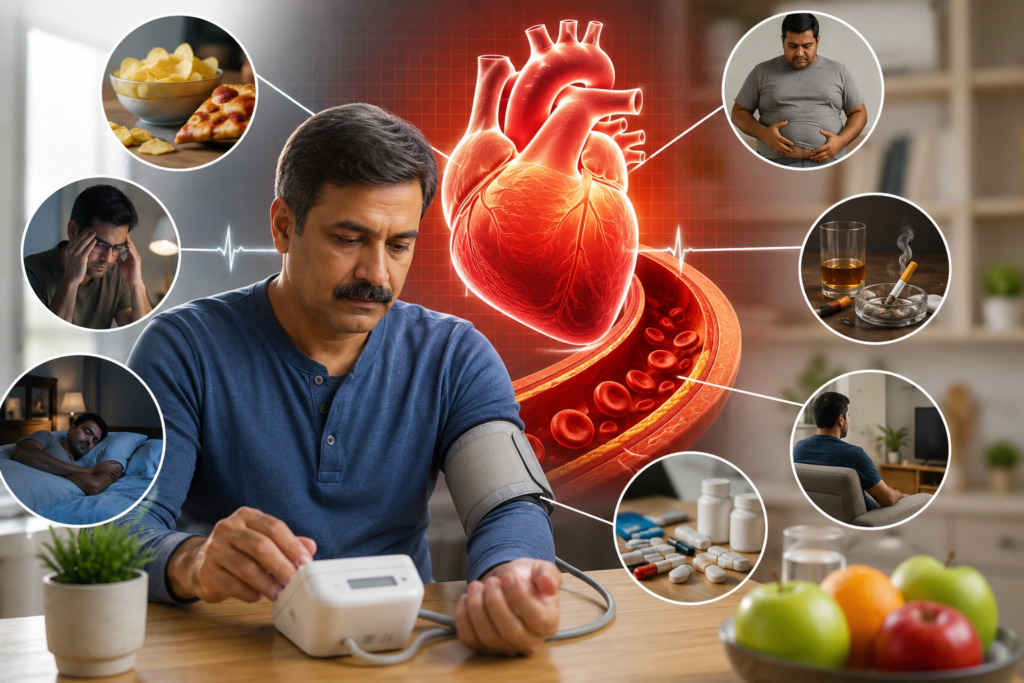
Furthermore, ignoring these specific risk factors is incredibly dangerous. Here are the top factors that multiply your cardiovascular risk today.
6. Obesity and Heart Health
Excess body weight is the leading cause of airway blockages. Specifically, extra fat around the neck physically crushes your windpipe.
As a result, obese patients suffer from much longer breathing pauses. Therefore, their hearts experience much deeper oxygen drops every night.
Moreover, obesity itself already puts heavy strain on the heart muscle. Consequently, combining obesity with apnea is a very deadly mix.
7. Age and Genetic Factors
As we get older, our throat muscles naturally lose their tone. Because of this, they collapse much easier during deep sleep cycles.
Additionally, a family history of snoring drastically increases your personal risk. However, you cannot easily change your genetics or your age.
Therefore, you must actively seek professional medical screening instead. Furthermore, older adults suffer from silent heart damage much faster.
Effective Ways To Protect Your Heart Today
Thankfully, the damage to your heart can often be stopped completely. When asking how does sleep apnea affect the heart, there is hope.
First, the most vital step is getting a proper sleep study. Afterwards, your doctor will prescribe a targeted medical treatment plan.
As a result, your heart will finally get the oxygen it needs. Let us explore the best ways to heal your heart now.
Using CPAP Therapy Successfully
Continuous Positive Airway Pressure (CPAP) is the absolute gold standard treatment. Essentially, it gently blows air to keep your throat open constantly.
Therefore, your oxygen levels never drop dangerously during the night. Because of this, your blood pressure stabilizes almost immediately.
Furthermore, studies show CPAP heavily reduces your risk of heart attacks. Indeed, it is the best way to reverse cardiovascular damage.
Visiting Dr-Vedprakash.com For Help
If you suspect you have this disorder, do not wait. Instead, reach out to trusted experts for immediate medical guidance.
For instance, visiting dr-vedprakash.com is a great first step forward. There, you can easily find vital resources and schedule a consultation.
Consequently, getting expert help will give you complete peace of mind. Moreover, your heart will thank you for taking swift action today.
Conclusion: How Does Sleep Apnea Affect The Heart Long-Term?

To summarize, how does sleep apnea affect the heart? In short, it starves it of oxygen and spikes your blood pressure.
However, you now have the exact knowledge to fight back effectively. Therefore, you must take your loud snoring very seriously tonight.
Finally, contact Dr. Vedprakash to start your healing journey immediately. Ultimately, protecting your sleep will successfully protect your entire life.