
A normal heart rate is essential for living a long, active, and healthy life. However, many people ignore their pulse completely until a serious problem finally arises. Therefore, understanding how your cardiovascular rhythm works is incredibly important. In addition, taking a few simple steps today can make a massive difference tomorrow. First, let us explore exactly what a healthy normal heart rate looks like for an average adult.
What Is a Normal Heart Rate?
Generally, a healthy resting pulse for adults ranges from 60 to 100 beats per minute. For example, athletes might have a resting heart rate as low as 40 beats per minute. Because their cardiac muscle is very strong, it does not have to work as hard to pump blood.
Consequently, a lower resting pulse usually implies more efficient body function. Furthermore, your heart rate changes throughout the day based on your activities. If you are resting calmly, your pulse should remain steady.
However, “normal” is not a single number for everyone. Age, fitness levels, and genetics all play a role in your measurements. Therefore, you should focus on your personal baseline. If your heart rate numbers consistently fall outside the 60–100 range, you should investigate why.
The Anatomy of Your Pulse
To truly understand your biology, you must look at the internal electrical system. Your cardiac muscle has a built-in pacemaker. It sends electrical signals to tell the organ when to beat. When this electrical system is healthy, your internal rhythm is consistent.
The organ has four chambers. They work in perfect sync to maintain your steady pulse. If one chamber struggles, the whole system suffers. This is why consistent exercise is important. It strengthens the muscle walls of these chambers. A strong pump needs less effort to keep your heart rate in a safe, efficient zone.
Additionally, the valves act like doors. They ensure blood flows in one direction. If you eat a poor diet, plaque can build up. This can damage the valves. Therefore, eating healthy fats is not just about weight; it is about keeping the “pipes” of your circulatory system clean.
Why Your Rhythm Matters
Your heart is a pump. It moves oxygen and nutrients to every cell in your body. When your pulse is steady, your organs function perfectly. Conversely, when the system works too hard, it suffers.
Therefore, keeping a normal heart rate helps prevent exhaustion. Additionally, it lowers the risk of cardiovascular disease. High resting pulse numbers are often linked to higher risks of stroke or heart attacks.
Because you cannot “feel” your internal timing perfectly, you should monitor it. Simple tracking can provide great peace of mind. Moreover, it empowers you to take control of your health. When you know your heart rate, you know your vitality.
5 Proven Ways to Maintain a Normal Heart Rate
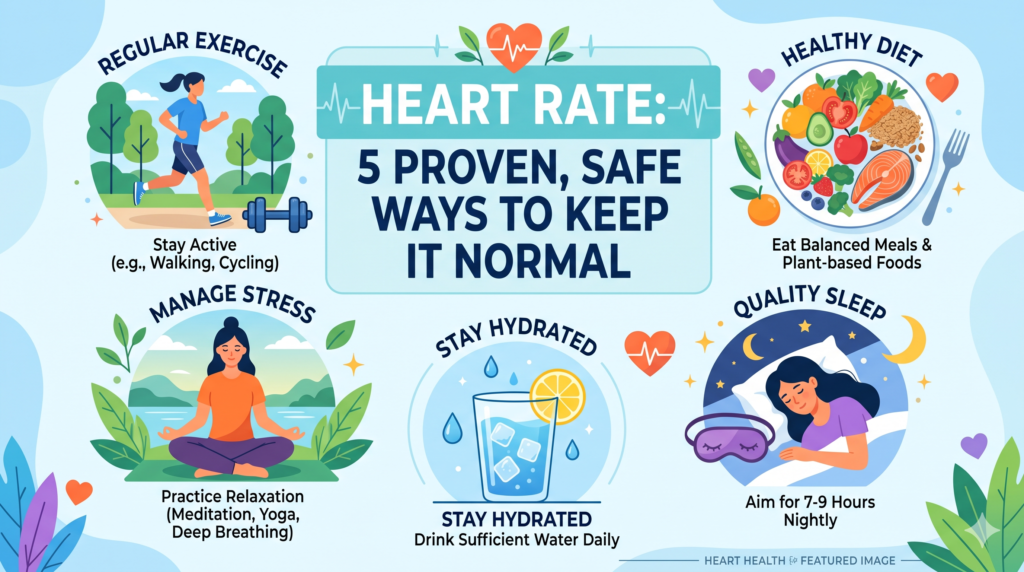
If you want to keep your pulse in a healthy range, you must build good daily habits. Therefore, follow these five simple, highly effective strategies.
1. Exercise Routinely
First, regular physical activity is the best way to train your muscles. Specifically, cardio exercises like walking, swimming, or cycling make the cardiac wall stronger. As a result, your pulse stabilizes because the organ pumps more blood with much less effort.
Try to get at least 30 minutes of light exercise every day. However, do not start too fast. Start with a brisk walk. Gradually increase your intensity to influence your heart rate positively.
Why does this work? When you exercise, you stress the system. This sounds bad, but it is actually good. The body adapts to this stress. Consequently, your resting pulse will drop over time.
Tips for Success:
-
Always warm up for five minutes to safely raise your pulse.
-
Monitor your heart rate during exercise to avoid overexertion.
-
Focus on consistency rather than intensity.
-
Listen to your body if you feel pain in your chest or arm.
2. Manage Your Stress
Secondly, high stress directly causes your pulse to spike rapidly. Whenever you feel overwhelmed, your body releases adrenaline. Thus, your pulse begins to race. It prepares you to run or fight.
However, in modern life, we are rarely running from predators. Instead, we sit at desks and worry. This chronic stress keeps the body in overdrive. Therefore, practicing deep breathing or meditation can calm your nervous system and heart rate.
Practical Steps:
-
Practice “Box Breathing”: Inhale for 4 seconds, hold for 4, exhale for 4, hold for 4.
-
Take short, frequent breaks during your workday to reset your pulse.
-
Engage in hobbies that you find relaxing.
-
Limit screen time before bed to lower anxiety and stabilize your heart rate.
3. Eat a Heart-Healthy Diet
In addition, what you eat directly impacts your cardiac rhythm. Therefore, try to consume foods rich in healthy fats, such as avocados and nuts. Conversely, you should avoid excessive caffeine and processed sugars.
Because caffeine is a stimulant, it can cause your pulse to race unnecessarily. Furthermore, high sodium intake can raise your blood pressure. When pressure is high, the pump works harder, which affects your heart rate.
Key Dietary Changes:
-
Eat more leafy greens: Spinach and kale are excellent for circulation.
-
Limit salt: Too much salt forces the body to retain fluid, which strains your pulse.
-
Hydrate with water: Skip the energy drinks that spike your heart rate.
-
Focus on whole grains: They provide steady energy without sudden changes to your rhythm.
4. Stay Hydrated Always
Furthermore, dehydration forces the system to work much harder. When you lack water, your blood volume drops. Because the blood becomes thicker, the heart must pump faster, increasing your heart rate to push it through your body.
To prevent this, drink plenty of water throughout the entire day. Do not wait until you are thirsty. By the time you feel thirst, your pulse might already be impacted by dehydration.
Signs of Dehydration:
-
Dark-colored urine.
-
Headaches, which often accompany a high pulse.
-
Dry mouth.
-
Feeling sluggish or tired.
Daily Goal: Aim for at least 8 glasses of water daily. However, adjust this based on the weather. If it is a hot Dehradun afternoon, you need much more water to keep your heart rate in a safe zone.
5. Prioritize Deep Sleep
Finally, your heart needs adequate time to rest and repair itself. During deep sleep, your pulse naturally slows down to recover. Therefore, aiming for 7 to 8 hours of quality sleep is strictly required for long-term health.
Without enough sleep, your resting pulse will likely increase. Additionally, poor sleep increases inflammation in the body. This inflammation damages your blood vessels and affects your heart rate over time.
Improve Your Sleep:
-
Keep your bedroom cool and dark to assist a lower pulse.
-
Go to bed at the same time every night.
-
Avoid large meals right before sleep to prevent a high pulse at night.
-
Establish a calming routine, like reading, to calm your heart rate.
Environmental Factors and Your Vital Signs
While these five steps are vital, many other factors change your pulse. It is helpful to understand these variables. Therefore, you should be aware of your environment and body.
The Role of Temperature
Your pulse beats faster in the heat. Why? Your body tries to cool you down. It pushes blood to the skin’s surface. Consequently, the heart rate pumps faster. In hot weather, you must be extra careful.
The Impact of Medication
Some medications change your pulse. For example, some blood pressure pills slow it down. Conversely, some asthma medications speed up your heart rate. Always check with your doctor if you start a new pill.
Age and Fitness
As we age, the electrical system can slow down. Therefore, it is normal to see slight changes in your pulse. However, fit individuals usually have a lower reading. This is a sign of efficiency. Maintaining a heart rate within your target range is key.
Technology and Tracking Methods
In our modern world, we have tools to help us. Smartwatches are popular. They track your pulse in real-time.
Are Wearables Accurate?
Generally, yes. They are great for spotting trends. If you notice your resting pulse has been rising for a week, you might be getting sick. Or perhaps you are overtraining.
However, they are not a replacement for a doctor. If your watch alerts you to an irregular heart rate, do not panic. But do get it checked. Wearables are for data, not diagnosis.
The “Pulse Trend” Method
Do not obsess over one single measurement. Look for trends. Is your pulse usually 70? If it jumps to 80, look for reasons. Did you drink coffee? Were you stressed? This detective work is valuable. It helps you understand your body’s unique heart rate language.
Common Misconceptions About Cardiovascular Health
There is much misinformation online. Let us debunk a few.
Myth 1: “My pulse is always changing, so I must have a problem.”
Fact: It is perfectly normal for your pulse to change. It goes up when you stand, walk, or think hard. It goes down when you sleep. Changes in your heart rate are a sign of a healthy, responsive organ.
Myth 2: “Only cardio counts for a good pulse.”
Fact: While cardio is great, strength training is also vital. Strong muscles improve your metabolism. A better metabolism supports a healthy heart rate. Combine both for the best results.
Myth 3: “I am young, so I don’t need to worry about my rhythm.”
Fact: Heart disease can start early. Bad habits in your 20s affect your 50s. Start protecting your normal heart rate now, regardless of your age.
Myth 4: “Supplements can replace exercise to fix my pulse.”
Fact: There is no “magic pill” for cardiovascular health. Supplements can support you. However, they cannot replace movement, sleep, and a good diet to regulate your heart rate.
When to Consult Dr. Ved Prakash
Usually, minor changes in your pulse are completely harmless. However, if your pulse is consistently above 100 or below 60 while resting, you should seek professional advice.
In addition, if you experience dizziness, shortness of breath, or chest pain, do not wait. These are red flags. Your heart is trying to send you an urgent signal regarding your heart rate.
For personalized care and expert cardiac guidance, book a consultation with Dr. Ved Prakash today.
Furthermore, you can learn more about general cardiovascular guidelines by reading the official recommendations from the American Heart Association.
Ultimately, your heart health is in your hands, so take action today to manage your heart rate effectively.
Frequently Asked Questions (FAQ)
Can anxiety cause a high pulse?
Yes, absolutely. Anxiety triggers the “fight or flight” response. Your body thinks it is in danger. Therefore, your pulse increases to prepare you for action. Deep breathing often helps reverse this quickly.
Is a reading of 95 normal?
Technically, yes. It is within the 60–100 range. However, if your pulse is always 95, you might be out of shape or stressed. You should aim to lower it through exercise.
Does alcohol affect my rhythm?
Yes. Alcohol is a toxin to the muscle. It can cause irregular beats. Even small amounts can raise your heart rate for several hours after drinking. Therefore, moderation is key.
How do I check my pulse manually?
It is very easy. Place two fingers on your wrist. Press lightly. Count the beats for 30 seconds. Then, multiply that number by two. That is your pulse in beats per minute.
What is Bradycardia?
Bradycardia is a resting pulse below 60 beats per minute. While common in athletes, it can be a problem for others. If you feel dizzy or faint, see a doctor about your cardiovascular health.
What is Tachycardia?
Tachycardia is a resting pulse above 100 beats per minute. It can be caused by stress, caffeine, or other issues. It is important to find the underlying cause.
Does a hot shower raise my pulse?
Yes, it can. Heat causes blood vessels to widen. To compensate, your internal rhythm may increase slightly to maintain blood pressure.
Can dehydration cause a low pulse?
Usually, dehydration causes a high pulse. However, in extreme cases, the body may struggle to maintain vital functions, leading to instability.
The Importance of Holistic Heart Care
Achieving a healthy rhythm is not just about one day of effort. It requires a lifetime of consistency. Therefore, look at your health as a marathon, not a sprint.
Morning Habits for a Strong Organ
Start your day with purpose to set the tone for your body. First, drink a full glass of water. Your body needs hydration after sleeping. Next, perform gentle stretches. This wakes up your muscles. Finally, practice five minutes of mindfulness. Clear your mind before the day begins. These small acts protect your cardiovascular system daily.
The Role of Social Connection
Believe it or not, social connection matters. Studies show that people with strong social ties have healthier hearts and a better-regulated rhythm. Why? Because stress is lower when we have support. Therefore, reach out to family and friends. A good conversation can lower your blood pressure and stabilize your pulse.
Avoiding Modern Traps
We live in a fast-paced world. Technology pulls our attention in every direction. This creates “digital stress.” Your brain stays on high alert. Consequently, your body suffers.
Therefore, designate “tech-free” hours. Turn off your phone an hour before sleep. Give your mind a break. Your rhythm will thank you for the silence.
Workplace Ergonomics
If you work at a desk, your posture matters. Hunched shoulders restrict your breathing. Shallow breathing forces the system to work harder, altering your pulse.
Therefore, sit up straight. Keep your feet flat on the floor. Take a “walking break” every hour. Even five minutes of walking helps blood flow and balances your system.
Why Consistency Wins
You might feel motivated today. However, motivation fades. Habits remain. Therefore, build systems to track your health. Lay out your gym clothes at night. Keep a water bottle on your desk. These visual cues make healthy choices easier, which is good for your longevity.
When healthy choices are easy, you don’t need willpower. You just do them. Over time, these actions become your lifestyle.
Environmental Factors
Your environment influences your biology. For example, air pollution forces the system to work harder to get oxygen. If you live in a city, try to spend time in green spaces. The air is cleaner. Your body can relax, and your pulse will stabilize.
Even simple acts, like keeping a plant in your room, help. Nature has a calming effect on our biology and our internal rhythm.
Planning Your Journey to Heart Health
So, where do you start with managing your internal rhythm? Do not try to do everything at once. That leads to burnout.
Week 1: The Awareness Phase
Spend this week just tracking. Wear a watch or check your pulse manually. Log your stats in the morning and evening. Do not try to change anything yet. Just observe your patterns.
Week 2: The Hydration Phase
Focus on water. Carry a bottle everywhere. If you feel tired, drink water first. Notice how your body feels when you are properly hydrated, and check your rhythm afterward.
Week 3: The Movement Phase
Add small amounts of movement. Take the stairs. Park further away. Go for a 15-minute walk. Keep it simple and watch your endurance improve.
Week 4: The Sleep Phase
Fix your sleep routine. Create a buffer zone before bed. No screens. Read a book. See how your morning energy changes and how your resting pulse responds.
By the end of the month, you will have built solid habits. You will feel stronger. And most importantly, your health will reflect a resilient lifestyle.
The Role of Dr. Ved Prakash in Your Journey
At the clinic, we see many patients. Some are worried about their internal rhythm. Some are confused. Our goal is to make things simple.
Your cardiac health should not be a mystery. You have the power to influence your well-being. By following these steps, you are protecting your future.
However, remember this: You do not have to do it alone. If you are confused about your symptoms or your pulse, reach out. We are here to help you interpret the signs.
Book your appointment today at dr-vedprakash.com.
Conclusion: Take Care of Your Health
Your cardiac system is the engine of your life. It beats for you, every second, without a break. It deserves your attention and your care regarding your vital signs.
Maintaining a consistent pulse is your ticket to a vibrant life. It means your body is efficient. It means you are resilient.
Start today. Drink a glass of water. Go for a walk. Breathe deeply to calm your rhythm. These are not chores. They are gifts you give yourself.
We hope this guide helped you. Please share it with someone you love. Their cardiac health matters, too.
Stay active, stay informed, and keep your body strong. The path to a healthy life is built one measurement at a time.