
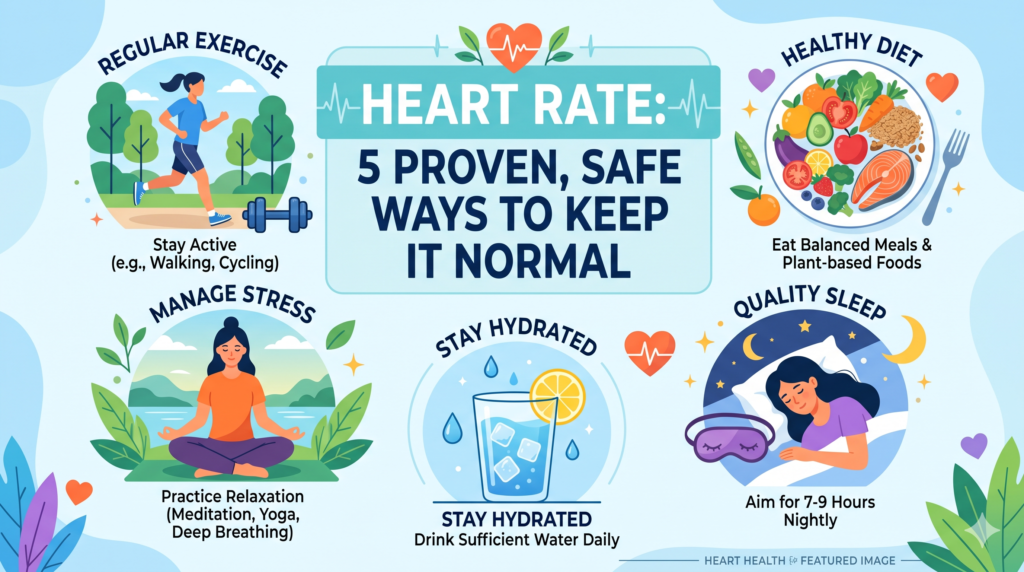
Heart Rate: 5 Proven, Safe Ways to Keep It Normal
A normal heart rate is essential for living a long, active, and healthy life. However, many people ignore their pulse completely until a serious problem finally arises. Therefore, understanding how your cardiovascular rhythm works is incredibly important. In addition, taking a few simple steps today can make a massive difference tomorrow. First, let us explore exactly what a healthy normal heart rate looks like for an average adult. What Is a Normal Heart Rate? Generally, a healthy resting pulse for adults ranges from 60 to 100 beats per minute. For example, athletes might have a resting heart rate as low as 40 beats per minute. Because their cardiac muscle is very strong, it does not have to work as hard to pump blood. Consequently, a lower resting pulse usually implies more efficient body function. Furthermore, your heart rate changes throughout the day based on your activities. If you are resting calmly, your pulse should remain steady. However, “normal” is not a single number for everyone. Age, fitness levels, and genetics all play a role in your measurements. Therefore, you should focus on your personal baseline. If your heart rate numbers consistently fall outside the 60–100 range, you should investigate why. The Anatomy of Your Pulse To truly understand your biology, you must look at the internal electrical system. Your cardiac muscle has a built-in pacemaker. It sends electrical signals to tell the organ when to beat. When this electrical system is healthy, your internal rhythm is consistent. The organ has four chambers. They work in perfect sync to maintain your steady pulse. If one chamber struggles, the whole system suffers. This is why consistent exercise is important. It strengthens the muscle walls of these chambers. A strong pump needs less effort to keep your heart rate in a safe, efficient zone. Additionally, the valves act like doors. They ensure blood flows in one direction. If you eat a poor diet, plaque can build up. This can damage the valves. Therefore, eating healthy fats is not just about weight; it is about keeping the “pipes” of your circulatory system clean. Why Your Rhythm Matters Your heart is a pump. It moves oxygen and nutrients to every cell in your body. When your pulse is steady, your organs function perfectly. Conversely, when the system works too hard, it suffers. Therefore, keeping a normal heart rate helps prevent exhaustion. Additionally, it lowers the risk of cardiovascular disease. High resting pulse numbers are often linked to higher risks of stroke or heart attacks. Because you cannot “feel” your internal timing perfectly, you should monitor it. Simple tracking can provide great peace of mind. Moreover, it empowers you to take control of your health. When you know your heart rate, you know your vitality. 5 Proven Ways to Maintain a Normal Heart Rate If you want to keep your pulse in a healthy range, you must build good daily habits. Therefore, follow these five simple, highly effective strategies. 1. Exercise Routinely First, regular physical activity is the best way to train your muscles. Specifically, cardio exercises like walking, swimming, or cycling make the cardiac wall stronger. As a result, your pulse stabilizes because the organ pumps more blood with much less effort. Try to get at least 30 minutes of light exercise every day. However, do not start too fast. Start with a brisk walk. Gradually increase your intensity to influence your heart rate positively. Why does this work? When you exercise, you stress the system. This sounds bad, but it is actually good. The body adapts to this stress. Consequently, your resting pulse will drop over time. Tips for Success: Always warm up for five minutes to safely raise your pulse. Monitor your heart rate during exercise to avoid overexertion. Focus on consistency rather than intensity. Listen to your body if you feel pain in your chest or arm. 2. Manage Your Stress Secondly, high stress directly causes your pulse to spike rapidly. Whenever you feel overwhelmed, your body releases adrenaline. Thus, your pulse begins to race. It prepares you to run or fight. However, in modern life, we are rarely running from predators. Instead, we sit at desks and worry. This chronic stress keeps the body in overdrive. Therefore, practicing deep breathing or meditation can calm your nervous system and heart rate. Practical Steps: Practice “Box Breathing”: Inhale for 4 seconds, hold for 4, exhale for 4, hold for 4. Take short, frequent breaks during your workday to reset your pulse. Engage in hobbies that you find relaxing. Limit screen time before bed to lower anxiety and stabilize your heart rate. 3. Eat a Heart-Healthy Diet In addition, what you eat directly impacts your cardiac rhythm. Therefore, try to consume foods rich in healthy fats, such as avocados and nuts. Conversely, you should avoid excessive caffeine and processed sugars. Because caffeine is a stimulant, it can cause your pulse to race unnecessarily. Furthermore, high sodium intake can raise your blood pressure. When pressure is high, the pump works harder, which affects your heart rate. Key Dietary Changes: Eat more leafy greens: Spinach and kale are excellent for circulation. Limit salt: Too much salt forces the body to retain fluid, which strains your pulse. Hydrate with water: Skip the energy drinks that spike your heart rate. Focus on whole grains: They provide steady energy without sudden changes to your rhythm. 4. Stay Hydrated Always Furthermore, dehydration forces the system to work much harder. When you lack water, your blood volume drops. Because the blood becomes thicker, the heart must pump faster, increasing your heart rate to push it through your body. To prevent this, drink plenty of water throughout the entire day. Do not wait until you are thirsty. By the time you feel thirst, your pulse might already be impacted by dehydration. Signs of Dehydration: Dark-colored urine. Headaches, which often accompany a high pulse. Dry mouth. Feeling sluggish or tired. Daily Goal: Aim for at least 8 glasses of water daily. However, adjust this based