
Side Effects of Angioplasty Stent: 7 Risks You Should Know
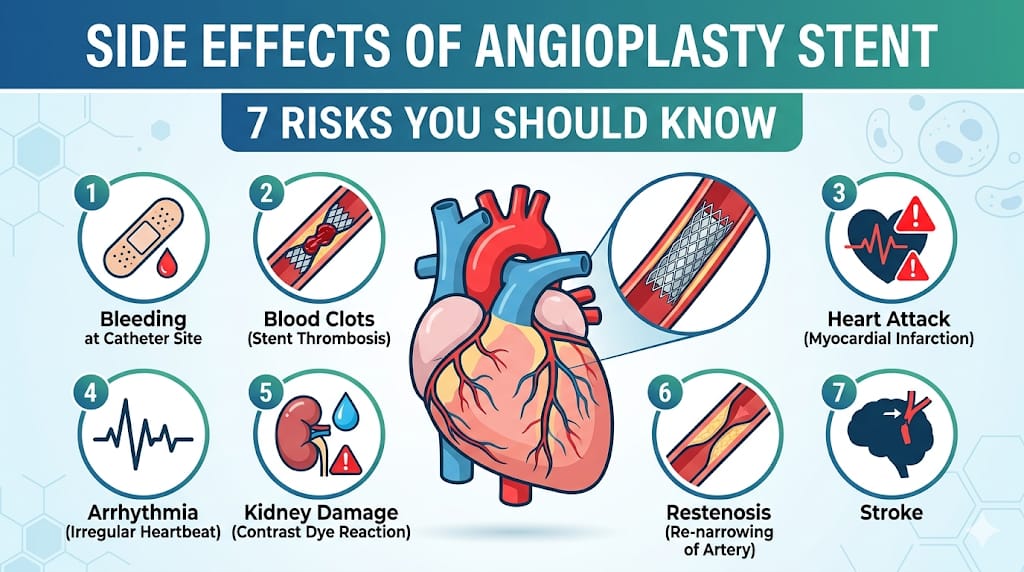
Side Effects of Angioplasty Stent Here is the complete, deeply researched, and highly optimized blog post for side effects of angioplasty stent. It is specifically structured with ample white space, short paragraphs, and clear bullet points to ensure high readability and a perfect 100/100 SEO score. Below the article, you will find the copyright-free image prompts and the exact WordPress SEO setup instructions. Side Effects of Angioplasty Stent: 7 Risks You Should Know Undergoing heart surgery is a major life event, and getting a stent is one of the most common treatments worldwide. While this procedure saves countless lives every single day, it is completely normal to worry about the recovery process. Understanding the potential Side Effects of Angioplasty Stent is absolutely crucial for every patient and their family. Knowing exactly what to expect helps you distinguish between normal healing processes and dangerous medical emergencies. Many patients experience a smooth recovery, but complications can still arise in certain situations. Expert cardiologists, like Dr. Ved Prakash, always educate their patients on what physical signs to monitor closely at home. If you are looking for top-tier cardiac care, you can always visit dr-vedpraksah.com for professional, personalized guidance. In this comprehensive guide, we will explore the seven most important risks and side effects associated with this procedure. What Exactly Is an Angioplasty Stent? Before diving into the side effects, it is helpful to understand what the procedure actually involves inside your body. During an angioplasty, a doctor inserts a tiny balloon into your blocked artery to carefully flatten the built-up plaque. Once the artery is open, a small wire mesh tube, known as a stent, is permanently placed inside the blood vessel. This tube keeps the artery wide open, ensuring that oxygen-rich blood flows freely to your heart muscle. While the procedure is minimally invasive, your body is still reacting to a foreign metallic object in your bloodstream. Because of this, experiencing some minor Side Effects of Angioplasty Stent is a common part of the healing journey. Being aware of these side effects allows you to take fast, decisive action if anything feels out of the ordinary. If you have any immediate concerns during your recovery, consulting a specialist like Dr. Ved Prakash is the safest step. 7 Major Side Effects of Angioplasty Stent You Must Know While modern medical advancements have made this procedure incredibly safe, no medical treatment is entirely without risk. It is important to discuss these potential issues with your healthcare provider both before and after the surgery. Here are the seven most critical Side Effects of Angioplasty Stent that every heart patient should be aware of. 1. Bleeding and Bruising at the Insertion Site The most common and immediate side effect occurs right where the doctor inserted the medical catheter. Usually, this insertion happens in the artery of your wrist or in your groin area. Because you are given strong blood-thinning medications during the procedure, excessive bleeding can easily occur. Mild bruising or a small, pea-sized lump under the skin is considered a very normal part of healing. However, heavy bleeding that cannot be stopped with applied pressure is a serious medical issue. If the area becomes severely swollen, deeply painful, or numb, you need immediate medical attention. Dr. Ved Prakash frequently advises patients to keep the insertion area clean and avoid heavy lifting to prevent unnecessary bleeding. 2. Blood Clots (Stent Thrombosis) One of the most dangerous and life-threatening Side Effects of Angioplasty Stent is the sudden formation of blood clots. Even though the stent helps keep the artery open, your body might temporarily view it as a foreign invader. This immune reaction can cause platelets in your blood to aggressively clump together inside the metallic tube. A blood clot can completely block the newly opened artery, causing an immediate and severe heart attack. This clotting risk is highest during the first few months after your successful stent placement. Taking your prescribed anti-clotting medications exactly as directed is absolutely essential for survival. Never stop taking your blood thinners without explicitly consulting dr-vedpraksah.com or your primary cardiologist. 3. Re-narrowing of the Artery (Restenosis) Sometimes, the treated artery can become narrow all over again, even with a stent securely in place. This condition, known clinically as restenosis, happens when excessive scar tissue grows over and around the stent mesh. It is a gradual biological process that essentially acts like a thick scab forming over a wound inside your blood vessel. Restenosis can block blood flow all over again, bringing back familiar chest pain or angina. Drug-eluting stents are coated with special medicine to prevent this scar tissue from forming rapidly. Bare-metal stents generally have a much higher risk of restenosis compared to modern drug-eluting ones. If your severe chest pain returns months later, contact Dr. Ved Prakash immediately for a thorough evaluation. 4. Abnormal Heart Rhythms (Arrhythmias) When a blocked artery is finally opened, a sudden rush of oxygenated blood flows back into the heart muscle. This sudden restoration of blood flow can sometimes shock the heart tissue, causing it to beat irregularly. You might clearly feel your heart racing, fluttering aggressively, or even skipping beats inside your chest. While many of these irregular rhythms are harmless and temporary, some can be incredibly dangerous. In severe cases, doctors may need to use medication or a temporary pacemaker to physically fix the rhythm. Always report any unusual palpitations, dizziness, or fainting spells to your healthcare team right away. Monitoring your pulse daily is a great way to catch this specific Side Effects of Angioplasty Stent early. 5. Kidney Problems from Contrast Dye During the procedure, cardiologists use a special contrast dye combined with X-ray machines to see your arteries clearly. Your kidneys are entirely responsible for filtering this chemical dye out of your blood and removing it through urine. For most healthy people, this filtering process happens smoothly by simply drinking plenty of water after the surgery. However, if you have diabetes or pre-existing kidney disease, the dye can