
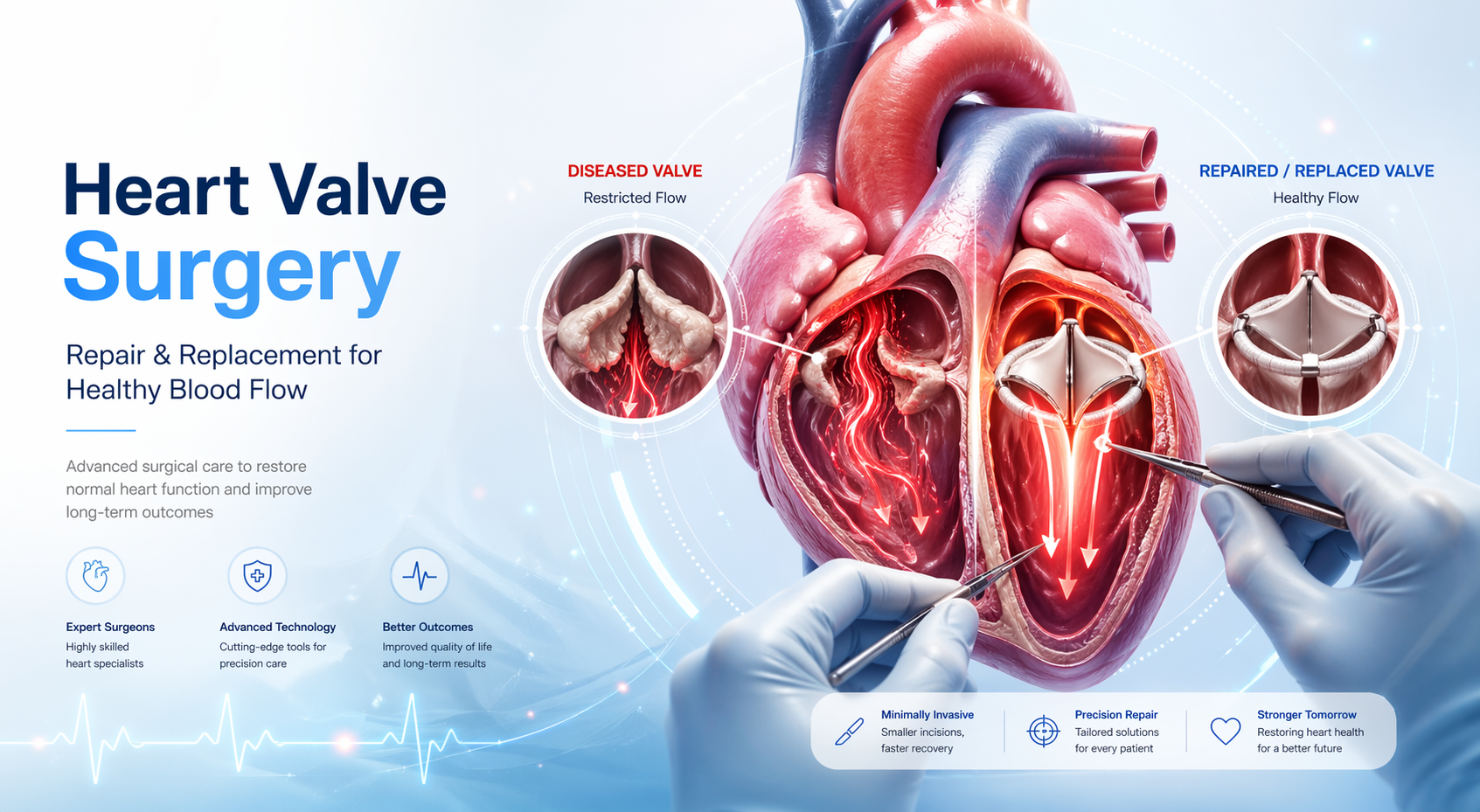
Heart valve surgery is an operation to repair or replace a heart valve that is no longer working correctly — either because it has become too narrow and restricts blood flow (stenosis), or because it leaks and allows blood to flow backwards (regurgitation). Understanding what heart valve surgery involves is the first step to making an informed decision about your treatment.
Dr. Ved Prakash, Director of CTVS at Yatharth Super Speciality Hospitals, Greater Noida, specialises in all forms of heart valve surgery — with a repair-first approach that preserves the patient’s own valve wherever the anatomy permits.
What Is Heart Valve Surgery — The Basics
The heart has four valves — the mitral, aortic, tricuspid, and pulmonary — that open and close with every heartbeat to keep blood flowing in the correct direction. When a valve becomes diseased, it forces the heart to work harder than it should. Over months and years, this extra strain weakens the heart muscle.
Heart valve surgery corrects the problem at its source — repairing or replacing the diseased valve so the heart can pump efficiently again. When performed before the heart muscle is significantly weakened, outcomes are excellent and most patients return to full normal life.
The Two Types of Heart Valve Surgery
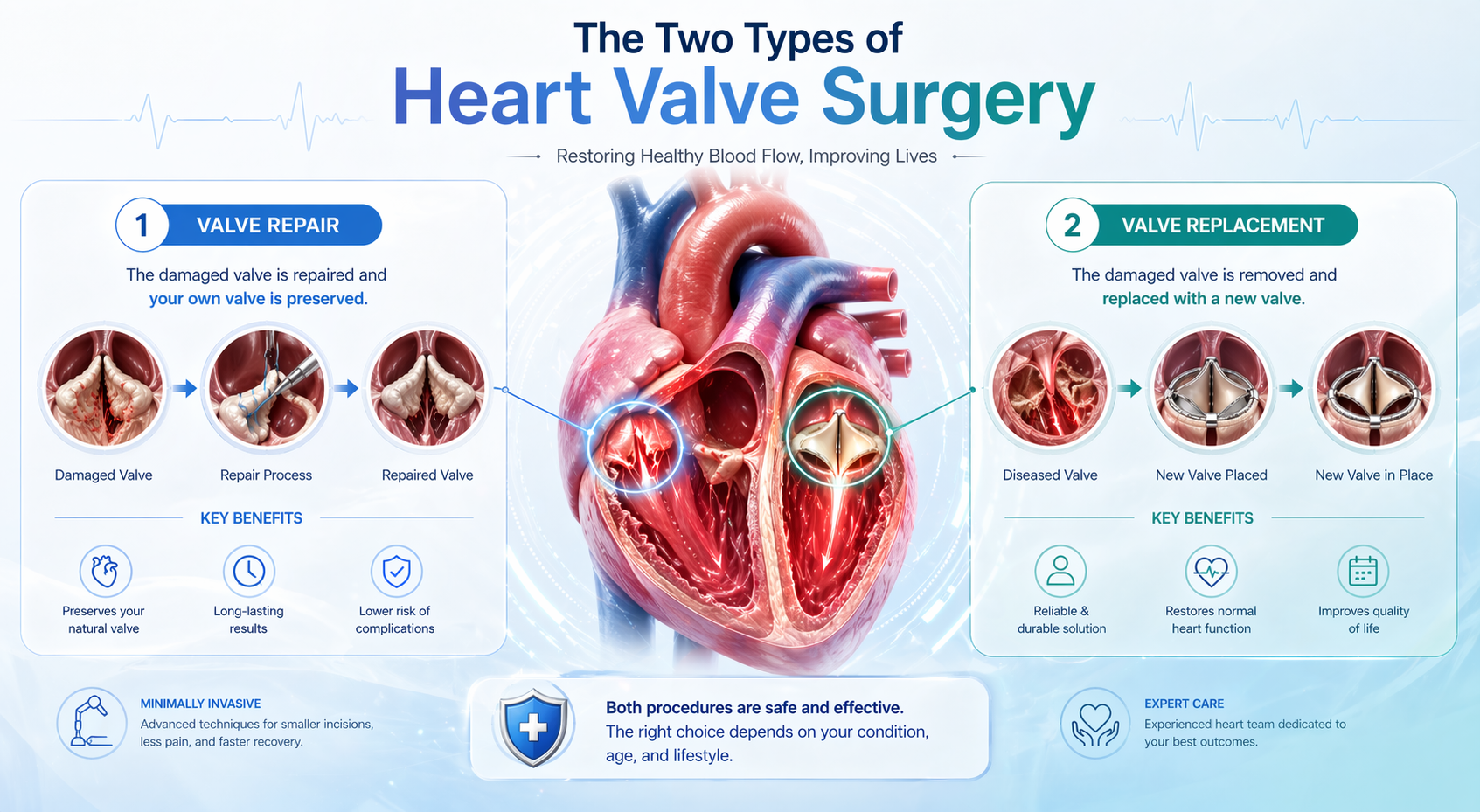
Valve Repair
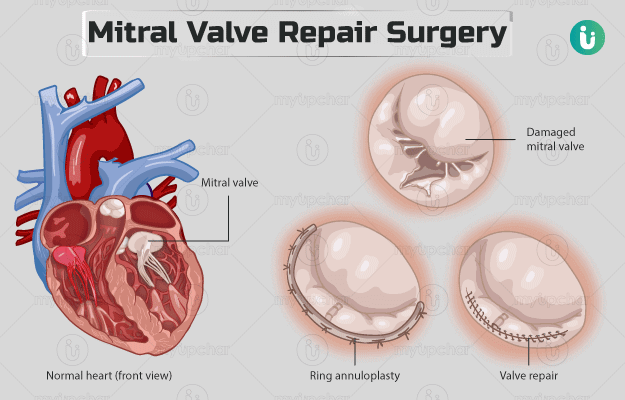
The diseased valve is reconstructed using the patient’s own tissue. No artificial valve is implanted. The surgeon reshapes, tightens, or restructures the valve leaflets and supporting apparatus to restore normal function.
Why repair is preferred over replacement whenever possible:
- No lifelong blood thinners (anticoagulation) required
- Better long-term durability than any prosthetic valve
- Lower risk of infection on the valve
- Preserved heart muscle function
Dr. Ved Prakash uses intraoperative echocardiography (echo during surgery) to confirm the repair is successful before closing the chest — if not, replacement is performed immediately.
Valve Replacement
When the valve cannot be repaired — because it is too heavily calcified, severely damaged, or the anatomy is not suitable — it is replaced with a prosthetic valve. Two types are available:
- Mechanical valve: A durable metal valve that lasts a lifetime. Requires lifelong warfarin (blood thinner) to prevent clotting. Best for younger patients who can reliably manage anticoagulation.
- Biological (tissue) valve: A natural tissue valve (from pig or cow). Does not require lifelong blood thinners in most patients. Wears out over 15–20 years. Best for patients over 60–65 or those who cannot safely take warfarin.
Which Valves Are Most Commonly Operated On?
| Valve | Common Conditions | Surgery Type |
| Mitral valve | Rheumatic heart disease, prolapse, degeneration | Repair preferred; replacement if not feasible |
| Aortic valve | Aortic stenosis (calcification), bicuspid valve | Replacement (mechanical or biological) or TAVI |
| Tricuspid valve | Secondary to mitral disease, rheumatic | Repair during mitral surgery if significant |
Symptoms That Suggest You May Need Heart Valve Surgery
- Breathlessness on exertion or at rest
- Fatigue and reduced exercise tolerance
- Swelling in the legs or ankles
- Heart palpitations or irregular heartbeat (atrial fibrillation)
- A heart murmur detected on examination
- Echocardiogram showing severe valve disease or reduced heart function
The timing of heart valve surgery is critical — operating before the heart muscle weakens gives the best results. Waiting too long — even without symptoms — can lead to irreversible heart damage.
What Happens During Heart Valve Surgery?
- General anaesthesia — you are fully asleep
- The heart is accessed through a chest incision (sternotomy)
- A heart-lung machine maintains circulation while the heart is stopped
- The diseased valve is repaired or replaced
- The heart is restarted and intraoperative echo confirms the result
- Total operative time: 3–5 hours for valve surgery
Recovery After Heart Valve Surgery
- ICU: 1–2 days for monitoring and breathing tube removal
- Ward: 7–10 days total hospital stay
- Home: Rest, walking, no driving for 6 weeks, no lifting for 8 weeks
- Full recovery: 8–12 weeks
- Follow-up: Annual echocardiogram to check valve function
For patients who are elderly or high-risk for open surgery, TAVI surgery in Delhi NCR offers aortic valve replacement without opening the chest — a catheter-based alternative with significantly faster recovery.
Frequently Asked Questions — Heart Valve Surgery
What is heart valve surgery and is it always open-heart surgery?
Heart valve surgery is traditionally performed through an open-chest incision (open-heart surgery). However, for the aortic valve specifically, TAVI (Transcatheter Aortic Valve Implantation) now offers a catheter-based alternative without a chest incision for suitable patients.
How long does heart valve surgery take?
Between 3 and 5 hours depending on which valve is being repaired or replaced and whether additional procedures (such as tricuspid repair or coronary bypass) are needed simultaneously.
Will I need blood thinners for life after heart valve surgery?
Only if you receive a mechanical valve replacement. Biological valve recipients and patients who undergo valve repair do not require lifelong anticoagulation in most cases — though short-term anticoagulation may be prescribed during healing.
Can valve surgery be avoided with medication?
Medications manage symptoms but cannot repair a structurally damaged valve. Once valve disease reaches a moderate-to-severe stage with symptoms or evidence of heart muscle impact on echocardiogram, surgery delivers better outcomes than continued medical management.
What is the success rate of heart valve surgery?
For elective valve repair or replacement at an experienced centre, success rates exceed 98%. Dr. Ved Prakash performs heart valve surgery in Delhi NCR with extensive experience in repair-first techniques from Medanta and Narayana Hospitals.
Is Heart Valve Surgery Right for You?
If an echocardiogram has shown valve disease — or if a murmur has been detected — book a heart valve surgery consultation in Delhi NCR with Dr. Ved Prakash at Yatharth Super Speciality Hospitals, Greater Noida. Online consultation is available — share your echo report via WhatsApp.
Dr. Ved Prakash | Director CTVS — Yatharth Super Speciality Hospitals, Greater Noida
📞 +91-9355255106 |
Book Appointment →

Pingback: Mitral Valve Disease — Symptoms, Causes and Treatment Options - Dr Ved Prakash