

VSD in babies — Ventricular Septal Defect — is the most common congenital heart defect, occurring in approximately 3–4 of every 1,000 live births. If your baby has been diagnosed with VSD, this article by Dr. Ved Prakash, Director of CTVS at Yatharth Super Speciality Hospitals, Greater Noida, explains what VSD in babies means, how to recognise the signs, when VSD treatment is needed, and what surgery or device closure involves.
What Is VSD in Babies?
VSD in babies is a hole in the muscular wall (septum) dividing the two lower chambers (ventricles) of the heart. A large VSD in babies allows blood to flow from the left ventricle (higher pressure) to the right ventricle — sending too much blood to the lungs. Over months, this extra blood flow causes the lungs to be overloaded, the heart to work harder, and if uncorrected, the pulmonary arteries to develop irreversible high blood pressure (Eisenmenger syndrome).
Small VSD in babies often close on their own in the first 2–3 years of life. Moderate and large VSDs require treatment — but the results are excellent and most babies treated for VSD go on to live completely normal lives.
Signs of VSD in Babies — What Parents Notice
The signs of VSD in babies are related to the size of the defect:
Small VSD in Babies
- Often detected only as a heart murmur during routine examination — the baby appears completely well
- Normal feeding and weight gain
- No symptoms — the small VSD in babies causes minimal left-to-right shunting
Moderate to Large VSD in Babies
- Poor feeding — the most important sign: Babies with significant VSD in babies tire during feeding, take very long to finish feeds, fall asleep before completing, or sweat profusely during feeds. The heart is working so hard to compensate for the VSD that feeding — which demands significant physical effort — overwhelms the baby.
- Poor weight gain: Despite adequate feeding attempts, babies with large VSD in babies often fail to gain weight normally. The heart’s extra workload consumes enormous energy — leaving little for growth.
- Rapid breathing: Increased lung blood flow from VSD in babies causes the respiratory rate to be faster than normal — particularly visible when the baby is resting or asleep
- Recurrent chest infections: Overloaded pulmonary blood flow makes the lungs more susceptible to respiratory infections
- Excessive sweating: Particularly on the forehead and scalp during feeds — a classic VSD in babies symptom reflecting the heart’s excessive effort
When Does VSD in Babies Close on Its Own?
The probability of spontaneous closure depends on VSD type and size:
- Muscular VSD in babies (holes in the muscular part of the septum): Up to 80% of small muscular VSDs close spontaneously by age 3. These are monitored with echocardiograms every 6 months until closure is confirmed.
- Perimembranous VSD in babies (near the aortic valve — most common type): Approximately 30–40% close spontaneously. Moderate and large perimembranous VSDs are unlikely to close and usually require treatment by age 1–2 years.
- Outlet (subarterial) VSD: Does not close spontaneously and may cause progressive aortic valve damage — early treatment is recommended.
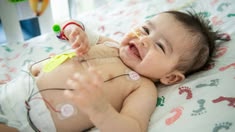
When Does VSD in Babies Need Treatment?
VSD treatment is recommended for babies with VSD when:
- The baby is failing to thrive despite adequate nutritional support
- Breathlessness and feeding difficulties significantly impair quality of life and growth
- The echocardiogram shows significant left heart enlargement from volume overload
- Pulmonary artery pressure is elevated
- The VSD is an outlet type — regardless of symptoms
- Age 1–2 years for significant moderate-to-large VSDs that have not shown signs of spontaneous closure
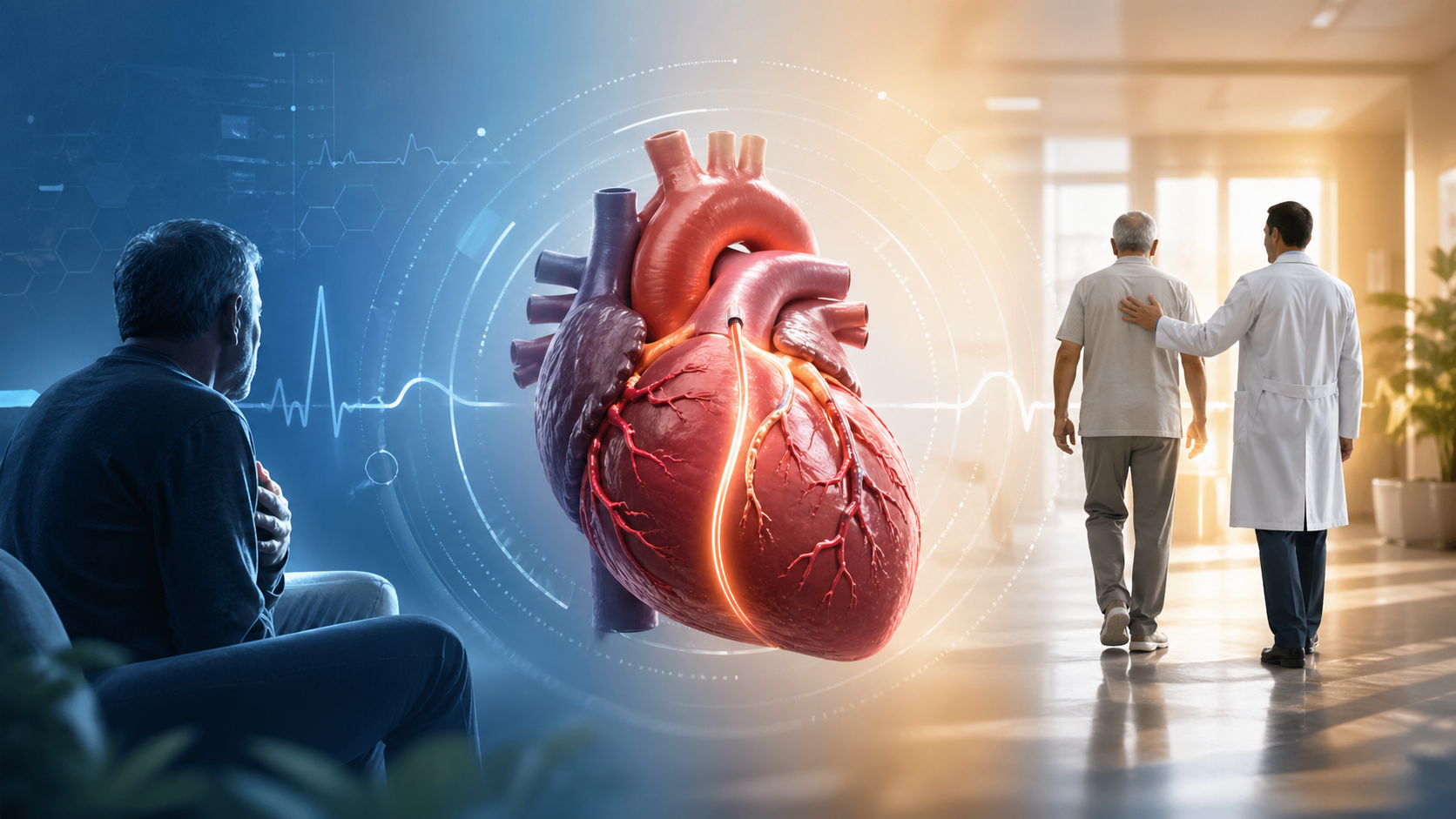
VSD Treatment Options in Delhi NCR
Surgical VSD Closure
Open-heart surgery is performed under general anaesthesia and cardiopulmonary bypass. The VSD is closed with a patch of pericardium (the heart’s own lining) or a synthetic patch sewn directly over the hole. VSD surgical closure is performed in babies as small as 3–4 kg when needed. Success rates at experienced centres exceed 98–99%. The child is typically in ICU for 1–2 days and hospital for 7–10 days total.
Device Closure
For some VSD types — particularly muscular VSDs and some perimembranous VSDs with suitable anatomy — a device (such as an Amplatzer VSD occluder) is delivered through a catheter in the femoral vein to close the VSD without surgery. No chest incision. Hospital stay 2–3 days. Not all VSDs are suitable for device closure — anatomy determines eligibility.
Frequently Asked Questions — VSD in Babies Treatment
What is VSD in babies and is it serious?
VSD in babies is a hole between the two lower chambers of the heart. Small VSDs are often not serious and may close on their own. Large VSDs cause significant heart strain and require treatment — but the results of VSD surgery or device closure are excellent, with most children living completely normal lives after treatment.
How do I know if my baby’s VSD is large or small?
The size is assessed on echocardiogram — measured in millimetres and also by the degree of left heart enlargement on the scan. Your paediatric cardiologist will classify the VSD as small, moderate, or large and advise whether monitoring or treatment is appropriate.
At what age is VSD surgery performed in babies?
If VSD treatment is urgently needed — due to failure to thrive or very high pulmonary pressure — surgery can be safely performed from 3–4 months of age. For less urgent cases, surgery is typically planned between 6 and 12 months of age, or up to 2 years if the baby is growing adequately and the VSD shows no sign of spontaneous closure.
What is the success rate of VSD surgery in Delhi NCR?
For VSD surgical closure at experienced paediatric cardiac surgery centres in Delhi NCR, success rates exceed 98–99%. Dr. Ved Prakash has performed paediatric heart surgery including VSD closure since 2017 across Medanta, Narayana, and Yatharth Hospital.
Book a paediatric heart surgery consultation for VSD in Delhi NCR. Echo reports can be shared via WhatsApp at +91-9355255106 for an initial assessment before your visit.
Dr. Ved Prakash | Director CTVS — Yatharth Super Speciality Hospitals, Greater Noida
📞 +91-9355255106 |
Book Appointment →
Pingback: Paediatric Heart Surgeon in Noida — Congenital Heart Surgery at Yatharth Hospital - Dr Ved Prakash
Pingback: Tetralogy of Fallot — What Parents Need to Know After a TOF Diagnosis - Dr Ved Prakash