Diet after heart surgery in India is one of the most common concerns patients ask about after bypass or valve surgery — and unfortunately, the advice many patients receive is so vague (“eat healthy”) that it is practically useless. Dr. Ved Prakash, Director of CTVS at Yatharth Super Speciality Hospitals, Greater Noida, provides a complete, India-specific diet guide after heart surgery — covering the foods to eat, the foods to avoid, and honest guidance on how to navigate desi cooking in the recovery period.
Why Diet After Heart Surgery in India Matters More Than Most Patients Realise
Diet after heart surgery in India directly affects:
- The lifespan of bypass grafts and stents — a high-fat diet accelerates new plaque formation in the grafted vessels
- Blood cholesterol and triglyceride levels — which must be controlled with both medication AND diet
- Blood pressure control — excessive sodium intake raises blood pressure and stresses the repaired heart
- Blood sugar management — particularly important since many bypass surgery patients have diabetes
- Wound healing and recovery — adequate protein is essential in the 6–8 weeks after surgery
The diet after heart surgery in India is not about punishment or deprivation — it is about making smart, sustainable choices that protect your surgical investment for the next 15–20 years.
What to Eat After Heart Surgery in India
Grains and Carbohydrates
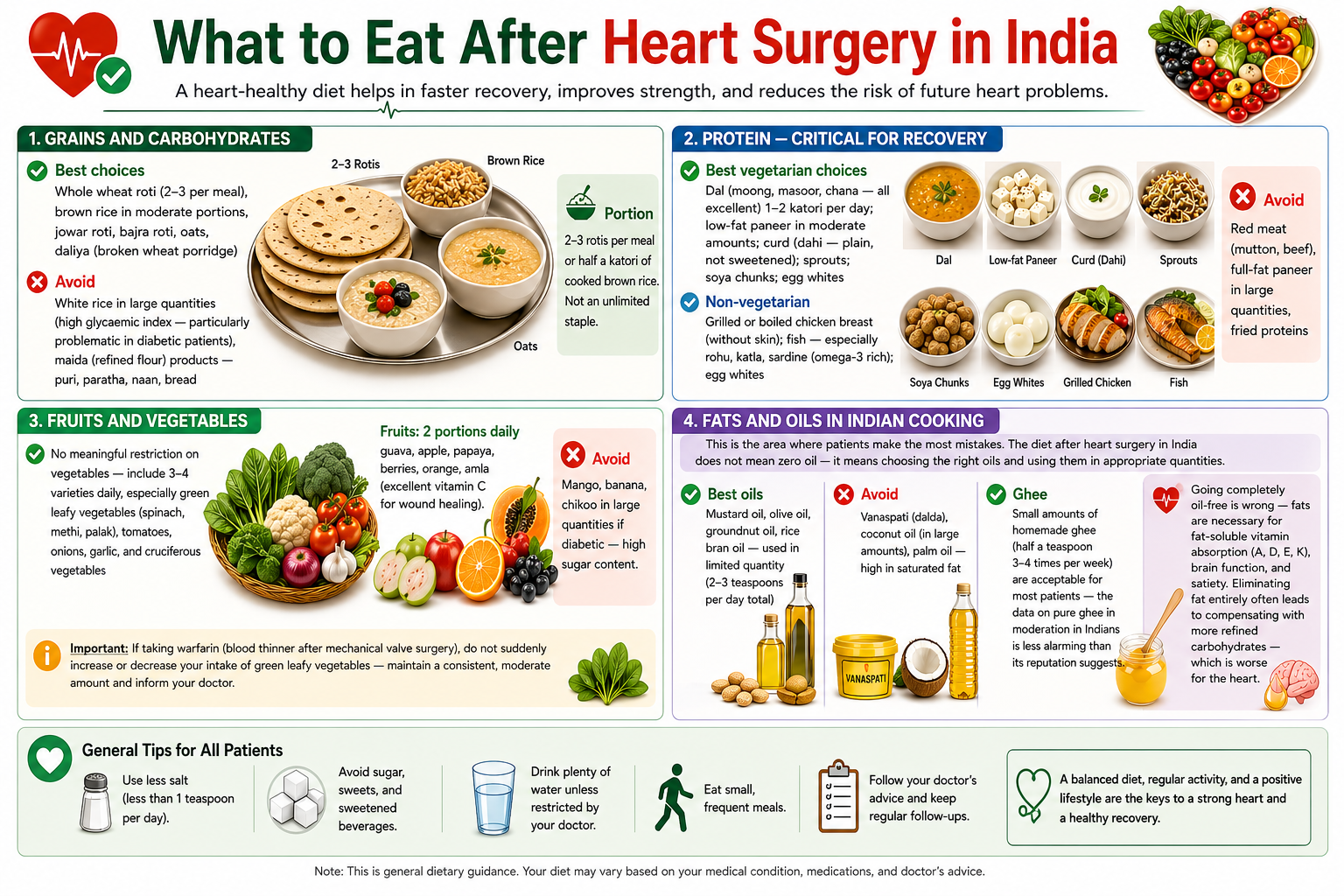
- Best choices: Whole wheat roti (2-3 per meal), brown rice in moderate portions, jowar roti, bajra roti, oats, daliya (broken wheat porridge)
- Avoid: White rice in large quantities (high glycaemic index — particularly problematic in diabetic patients), maida (refined flour) products — puri, paratha, naan, bread
- Portion: 2–3 rotis per meal or half a katori of cooked brown rice. Not an unlimited staple.
Protein — Critical for Recovery
- Best vegetarian choices: Dal (moong, masoor, chana — all excellent) 1–2 katori per day; low-fat paneer in moderate amounts; curd (dahi — plain, not sweetened); sprouts; soya chunks; egg whites
- Non-vegetarian: Grilled or boiled chicken breast (without skin); fish — especially rohu, katla, sardine (omega-3 rich); egg whites
- Avoid: Red meat (mutton, beef), full-fat paneer in large quantities, fried proteins
Fruits and Vegetables
- No meaningful restriction on vegetables — include 3–4 varieties daily, especially green leafy vegetables (spinach, methi, palak), tomatoes, onions, garlic, and cruciferous vegetables
- Fruits: 2 portions daily — guava, apple, papaya, berries, orange, amla (excellent vitamin C for wound healing). Avoid: mango, banana, chikoo in large quantities if diabetic — high sugar content.
- Important: If taking warfarin (blood thinner after mechanical valve surgery), do not suddenly increase or decrease your intake of green leafy vegetables — maintain a consistent, moderate amount and inform your doctor
Fats and Oils in Indian Cooking
This is the area where patients make the most mistakes. The diet after heart surgery in India does not mean zero oil — it means choosing the right oils and using them in appropriate quantities.
- Best oils: Mustard oil, olive oil, groundnut oil, rice bran oil — used in limited quantity (2–3 teaspoons per day total)
- Avoid: Vanaspati (dalda), coconut oil (in large amounts), palm oil — high in saturated fat
- Ghee: Small amounts of homemade ghee (half a teaspoon 3–4 times per week) are acceptable for most patients — the data on pure ghee in moderation in Indians is less alarming than its reputation suggests. Commercially produced ghee or large amounts of ghee daily should be avoided.
- Going completely oil-free is wrong — fats are necessary for fat-soluble vitamin absorption (A, D, E, K), brain function, and satiety. Eliminating fat entirely often leads to compensating with more refined carbohydrates — which is worse for the heart.
Heart-Protective Foods to Add Daily
- Garlic: 2–3 raw or cooked cloves daily — modest LDL-lowering and anti-platelet effect
- Flaxseeds (alsi): 1 tablespoon ground daily — excellent plant omega-3 source
- Walnuts: 4–5 walnuts daily — omega-3, vitamin E, and anti-inflammatory
- Amla (Indian gooseberry): 1 fresh amla or 1 teaspoon amla powder daily — exceptionally high vitamin C
- Methi (fenugreek seeds): Soaked overnight, consumed in the morning — helps blood sugar and cholesterol control
What to Avoid After Heart Surgery in India
- Namkeen, papad, pickle, processed snacks: Extremely high in sodium — significantly raises blood pressure
- Restaurant and dhaba food: Cooked in large quantities of oil, high sodium, unknown quality fats — avoid for the first 6 months at minimum
- Full cream milk and curd: Switch to low-fat (toned) milk and curd
- Fried foods of any kind: Puri, bhatura, samosa, pakora, chips — avoid entirely for 12 months after surgery
- Mithai and sweets: High in sugar and saturated fat — particularly dangerous for diabetic bypass patients. Festivals are not an excuse to make exceptions.
- Alcohol: Avoid completely for at least 3 months after surgery. After that, if the cardiologist permits — maximum 1 small drink per day for men, occasionally. Avoid entirely if on warfarin.
Diet After Heart Surgery India — The Practical Weekly Framework
| Meal | Good Choices |
| Early morning | Soaked methi seeds + 4 walnuts + amla |
| Breakfast | Oats with low-fat milk, or daliya, or 2 egg whites with whole wheat toast |
| Lunch | 2 whole wheat rotis + dal (1 katori) + sabzi (cooked in minimal oil) + salad |
| Afternoon | Fruit (guava/apple) + plain low-fat dahi |
| Dinner | 2 rotis + light sabzi or grilled fish/chicken + dal or sprouts |
| Bedtime | Half katori low-fat milk (plain, no sugar) |
Frequently Asked Questions — Diet After Heart Surgery India
Can I eat dal roti after bypass surgery?
Yes — whole wheat roti and dal are excellent choices for the diet after heart surgery in India. Dal provides plant protein, fibre, and complex carbohydrates with a low glycaemic index. Use minimal oil in the tadka. Avoid high-sodium spice mixes and pickle on the side.
Can I eat ghee after bypass surgery?
Small amounts of homemade ghee — half a teaspoon occasionally — are acceptable for most patients as part of a balanced diet after heart surgery in India. Daily or large-quantity ghee should be avoided. Commercially produced ghee contains more saturated fat than homemade varieties.
How long should I follow the diet after heart surgery?
The diet after heart surgery in India is not a temporary restriction — it is a permanent lifestyle change. The grafts and repaired valves benefit from lifelong heart-healthy eating. That said, the strictest phase is the first 3–6 months. After that, occasional indulgences at festivals or family events are acceptable — as long as they are exceptions, not the daily pattern.
Can I eat fish after bypass surgery?
Yes — oily fish (rohu, katla, sardine, mackerel) are among the best foods for the diet after heart surgery in India. Omega-3 fatty acids in fish reduce triglycerides, lower inflammation, and protect bypass grafts. Grilled or steamed fish is preferred over fried.
For more on recovery after bypass surgery, read our complete guide on life after bypass surgery — week by week recovery.
Dr. Ved Prakash | Director CTVS — Yatharth Super Speciality Hospitals, Greater Noida
📞 +91-9355255106 |
Book Appointment →