
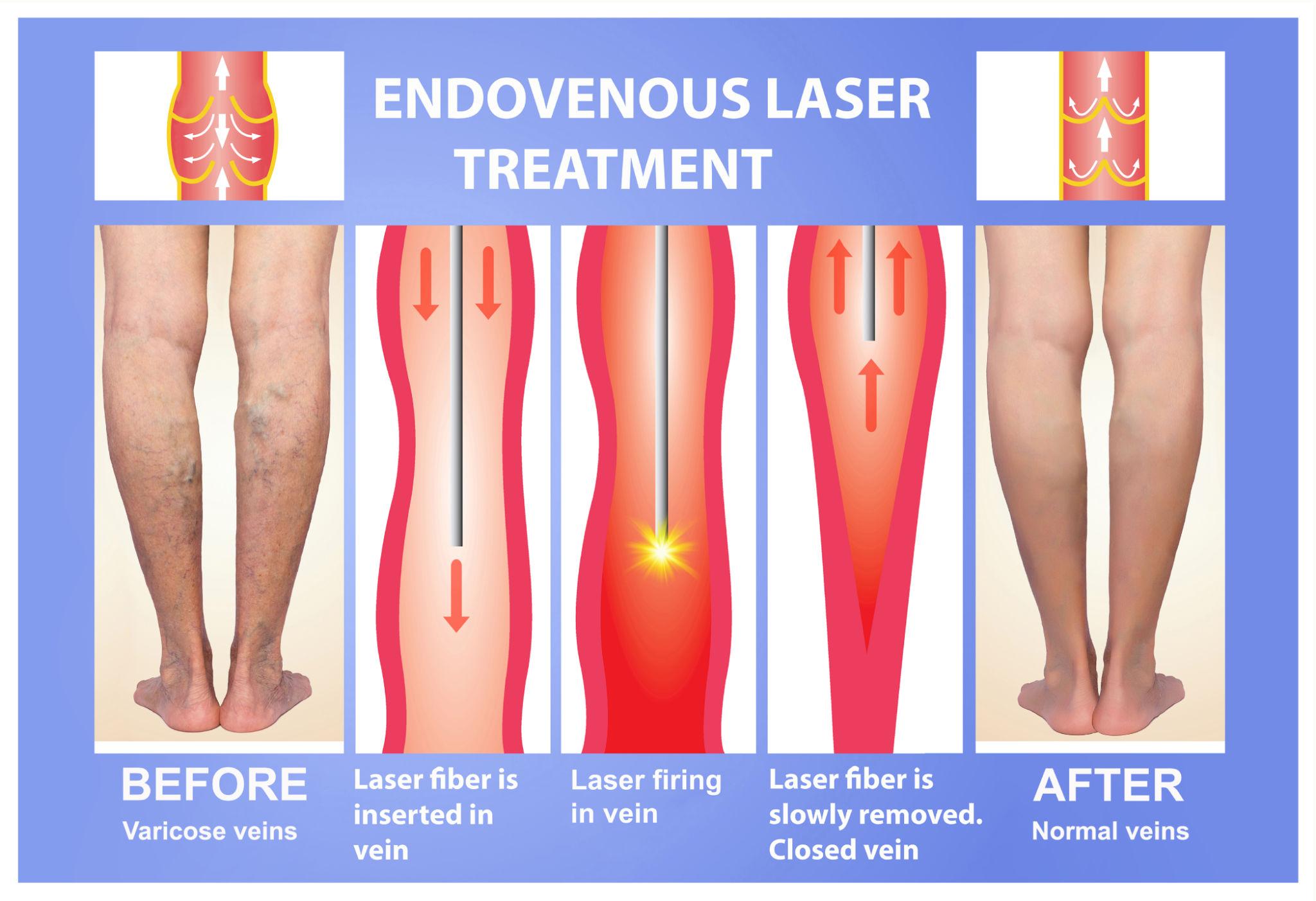
 EVLT — Endovenous Laser Treatment — is a walk-in, walk-out procedure that closes varicose veins permanently from the inside using laser energy, with no surgical incision, no stitches, and no general anaesthesia. It has replaced surgical stripping as the first-choice treatment for most varicose veins. Dr. Ved Prakash, Director of CTVS and Vascular Surgery at Yatharth Super Speciality Hospitals, Greater Noida, explains exactly what EVLT laser treatment involves, who it works for, and what recovery looks like day by day.
How Does EVLT Work?
To understand EVLT, you first need to understand the problem it solves. Varicose veins are caused by valve failure in the long saphenous vein — the main superficial vein that runs from the foot to the groin. When this vein’s valves stop working, blood pools and the branches feeding off it become the visible varicose veins on the surface.
EVLT targets the root cause directly. A laser fibre is inserted into the long saphenous vein through a needle puncture — no cut, no incision. As the fibre is slowly withdrawn along the length of the vein, it delivers controlled laser energy to the vein wall, causing it to collapse and seal permanently. Within 4–8 weeks, the sealed vein is absorbed by the body. Blood that previously pooled in the diseased vein automatically reroutes through the healthy deep veins — relieving symptoms and collapsing the visible surface varicosities.
What Happens on the Day of EVLT
Duplex Ultrasound Mapping First
Before the laser is inserted, a duplex ultrasound scan is performed to map the incompetent saphenous vein — its length, diameter, and the location of the incompetent junction at the groin. This guides precisely where the laser fibre will be placed and how long it needs to run.
Access Under Ultrasound Guidance
A fine needle puncture — usually at the knee — is made into the saphenous vein under ultrasound vision. No incision, no stitch. A thin sheath is introduced through which the laser fibre is threaded up to the level of the groin junction.
Tumescent Anaesthesia
A dilute local anaesthetic solution is injected around the vein using very fine needles along its entire length. This is called tumescent anaesthesia. It numbs the vein completely — so the laser is painless — and also acts as a heat buffer protecting the surrounding tissue from thermal injury. This step takes 10–15 minutes and is the only mildly uncomfortable part of the procedure.
Laser Activation
The laser is switched on and the fibre is slowly pulled back along the vein at a controlled rate. You feel nothing. The procedure takes 15–25 minutes per leg.
Compression and Walking
A compression bandage is applied immediately. Patients are asked to walk for 20–30 minutes in the corridor before leaving the hospital. Walking straight away activates the deep veins and prevents clot formation. You then go home — same day, every time.
Recovery After EVLT — Day by Day
- Day of procedure: Walk 20–30 minutes before leaving. Go home. Mild tightness along the treated vein is normal — this is the vein sealing. Not painful.
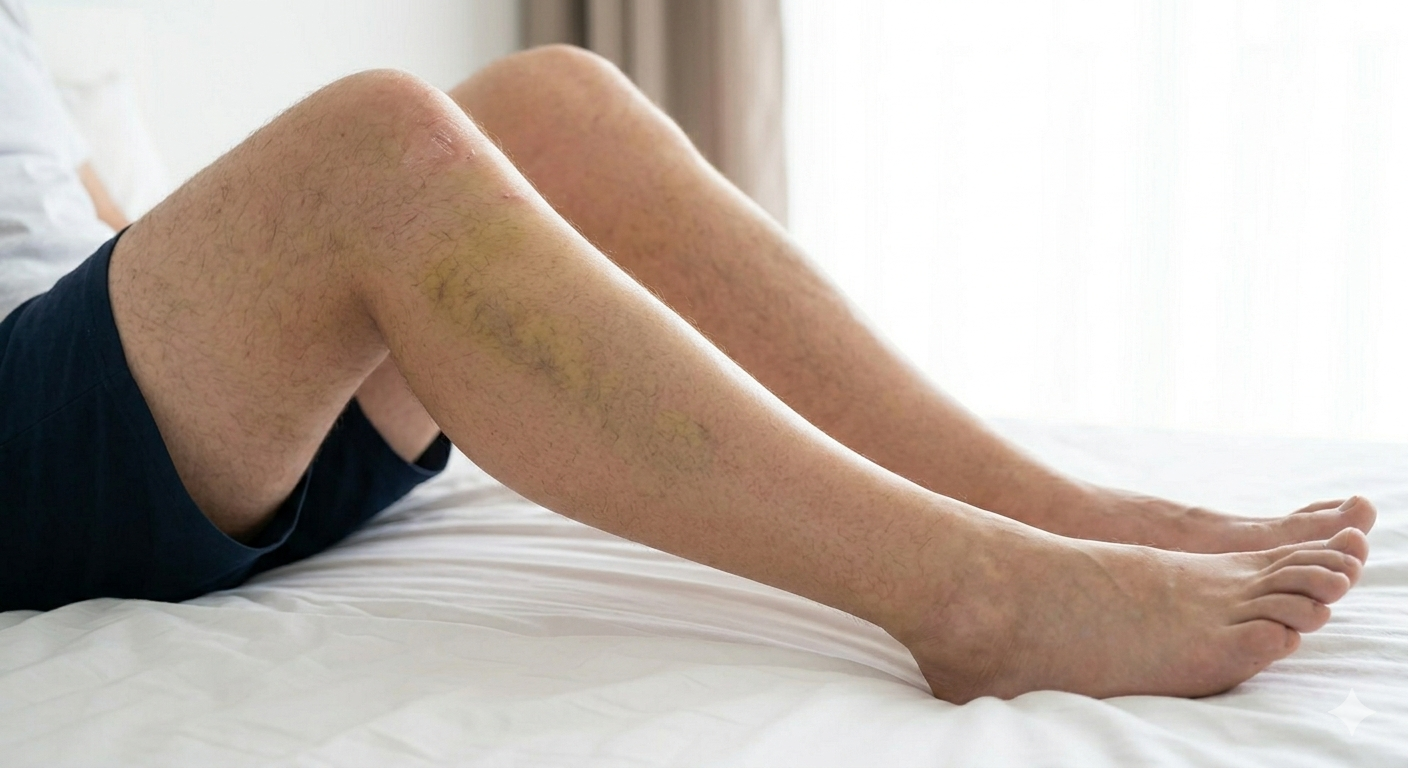
- Days 1–3: Bruising develops along the vein track. This is expected and not a complication. Continue walking 30 minutes daily. Compression stocking on throughout the day, off at night.
- Days 3–5: Most desk-work patients return to work. The vein feels like a cord under the skin — the sealed vein being absorbed. This resolves over 4–6 weeks.
- Week 1: Avoid hot baths, saunas, swimming. Shower normally. No prolonged standing for more than 2 hours at a stretch.
- Week 2: Bruising fades significantly. Compression stocking continues for the full 2 weeks post-procedure.
- Week 4–6: Follow-up duplex ultrasound confirms the vein is fully closed. Any residual smaller tributary veins visible at the surface are treated with sclerotherapy injection at this visit if needed.
EVLT vs Surgical Stripping — Why EVLT Is Now the Standard
| Feature | EVLT Laser | Surgical Stripping |
| Anaesthesia | Local (tumescent) | General or spinal |
| Incisions | None — needle puncture only | 2–3 small incisions |
| Same-day discharge | Yes — every time | Usually day procedure or overnight |
| Return to desk work | 1–2 days | 2–3 weeks |
| Post-procedure pain | Mild tightness only | Wound pain for 5–10 days |
| 5-year closure rate | >90% | >85% — similar |
Who Qualifies for EVLT?
EVLT is suitable for most patients with symptomatic varicose veins from great or small saphenous vein incompetence. A duplex ultrasound assessment beforehand confirms suitability — specifically, the vein must be large enough to accept the laser fibre and accessible by needle puncture. Very large or tortuous veins may require surgical stripping. Active DVT in the affected leg is a contraindication.
To understand more about the underlying condition EVLT treats, read about how varicose veins develop. For more on all treatment options — including sclerotherapy and surgical alternatives — visit our varicose vein treatment page.
Frequently Asked Questions — EVLT Laser Varicose Vein Treatment
Is EVLT laser treatment for varicose veins painful?
No — the tumescent anaesthesia numbs the vein completely before the laser activates. Patients feel no pain during the procedure. Mild tightness and bruising along the treated vein is normal for 3–7 days after and is not painful.
How long does recovery take after EVLT?
Desk-work patients return within 1–2 days. Walking from the same day. Compression stockings for 2 weeks. Physically demanding work — prolonged standing or heavy lifting — avoided for 2 weeks. Full activity by week 3.
How long does EVLT last?
The treated vein is permanently closed. Closure rates exceed 90% at 5 years. The treated vein does not reopen. New varicose veins can develop from other branches over subsequent years but the treated vein stays sealed.
Can both legs be treated with EVLT on the same day?
Yes — bilateral EVLT on the same day is safe and commonly performed. Post-procedure walking is required. Most patients tolerate bilateral EVLT well under tumescent anaesthesia.
Dr. Ved Prakash | Director, CTVS — Yatharth Super Speciality Hospitals, Greater Noida
📞 +91-9355255106 |
📧 drvedprakash@gmail.com |
Book Appointment →