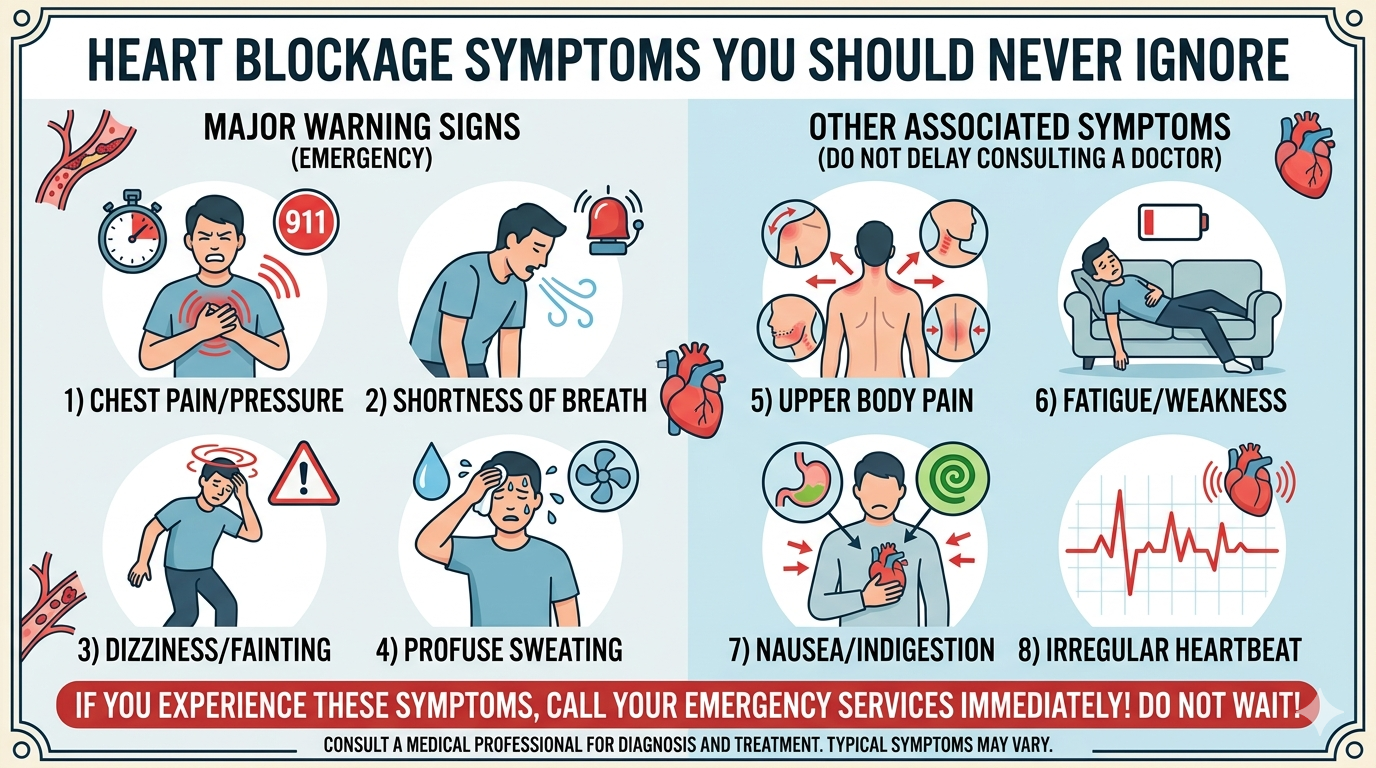
 The most dangerous thing about heart blockage symptoms is that many people dismiss them — or mistake them for indigestion, muscle pain, or tiredness. By the time a heart attack occurs, the blockage has often been building silently for years.
Dr. Ved Prakash, Director of CTVS at Yatharth Super Speciality Hospitals, Greater Noida, explains the key symptoms that indicate a coronary artery may be blocked — and why acting on them early can prevent a heart attack or avoid emergency surgery.
What Is a Heart Blockage?
A heart blockage occurs when fatty deposits called plaque build up inside the coronary arteries — the blood vessels that supply the heart muscle with oxygen. As plaque accumulates over years, the artery narrows. When blood flow is significantly restricted, the heart muscle sends out warning signals. When a plaque ruptures and a blood clot forms suddenly, a heart attack occurs.
Recognising heart blockage symptoms early gives you the best chance of treatment before a heart attack — or before the blockages become severe enough to require emergency surgery.
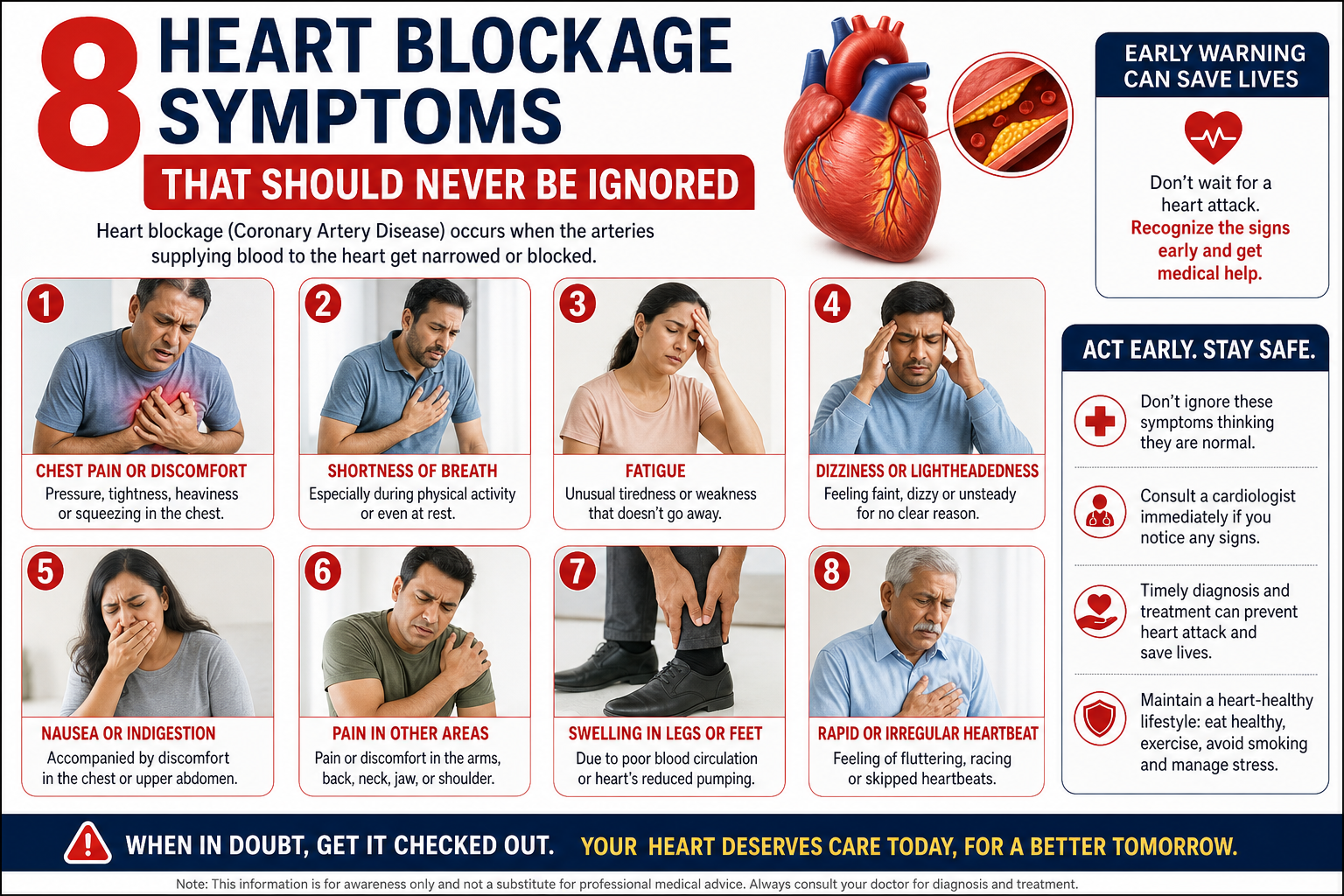
8 Heart Blockage Symptoms That Should Never Be Ignored
1. Chest Pain or Chest Tightness During Activity
This is the most classic heart blockage symptom. Patients describe it as pressure, tightness, squeezing, or heaviness in the centre of the chest — typically triggered by walking, climbing stairs, or any physical exertion. It is relieved by rest within 5–10 minutes.
This pattern is called stable angina and it almost always means there is a significant coronary artery blockage. Do not ignore it. Get an ECG and see a cardiologist the same day.
2. Chest Pain at Rest or Waking at Night With Chest Pain
Chest pain that occurs at rest — or wakes you from sleep — is more serious. It suggests the blockage has become critical or unstable, and the risk of a heart attack in the next 48–72 hours is significantly elevated. This requires emergency cardiac evaluation.
3. Breathlessness on Mild Exertion
Unexplained breathlessness — feeling short of breath climbing one flight of stairs, walking 200 metres, or doing light housework — is frequently a heart blockage symptom. When the heart muscle is deprived of blood, it does not pump efficiently, causing fluid to back up into the lungs.
Many patients — particularly women and diabetic patients — present with breathlessness as their primary or only symptom, with no chest pain at all.
4. Pain Radiating to the Left Arm, Jaw, Neck, or Shoulder
The heart and these areas share nerve pathways, which is why cardiac pain often radiates outward. Pain or discomfort in the left arm (particularly the inner forearm), jaw, neck, or between the shoulder blades — especially during exertion — is a strong warning sign of coronary artery disease.
5. Unusual Fatigue That Does Not Improve With Rest
A heart working against blocked arteries has to pump harder. This consumes energy and leads to persistent, unexplained fatigue — particularly in women, who frequently report feeling exhausted for weeks before a heart attack. If tiredness does not improve despite adequate sleep and rest, a cardiac evaluation is warranted.
6. Palpitations or an Irregular Heartbeat
A blocked coronary artery can irritate the heart’s electrical system, causing palpitations — a sensation of the heart racing, skipping beats, or fluttering. While many causes of palpitations are benign, any palpitations combined with other symptoms on this list require urgent investigation.
7. Dizziness or Light-Headedness on Exertion
When a blocked artery limits blood flow to the heart during exercise, the brain may temporarily receive less blood too — causing dizziness or near-fainting. This is particularly concerning and warrants immediate cardiac assessment.
8. Swelling in the Feet or Ankles by Evening
When the heart’s pumping capacity is reduced by poor blood supply, fluid accumulates in the lower limbs. Persistent ankle or foot swelling that worsens through the day — without another obvious cause — can indicate reduced heart function from blocked arteries.
Symptoms in Women and Diabetic Patients Are Often Different
This is critically important. Women and people with diabetes often do not experience classic chest pain. Their heart blockage symptoms may include:
- Unexplained fatigue and weakness
- Nausea or vomiting with exertion
- Breathlessness without chest pain
- Discomfort in the upper back or jaw
- A vague sense that “something is wrong”
Diabetic patients may have silent ischaemia — blocked arteries with no symptoms at all — because diabetic neuropathy blunts the pain signals the heart normally sends. This is why routine cardiac screening for diabetic patients over 50 is strongly recommended.
What to Do If You Have These Symptoms
| Symptom | What to Do | Urgency |
| Chest pain on exertion, relieved by rest | See a cardiologist today. Get ECG and echo. | Same day |
| Chest pain at rest or waking at night | Go to emergency immediately. Do not drive yourself. | Emergency |
| Unexplained breathlessness on mild activity | Cardiac evaluation within 24–48 hours. | Urgent |
| Pain radiating to arm, jaw, or neck | Same-day cardiology review. | Same day |
| Persistent fatigue in a diabetic patient | Cardiac screening — ECG, stress test, echo. | This week |
What Tests Diagnose a Heart Blockage?
- ECG (Electrocardiogram): First-line test. Shows electrical changes caused by poor blood supply to the heart muscle.
- Echocardiogram (Echo): Ultrasound of the heart showing how well each section of the heart wall is moving and pumping.
- TMT (Treadmill Stress Test): ECG recorded while exercising. Reveals blockages that only appear when the heart is under demand.
- CT Coronary Angiography: A non-invasive scan that shows plaque and narrowing inside the coronary arteries.
- Conventional Coronary Angiography: The gold standard — a catheter-based procedure that shows the exact location and severity of each blockage. Performed when intervention is likely to be needed.
Frequently Asked Questions — Heart Blockage Symptoms
Can heart blockage symptoms be mistaken for something else?
Yes — very commonly. Chest tightness is mistaken for acidity or muscle pain. Breathlessness is attributed to fitness or anaemia. Jaw or arm pain is put down to dental issues or a muscle strain. This is why a proper cardiac evaluation is essential for anyone with recurring unexplained symptoms, particularly over the age of 40.
Can a heart blockage be present with no symptoms at all?
Yes — particularly in diabetic patients. This is called silent ischaemia. The blocked artery restricts blood to the heart without the patient experiencing any chest pain. Routine screening with ECG and echocardiogram is strongly recommended for diabetic patients over 50.
What is the difference between a heart blockage and a heart attack?
A heart blockage is a narrowed coronary artery that restricts blood flow — it causes symptoms but the heart muscle is still alive. A heart attack occurs when the blockage becomes complete (usually from a blood clot on a ruptured plaque) and a section of heart muscle begins to die from lack of oxygen. Treating blockages before this happens is the goal of cardiac medicine.
At what age do heart blockage symptoms usually appear?
Symptoms typically appear from age 45 onwards in men and age 55 onwards in women — though they can occur earlier in people with diabetes, hypertension, smoking history, high cholesterol, or a family history of heart disease.
Do Not Wait — Get a Cardiac Opinion Today
If any of the symptoms above sound familiar, consult a cardiac surgeon in Delhi NCR before they progress further. An angiogram that shows a blockage is not a death sentence — it is the beginning of a treatment plan.
If you have already had an angiogram and been told surgery is needed, a cardiac second opinion in Delhi NCR from Dr. Ved Prakash can help you understand all your options clearly before making a decision.
Dr. Ved Prakash | Director CTVS — Yatharth Super Speciality Hospitals, Greater Noida
📞 +91-9355255106 | Book Appointment →