
 Heart bypass vs angioplasty is a vital decision that thousands of heart disease patients face every single year. When your coronary arteries narrow due to plaque buildup, your heart muscle starves for crucial oxygen. Therefore, restoring proper blood flow becomes an immediate priority. Because both procedures achieve this goal differently, understanding them is essential.
Dr. Vedprakash notes that the right choice depends heavily on your specific medical history. In addition, the location and severity of your arterial blockages play a massive role. Let us break down the mechanisms, recovery times, and outcomes of these two life-saving procedures.
What is Heart Bypass Surgery?
Heart bypass surgery, or Coronary Artery Bypass Grafting (CABG), is a major surgical procedure. During this operation, a cardiothoracic surgeon takes a healthy blood vessel from your leg, arm, or chest. Consequently, they use this vessel to create a brand-new pathway around the blocked heart artery.
This procedure is typically recommended for patients with complex, severe blockages. For instance, if you have triple-vessel disease or blockages in the left main coronary artery, bypass surgery is usually the safest option.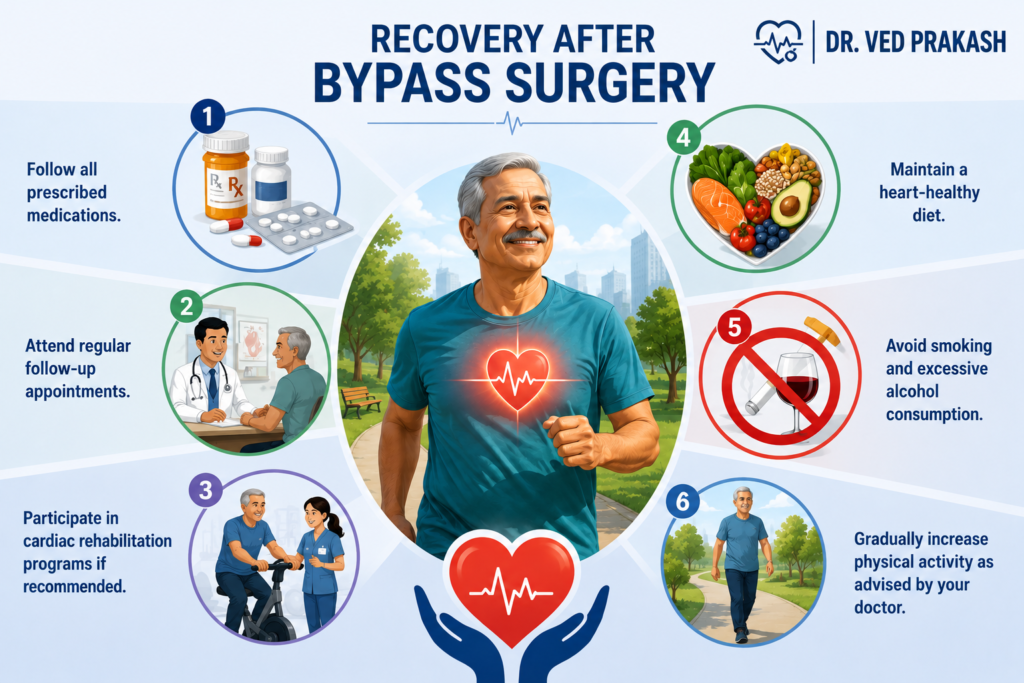
The Pros of Bypass Surgery
-
Choosing heart bypass vs angioplasty often comes down to long-term durability. Heart bypass surgery (CABG) stands out because it offers excellent, lasting protection against future cardiac events. Research shows that bypass grafts generally last much longer than coronary stents, which frequently require repeat procedures over time.
In addition, bypass surgery achieves complete revascularization. This means it can safely bypass multiple, heavily calcified blockages that a standard catheter cannot clear. Because surgeons place the new graft completely past the diseased section of the artery, it fundamentally resets the blood supply to your heart muscle.
Therefore, for patients dealing with complex, multi-vessel blockages or underlying conditions like diabetes, bypass surgery significantly lowers the long-term risk of future heart attacks. It remains the gold standard for providing lasting peace of mind and extending survival in severe cases.
The Cons of Bypass Surgery
While highly effective, choosing heart bypass vs angioplasty means weighing the highly invasive nature of open-heart surgery. To perform a traditional bypass, a cardiothoracic surgeon must carefully divide the breastbone to access the heart. Because of this, the procedure typically requires the use of a heart-lung machine to keep blood circulating while the heart is temporarily stopped.
Consequently, this profound physical toll demands a significantly longer recovery timeline. Patients typically spend four to seven days closely monitored in the hospital post-surgery. Furthermore, returning to normal daily activities takes anywhere from six to twelve weeks as the bone and deep tissue heal.
Therefore, the major disadvantages include intense post-operative discomfort, a lengthy temporary disruption to your lifestyle, and a higher risk of surgical complications like infections when compared to less invasive options.
What is Angioplasty?
Angioplasty, or Percutaneous Coronary Intervention (PCI), is a minimally invasive procedure. Instead of open surgery, an interventional cardiologist threads a thin tube through a blood vessel in your groin or wrist.
Once the tube reaches the blockage, a tiny balloon inflates to flatten the plaque against the artery wall. Finally, a small metal mesh tube, called a stent, is permanently expanded to keep the artery open.
The Pros of Angioplasty
-
Minimally Invasive: No major incisions are made in the chest.
-
Rapid Recovery: Most patients go home within 24 hours. Normal activities can resume within a week.
-
Local Anesthesia: The patient remains awake but sedated during the process.

The Cons of Angioplasty
-
Restenosis Risks: The treated artery can narrow again over time.
-
Less Effective for Multi-Vessel Disease: It is not ideal if all your major arteries are blocked.
Head-to-Head Comparison
Choosing between heart bypass vs angioplasty requires a careful look at key metrics. Here is a clear breakdown to compare your options quickly.
| Feature | Heart Bypass Surgery (CABG) | Angioplasty (PCI) |
| Invasiveness | High (Open-heart surgery) | Low (Catheter-based) |
| Hospital Stay | 4 to 7 days | 1 day or less |
| Full Recovery Time | 6 to 12 weeks | 3 to 7 days |
| Anesthesia Used | General anesthesia | Local anesthesia with sedation |
| Best For | Multiple or complex blockages | Single or simple blockages |
Because everyone’s anatomy is unique, these metrics can vary. However, this structure provides a reliable framework for your initial understanding.
How to Decide with Your Doctor

Your medical team will look at several factors before making a recommendation. According to Dr. Vedprakash, the decision usually comes down to three main elements.
First, the complexity of your coronary anatomy matters. If you have multiple severe blockages, a heart bypass vs angioplasty debate usually leans toward surgery. Second, your overall health condition is vital. If you suffer from diabetes or kidney disease, clinical studies show that bypass surgery often yields better long-term survival rates.
Finally, patient preference and lifestyle goals play a part. While angioplasty offers a faster return to work, bypass surgery provides lasting peace of mind for severe cases.
Important Note: Always consult with a qualified heart team, including a cardiologist and a cardiac surgeon, to determine the exact path forward for your specific heart health needs.